Pomegra
Paris startup Gallium Defense exits stealth with a €7.1M seed from Keen Venture Partners and 360 Capital to sell a €500,000 drone-detection radar by 2027.
Key Takeaways
- Gallium Defense raised a €7.1M seed led by Keen Venture Partners and 360 Capital; valuation is undisclosed.
- Its GDS-10 radar targets about €500,000 per unit, against €2M to €5M for comparable systems.
- The company is pre-revenue, with commercial orders opening in Q1 2027.
Lead
Gallium Defense, a Paris startup founded in April 2026, came out of stealth on 2 November with a €7.1M seed round. Keen Venture Partners and 360 Capital led the financing, with Omnes Capital and Polytechnique Ventures participating. The company has not disclosed a valuation. The announcement landed during European Defence Week in Paris, held 2 to 6 November.
The money will fund production of the first radars, hiring, training of AI models and demonstrations for civil and military operators. Gallium says it will open commercial orders in the first quarter of 2027.
What Does Gallium Defense Actually Build?
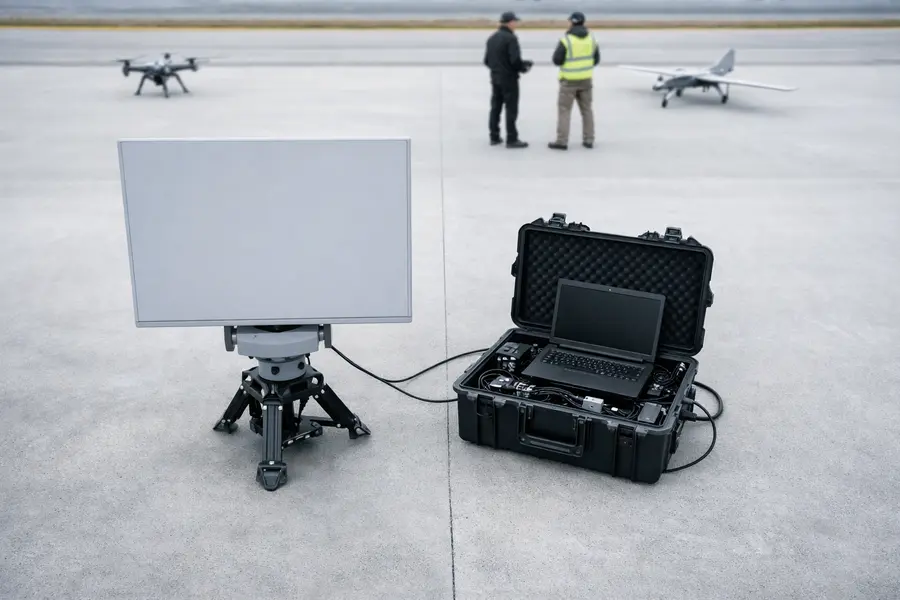
Gallium builds the GDS-10, an X-band active electronically scanned array (AESA) radar with a software-defined architecture. The company says it detects small Class 1 and FPV drones out to 10 kilometres, with 360-degree azimuth and 90-degree elevation coverage. Each unit carries 512 antenna elements.
It ships in two versions, one for critical infrastructure and one for military use. The system tracks multiple targets, handles swarms and resists jamming, according to the company. Open interfaces support the SAPIENT and ASTERIX standards, which lets it plug into existing command systems.
Gallium's cost claim rests on two engineering choices: an antenna it says costs one-tenth of a conventional one, and processing capacity it puts at 100 times that of traditional military radar approaches. None of these figures has been independently verified.
Who Is Behind the Company?
Three founders with defence and industrial backgrounds started the company. CEO Eric Fournier previously worked at Boston Consulting Group on defence R&D programmes. CTO Florian Lemoine has NATO and French DGA procurement experience. COO Robin Mandel came from Thales and Safran.
An advisory board adds institutional weight: General Autellet, a former deputy chief of the French Defence Staff, and General Philippe Lavigne, a former NATO Supreme Allied Commander and French Air and Space Force chief of staff. The team stands at about 15 people, with plans for roughly 50 after the raise.
Why Is a Cheaper Radar the Pitch?
Gallium is targeting a gap in pricing. Short-range detectors under 5 kilometres are cheap, while high-end radars from established defence primes such as Thales, Hensoldt, Saab and Raytheon cost far more. Gallium puts its target price near €500,000 against the €2M to €5M typical of comparable systems.
Fournier framed the design goal as a question: "How do you meet 80 per cent of the need at 20 per cent of the price?" The pitch is volume. Protecting airports, data centres, energy sites and military bases against FPV drones requires many sensors, and few buyers can afford many sensors at seven-figure prices.
How Does the Round Compare With Rivals?
The seed is small next to the money flowing into adjacent defence companies. US radar maker Chaos Industries raised $510M in November 2025 at a $4.5B valuation, and Cambridge Aerospace raised $300M at a $3.4B valuation in August 2026. French rival Alta Ares raised €50M in June 2026. Robin Radar, a Dutch company, won a 100-unit contract from the Dutch defence ministry in December 2025, and Echodyne in the US raised $135M in 2022.
That context cuts two ways. Investor appetite for counter-drone hardware is evidently strong, which helps a first-time team raise on a prototype. But Gallium enters a field where better-funded competitors already hold contracts, and a seed of €7.1M buys limited room to be wrong about manufacturing costs.
What Still Has to Be Proven?
Almost everything commercial. Gallium is pre-revenue, and its two GDS-10 prototypes began development only in June 2026, following small-scale antenna tests in an anechoic chamber in December 2025. Monthly field trials are planned. Company materials cite five to six prospective customers in discussions, though these are non-binding memoranda of understanding at this stage.
Management targets €6M in orders in 2027 and a first unit delivery around June 2027. Exports will be subject to EU and national controls, and the company is considering white-labelling and licensed assembly with larger defence primes rather than competing with them head-on. A price a tenth of incumbents' is credible only if field performance survives scrutiny from military buyers who have heard similar claims before.
Outlook
Gallium has raised €7.1M to test whether a software-defined AESA radar can deliver most of the performance of premium systems at a fraction of the cost. The next markers are the field trials, the opening of orders in Q1 2027 and a first delivery targeted for mid-2027. If the six prospects convert into paid contracts, the company will likely need a larger round to scale manufacturing. If performance trails the price advantage, the seed will have bought an expensive prototype.