Pomegra
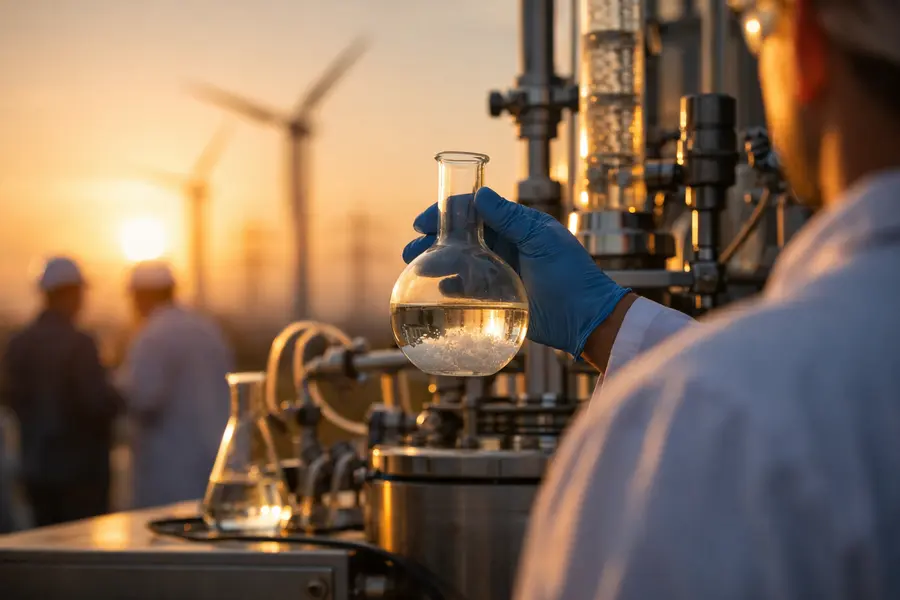
Oxford spinout FluoRok raised a €26.6M ($30M) Series A led by Orano Ventures and Supernova Invest to make battery electrolyte salts without hydrogen fluoride.
Key Takeaways
- FluoRok closed a €26.6M ($30M, £22.8M) Series A on November 5, 2026, co-led by Orano Ventures and Supernova Invest.
- Its mechanical process makes LiPF6 and inorganic fluorides without hydrogen fluoride. It is proven at pilot scale only.
- Valuation is undisclosed. The money funds demonstrator plants, hiring and customer validation.
Lead
FluoRok, a University of Oxford spinout founded in 2022, raised a €26.6M Series A on November 5, 2026. The round was co-led by Orano Ventures and Supernova Invest. The company makes fluorochemicals through a patented mechanical activation process that skips hydrogen fluoride (HF), the toxic and corrosive acid at the start of nearly every conventional fluorine supply chain. The company did not disclose a valuation.
Who Else Is in the Round?
The round drew new and returning money. Bidra Innovation Ventures is a new investor, and EverQuest Capital Partners, CPI Enterprises and WS Investments are also listed. Existing backers Oxford Science Enterprises, BGF, GGF, Volta Energy Technologies and the University of Oxford returned, along with angel investors. Innovate UK grant funding, roughly £1M, sits alongside the equity.
The follow-on from Oxford Science Enterprises, BGF and Volta is the more informative signal. FluoRok's previous round was £7.7M ($9.8M) in September 2024. The Series A is roughly three times that in dollar terms, and the insiders came back. The company describes the round as oversubscribed, a claim the numbers cannot confirm.
What Does FluoRok Actually Make?
FluoRok makes two product families: inorganic fluorides for pharmaceutical and agrochemical customers, and lithium hexafluorophosphate (LiPF6), the dominant salt in lithium-ion battery electrolytes. Its process converts fluorite, the natural mineral source of fluorine, into these products by mechanical activation instead of the HF route. It also accepts lower-grade fluoride feedstock and can recover fluoride from waste streams. The company says it runs on commercially available industrial equipment, which matters for any plan to scale quickly.
The company has completed pilot-scale product qualifications. It also holds a letter of intent from European electrolyte maker Green Energy Origin for future LiPF6 supply. A letter of intent is not a purchase contract, and no volumes or prices have been published.
Why Does Removing Hydrogen Fluoride Matter?
Hydrogen fluoride is dangerous to transport, store and handle, and that cost shapes where fluorochemical plants can be built. Taking it out of the process lowers the permitting and safety burden, which could widen the list of viable sites. That is the core of the pitch.
The supply picture adds a second argument. Chinese producers supply an estimated 85% to 90% of global LiPF6, including Tinci, Capchem and Foosung. Western alternatives are few. Orbia's Koura unit is building a 10,000-tonne-per-year plant in Louisiana, an HF-based route that shows what incumbents are spending to compete. European and American battery makers want non-Chinese electrolyte supply, and a producer with a European footprint fits that demand.
Florian de Beauchaine of Orano and Supernova said that eliminating hydrogen fluoride from fluorochemical manufacturing addresses safety and supply-chain challenges across the industry. Orano is a French nuclear fuel and materials group with long experience of fluorine chemistry, so its role is more than financial.
What Are the Risks?
Pilot-scale chemistry is not plant economics. LiPF6 is a commodity, and its price has fallen sharply from earlier peaks as Chinese capacity expanded. A new entrant must beat incumbents on cost or win a premium for supply security and lower hazard. Battery customers also qualify new salt suppliers slowly, with purity and consistency tests that can run many months.
The funding gap is another test. A demonstrator plant is a long way from the multi-thousand-tonne capacity that battery customers buy. FluoRok will probably need a larger financing, or an industrial partner, to build commercial capacity.
What Comes Next?
The proceeds go to demonstrator facilities for both reagents and battery electrolyte salts, to hiring, and to validating products with customers at larger volumes. The milestones to watch are consistent output at demonstrator scale, conversion of the Green Energy Origin letter into a supply agreement, and a named site for commercial production. Pharmaceutical and agrochemical fluorides may offer earlier revenue than batteries, since those customers pay more per kilogram.
Outlook
FluoRok has a larger round, returning insiders and a strategic co-lead with fluorine expertise. It has not yet shown industrial output, disclosed contract volumes or published a valuation. The next 12 to 24 months of demonstrator results will show whether HF-free production is a cost advantage or a safety feature with a price premium.