Pomegra
Zipline raised $1.5 billion at a $21.5 billion valuation, led by Paradigm, WCM and Layer Global, to build a nationwide US drone delivery network.
- Zipline raised $1.5B at a $21.5B post-money valuation on Nov. 5, 2026, led by Paradigm, WCM and Layer Global.
- The valuation nearly tripled from $7.6B set in January 2026, when Zipline raised more than $600M.
- A new Walmart deal adds 300 drone delivery sites to the 21 currently active.
Lead
Zipline, the autonomous drone delivery company, announced a $1.5 billion late-stage round on Nov. 5, 2026, valuing the business at $21.5 billion post-money. Paradigm, WCM Investment Management and Layer Global led the financing. Valor Equity Partners, Fidelity Management & Research Company, Uber, Tiger Global, J.P. Morgan, ARK Invest and Salesforce Ventures also participated. Zipline said the money will go to expanding US manufacturing and hiring as it builds a nationwide delivery network.
What Happened?
Zipline closed a $1.5 billion round and, on the same day, signed a new multi-year agreement with Walmart to add 300 drone delivery sites across the United States. The two companies have delivered together since 2021 and currently run 21 active sites, so the agreement represents roughly a fifteenfold increase in footprint.
Zipline reported more than one million deliveries in the Dallas-Fort Worth metroplex this year, with a median delivery time of 19 minutes. It also reported 150 million commercial autonomous miles flown without a safety incident. Those figures come from the company, and no revenue or profit figures were disclosed.
How Does This Round Compare With the Last One?
The valuation moved from $7.6 billion to $21.5 billion in about ten months. In January 2026, Zipline announced more than $600 million at the lower figure. The new round is roughly 2.5 times larger in dollars and values the company at close to three times the earlier mark.
A jump of that size says investors are pricing in the Walmart rollout and the Uber partnership rather than current earnings. Zipline has not published revenue, so the multiple cannot be tested against financials. The entry of Paradigm, better known as a crypto and frontier-technology investor, as a co-lead also signals that the company is being priced as a robotics platform and not as a logistics operator.
Matt Huang of Paradigm described Zipline as "now one of the largest autonomous robotics companies," operating with scale, safety and a "magical user experience."
Why Is Walmart the Center of the Deal?
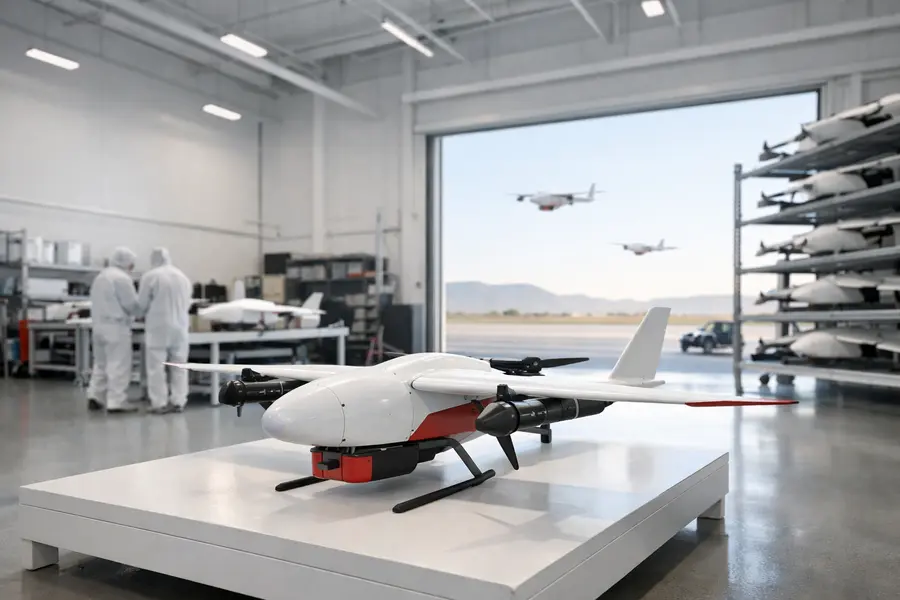
Walmart supplies the demand that justifies the capital. Delivery from its stores is where Zipline's drones, which carry up to 8 pounds over a 10-mile radius on the Platform 2 system, fit most naturally. Zipline's share of Walmart's drone delivery revenue grew from 10.8% to 34.9% between March and October 2026, a measure of how quickly it is taking volume in that channel.
Three hundred new sites would turn a regional program into a national one. Each site requires installation, regulatory coordination and local operating staff, so the schedule matters as much as the headline number. Zipline has not disclosed a completion date for the 300 sites.
What Role Does Uber Play?
Uber is both an investor and a distribution partner. The two agreed in August 2026 to target one million deliveries a day by the end of 2029. At 19 minutes per delivery in Dallas-Fort Worth, Zipline has produced one million deliveries in a year in a single metro. A daily rate of one million would be a different order of scale, and it depends on manufacturing capacity that the new funding is meant to expand.
Strategic Context
Zipline began in medical logistics, delivering blood and vaccines in Rwanda, and now operates in five African countries, multiple US cities and Japan. The company says its medical work saves more than 14,000 lives annually, and its Côte d'Ivoire network targets 2,200 health facilities and 12 million people. That track record separates it from consumer-only drone rivals.
The company holds an FAA Part 135 air carrier certification, granted in 2022, which allows long-range commercial operations. Its Platform 1 fixed-wing aircraft can fly a 120-mile round trip for business customers. Regulatory approval for operations beyond visual line of sight at scale remains the gating factor for any competitor, and Zipline's head start there is a real asset.
What Comes Next for Zipline?
The next milestones are manufacturing output and site activation. Going from 21 sites to 321 requires aircraft, docks and trained crews in many new markets, and the company has not said how many drones it builds today.
The risks are plain. A single high-profile safety incident could slow regulators. Unit economics on a 19-minute delivery of a light package remain unpublished. And a valuation set at nearly three times the January mark leaves little room for a slow rollout.
Outlook
Zipline entered November 2026 with $1.5 billion in new capital, a $21.5 billion valuation and a Walmart commitment that, if executed, makes it one of the largest drone delivery operators in the US. The test over the next 12 months is whether site counts, daily delivery volumes and manufacturing output move toward the Uber target of one million deliveries a day by 2029.