Pomegra
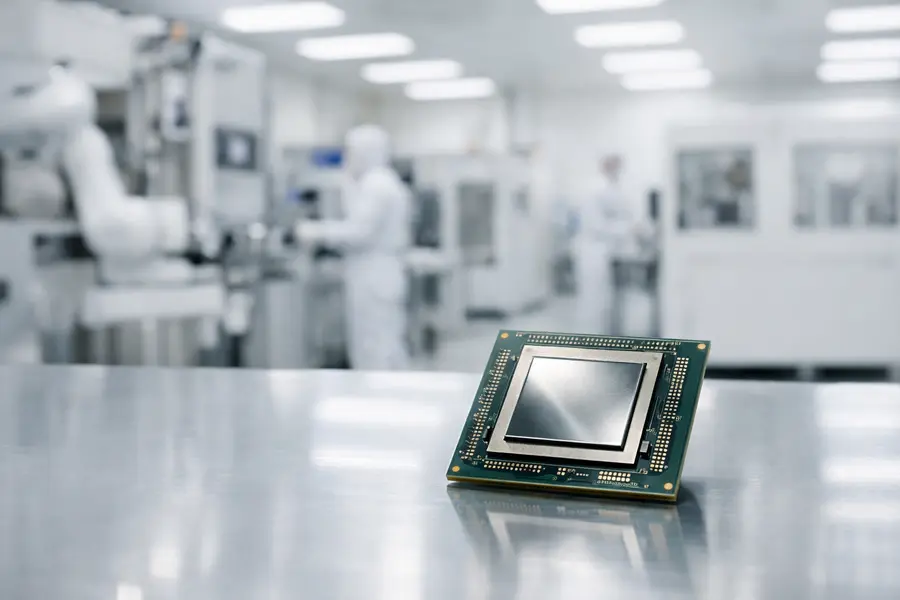
Seoul chipmaker FuriosaAI raised a $620M Series D at a $2.9B valuation to scale RNGD inference chips that cut power and compute costs against Nvidia GPUs.
Key Takeaways
- FuriosaAI closed a $620M Series D on October 29, 2026, at a $2.9B valuation, up from $735M a year earlier.
- South Korea's National Growth Fund led the round; Infinitum is the largest international investor.
- RNGD chips draw 180 watts per card, air-cooled; 20,000 units are planned for 2026 and 40,000+ for 2027.
Lead
FuriosaAI, the Seoul-based AI chip startup founded in 2017, closed a $620M Series D (about 820 billion won) on October 29, 2026, valuing the company at $2.9B. The round was led by South Korea's National Growth Fund, which put in 370 billion won, roughly $280M. The company designs inference processors, the chips that run trained AI models rather than train them, and sells them on a pitch of lower electricity and compute costs than GPU-based systems.
What Did FuriosaAI Announce?
FuriosaAI announced that the Series D is complete and will fund higher production of its RNGD accelerator, broader global sales and software work. The round also pays for a third-generation chip under development with Broadcom. The raise began in January 2026 with a target range of 450 to 750 billion won. It closed above the top of that range at 820 billion won.
RNGD entered mass production in January 2026, with TSMC manufacturing the chips. FuriosaAI plans to ship 20,000 units this year and more than 40,000 in 2027. The third-generation design is described as a 2nm, multi-die part using HBM4 memory.
Who Backed the Round?
The round drew a mix of Korean state-linked money and foreign funds. The National Growth Fund led. Infinitum, a U.S. firm, is the largest overseas participant, and international investors contributed about $110M in total. That group includes Jericho Capital, Worldline Capital, Cisco Investments, Singapore's QUDA Capital Partners and Abu Dhabi's NeoFort Holding.
Existing backers Naver, DSC Investment and KDB Capital returned. Korea Development Bank put in 30 billion won. UAMCO invested 40 billion won, and NEXTRANS 48 billion won. Kakao Investment, Hanwha Asset Management and the Export-Import Bank of Korea also appear on the list. The Export-Import Bank's stake is its first direct investment in a venture company.
How Does RNGD Cut Power and Compute Costs?
RNGD cuts costs mainly by drawing less power per card. Each card consumes 180 watts and runs on air cooling alone, and an eight-card 4U server draws about 3 kilowatts. Data centers can therefore install it in racks without liquid cooling or new power feeds.
FuriosaAI says RNGD matches the throughput of Nvidia's RTX PRO 6000 card for card and serves about twice as many users per kilowatt. Both figures are company claims, and the comparison point is a workstation-class Nvidia part, not its top data center accelerators. The more useful test is production deployments. Samsung SDS launched an NPU-as-a-service offering on RNGD in July. LG Group runs its EXAONE models on the chips, and Upstage uses them for search summaries.
What Does the Fourfold Valuation Jump Imply?
A rise from $735M to $2.9B in about a year implies investors now price FuriosaAI as a supplier with shipping product, not a design house. The previous round came before mass production. This one follows ten months of volume output and named customers.
The scale is still modest. A planned 20,000 cards in 2026 is small next to Nvidia's shipments, and the valuation assumes FuriosaAI wins customers outside Korea. The National Growth Fund as lead adds a second reading. Seoul wants a domestic alternative in AI silicon, and state capital can accept a longer payback than a venture fund. That lowers financing risk in the near term but ties the company's story to industrial policy.
What Comes Next for FuriosaAI?
The next test is exports. CEO June Paik has said talks are under way in Asia-Pacific and the Middle East, and the new international investors, including NeoFort in Abu Dhabi and QUDA in Singapore, sit in those regions. Software maturity is the other constraint, since buyers weigh how easily existing models port to a non-Nvidia stack.
Execution on the third-generation chip carries more risk. A 2nm, HBM4-equipped multi-die design depends on advanced packaging capacity and memory supply, both tight across the industry. A slip there would leave RNGD as the only product in a market where Nvidia releases new hardware on a yearly cadence.
Outlook
FuriosaAI has money, a shipping chip and a state-backed lead investor. What it has yet to show is large-scale adoption beyond Korean customers. Hitting the 20,000-unit target this year and signing a foreign cloud or enterprise buyer would do more to justify the $2.9B price than the round itself.