Pomegra
London's Foundational exited stealth with a €9.6M pre-seed led by Inflection to build a laser network tracking satellites and debris to the millimetre.
Key Takeaways
- Foundational raised £8.2M (€9.6M) pre-seed, led by Inflection, and announced it on 1 October 2026.
- It claims the largest pre-seed ever raised by a European space-tech company; valuation is undisclosed.
- Its automated laser ground stations cost about 30 times less than legacy facilities, the company says.
Lead
Foundational, a London-based space-technology startup, emerged from stealth on 1 October 2026 with a £8.2M (€9.6M, about $10.8M) pre-seed round. Inflection led the financing. BACKED, Final Frontier, Adjacent and Type One Ventures also participated. Foundational has not disclosed a valuation.
The company was founded in 2025 by Hira Virdee, who is CEO, and Dave Gooding, who is CTO. It is building a vertically integrated Satellite Laser Ranging network that locates satellites and orbital debris to within millimetres. Foundational describes the round as the largest pre-seed raised by a European space company to date.
What Does Foundational Actually Build?
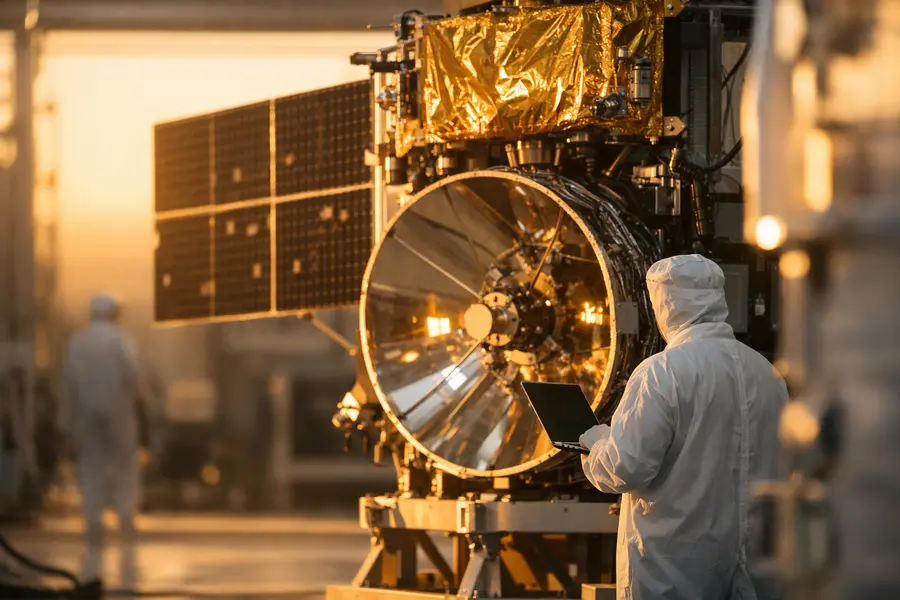
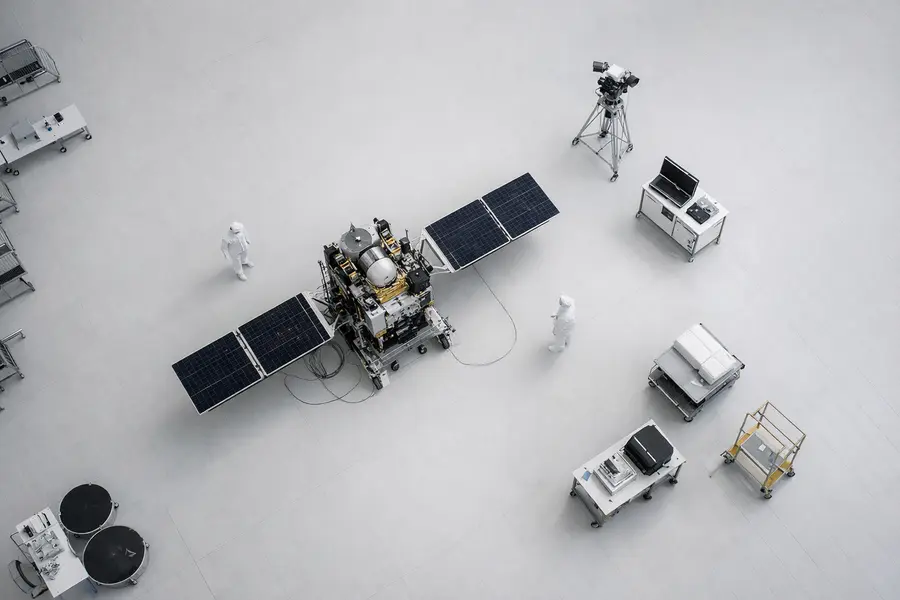
Foundational sells positioning data, and it owns each layer that produces it. The first layer is retroreflectors, small optical devices mounted on satellites that bounce laser light straight back to its source. The second is a network of automated, weatherproof ground stations that fire eye-safe lasers and time the return. The third is Origin, a software platform and API that turns those measurements into tracking data.
Laser ranging is not new. Virdee founded Lumi Space in 2018, with backing from the European Space Agency and the UK Space Agency, and Foundational builds on that earlier work. The company says its stations work day and night at ranges up to 2,000 kilometres. It also says they cost roughly 30 times less than legacy installations.
The network is already operating, and early customers are being onboarded through Origin. Foundational lists commercial satellite constellations, the European Space Agency, the UK government, aerospace manufacturers and research institutions among those it supports. It has not named individual customers or disclosed revenue.
Why Does Satellite Tracking Need New Infrastructure?
Existing laser ranging capacity is small, old and government-funded, while the number of objects in orbit keeps climbing. Inflection's investment thesis puts the global count at about 40 stations, with 18 of them producing 80% of the world's data. It cites a 2024 UN assessment that called the infrastructure "perilously close to collapse."
Meanwhile, the catalogued payload count in low Earth orbit rose from 2,942 in 2018 to 14,906 in 2025, a 5.1-fold increase. McKinsey's base case projects 27,000 satellites by 2030, and its high case reaches 65,000. The "CRASH Clock" metric, which estimates how long a constellation would last without manoeuvres after losing control, fell from 164 days in 2018 to 5.5 days in 2025.
Current tracking often leaves position uncertainty in the range of metres to kilometres. That produces a flood of false-positive collision alerts, which operators must either ignore or answer with costly manoeuvres. Foundational argues that centimetre-level orbit knowledge would cut that noise and also support autonomous docking and in-orbit servicing.
"Satellite Laser Ranging is the gold standard," Virdee said, "but until now it's been too costly and too complex to use at scale."
How Will the Money Be Spent?
The funds go to hardware first. Foundational plans to build more ground stations, manufacture space hardware in-house, produce retroreflectors and develop the Origin data platform. The stated goal is a global network serving satellite operators and governments.
Alexander Lange, a founding partner at Inflection, framed the bet around demand beyond collision avoidance. "Existing measurement technology isn't suitable for the next space era or the rise of physical AI and its navigation challenges," he said. Inflection's own write-up goes further, arguing that whoever builds the hardware backbone first will hold GPS-like platform power through a proprietary data standard.
Who Else Is Competing, and What Is Unproven?
Foundational is not alone in selling orbital awareness. Competitors named in coverage of the round include LeoLabs, Aavuus and Space DOTS, which approach tracking with other sensing methods. The company's pitch rests on ground-based lasers outlasting space-based alternatives, since terrestrial stations need simple maintenance and are not subject to orbital decay.
Several claims remain unverified in public. The 30-fold cost advantage comes from the company. Customer names, contract values and station counts have not been published. A pre-seed round of this size also raises the bar for the next one: investors will want evidence that operators will pay for retroreflector-equipped satellites, which means persuading manufacturers to add hardware to their designs.
Outlook
Foundational enters a market where demand for precise orbit data is rising faster than the public stations that supply it. The €9.6M gives it funds to build stations and retroreflectors, but the commercial test is adoption. Satellite makers must fit the reflectors, and operators must pay for Origin data. Whether the company can turn a cost advantage in ground stations into a standard other players adopt will determine if the round looks large for a pre-seed or merely early.