Pomegra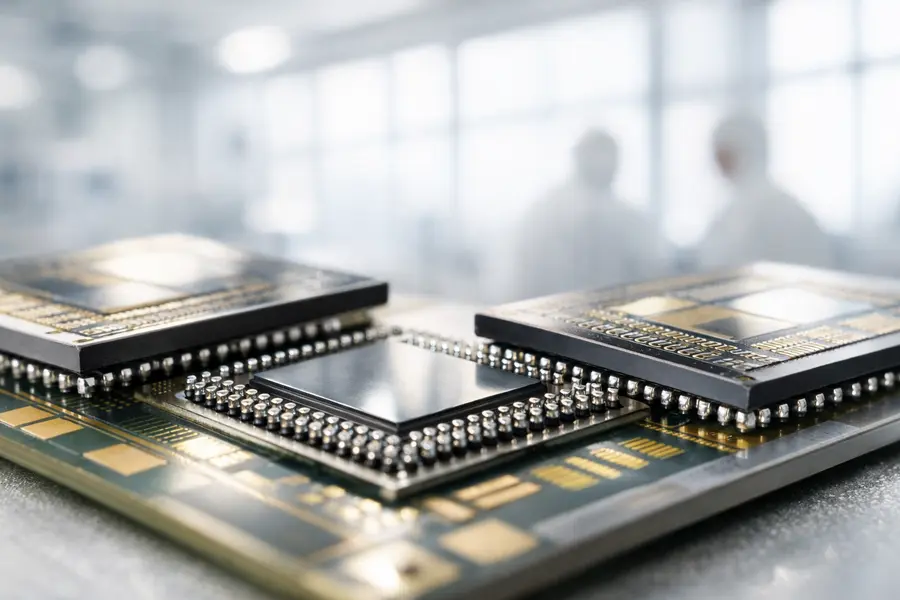
Eliyan's $145M Series C, led by Seligman Ventures, values the Santa Clara chiplet interconnect startup at $1B as it extends from electrical die-to-die links into electro-optical AI infrastructure.
- Seligman Ventures led the July 29, 2026 round; Cisco Investments and optical component maker Lumentum joined as new strategic investors.
- Eliyan has now raised roughly $295 million since its 2022 Series A, with AMD, Arm, Meta, and Intel Capital on its cap table.
- Proceeds will fund expansion from electrical chiplet interconnects into rack-scale electro-optical AI links.
Lead
Santa Clara's Eliyan closed a $145 million Series C on July 29, 2026, reaching a $1 billion valuation on the premise that AI chip scaling has made die-to-die data movement as critical as compute itself. Seligman Ventures led the round; its managing partner Umesh Padval joins Eliyan's board. Cisco Investments and optical components supplier Lumentum joined as new strategic investors, alongside a roster of existing backers that now spans chip designers, memory suppliers, hyperscalers, and growth funds.
What Does Eliyan Actually Make?
The company's core product line centers on NuLink, a physical-layer technology that transfers data between chiplets sharing a package and between separately packaged chips on a circuit board. NuLink was built to be backward compatible with Universal Chiplet Interconnect Express (UCIe), the standard Intel developed and donated to the UCIe Consortium. A companion product, NuGear, addresses memory expansion and scale-up networking using the same chiplet architecture.
Eliyan first taped out NuLink on a 5nm process in November 2022, claiming twice the bandwidth density of comparable interconnects. Its stated technical differentiation: NuLink operates over any packaging substrate, not just advanced packaging, which avoids locking customers into a single manufacturing process.
Why Did This Round Jump So Sharply From the Last?
The March 2024 Series B closed at $60 million. This Series C is more than twice that amount, at a valuation implying a step-up in excess of 2x in under 18 months. The explanation is a product extension, not simply faster revenue accumulation.
Eliyan is now targeting electro-optical interconnects - links that carry data using light rather than electrons, first across a single rack and eventually between racks in AI clusters. Lumentum manufactures the optical components those links require, making its participation a direct signal of technical direction. Cisco Investments, whose parent sells networking hardware into the same AI infrastructure buildout, has a strategic stake in which interconnect approaches become standard.
The January 2026 $50 million strategic round from AMD, Arm, Coherent, and Meta set up this close. Those names cover the AI supply chain from chip design to hyperscale deployment, and their collective participation before a Series C shapes enterprise procurement conversations.
Who Is Behind the Company?
The cap table now spans Intel Capital, Samsung Catalyst Fund, Tiger Global Management, SK Hynix, AMD, Arm, Coherent, Meta, Cisco Investments, Lumentum, and Seligman Ventures. That breadth is notable - financial and strategic investors typically push in different directions on exit timelines and technical roadmap prioritization. Managing both sets of expectations adds an organizational challenge that the funding headline does not capture.
Total capital raised across four rounds since November 2022 sits at approximately $295 million.
Outlook
The $1 billion valuation validates Eliyan's positioning in a market that major chipmakers are actively shaping through standards bodies and targeted investments. Converting that positioning into production-scale revenue is the open question. Expanding from electrical chiplet PHY into electro-optical AI links requires deep integration with advanced packaging, firmware, and system software - a technical scope well beyond the original Series A mandate.
Whether $295 million is sufficient to reach volume production before better-capitalized competitors close the gap determines whether the unicorn status is a milestone or a pressure point.