Pomegra
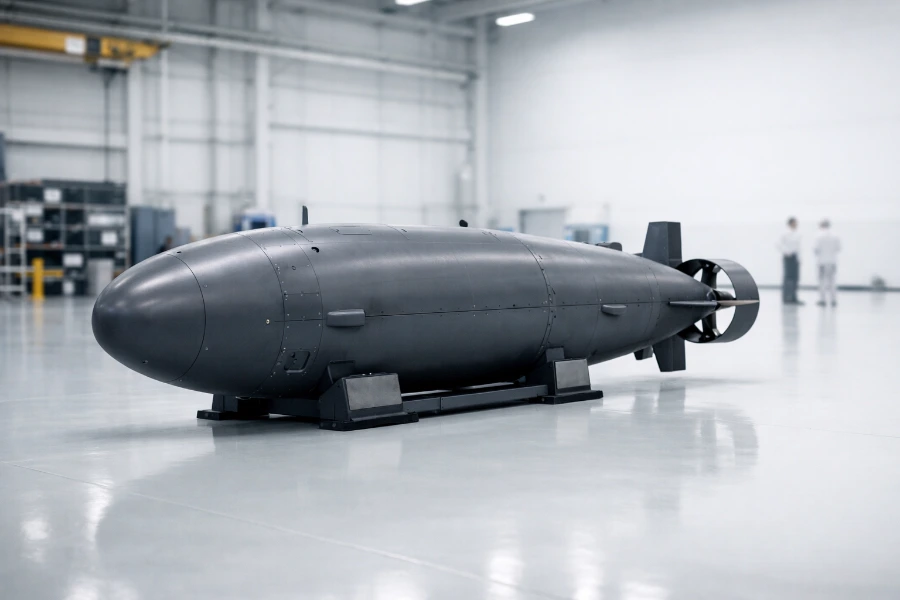
Corridian emerged from stealth with a $38 million seed round led by Point72 Ventures to build ultra-large autonomous underwater vehicles that can move military cargo without a crew.
Key Takeaways
- Corridian raised a $38M seed led by Point72 Ventures, announced November 3, 2026.
- The company was founded in September 2025 by four former General Dynamics undersea autonomy leaders.
- A flagship vehicle is due to be unveiled in 2027; valuation was not disclosed.
Lead
Corridian, a New England defense technology startup, came out of stealth on November 3, 2026 with a $38 million seed round. Point72 Ventures led the financing. Balerion Space Ventures, Harpoon Ventures, DCVC and Marlinspike joined, along with an undisclosed group of defense and deep-tech investors.
The company is building ultra-large autonomous underwater vehicles (AUVs). Its design calls for carrying ISO-standard shipping containers across thousands of nautical miles with no one on board. Corridian plans to unveil its flagship vehicle in 2027.
Who Is Behind Corridian?
Four executives who previously ran undersea autonomy programs at General Dynamics founded Corridian. Mike Guay is chief executive. Greg Barrow is president, Kyle Arace is chief technology officer and Mark Bodnar is chief operating officer. Programs they led went into service with the U.S. Navy and the Royal Australian Navy.
The company was founded in September 2025, so it raised its first outside capital and left stealth about 14 months after incorporation. That is a fast path for a hardware company, and it reflects how much venture money is now looking for defense teams with fielded-program credentials.
The advisory group carries similar weight. It includes retired Adm. Lisa Franchetti, the 33rd Chief of Naval Operations, and Jason Potter, a former acting Assistant Secretary of the Navy. Retired Vice Adm. Jeff Trussler and retired Rear Adm. Milton "Jamie" Sands III are also listed, as is Stephen Rodriguez of DCVC.
What Is Corridian Actually Building?
Corridian is building uncrewed submersibles sized to haul containerized cargo, which the company calls stealth logistics. The vehicles are meant to deliver payloads and effects, perform intelligence, surveillance and reconnaissance, and resupply forces in contested waters. Launch method, dimensions and propulsion have not been disclosed.
The pitch rests on a gap in current inventory. Corridian argues that existing Navy AUVs and submarines were not designed to carry large, numerous or dense payloads, which caps the undersea capacity available to the United States and its allies. Smaller AUVs handle survey and mine-hunting work. Crewed submarines carry weapons and sensors, not bulk freight.
Guay framed the problem in terms of exposure. "America's dependence on the surface and air domains to move mass at scale is an acute vulnerability," he said. Cheap drones and long-range missiles have made surface shipping and airlift harder to protect in a conflict, and the company wants to move that traffic below the waterline.
Why Did Point72 Ventures Back a Pre-Product Seed?
Investors are paying for the team and the thesis, since there is no vehicle to inspect yet. The $38 million is large for a seed round and would normally fall closer to a Series A in size. It signals that defense hardware rounds are priced against the capital required to build and test a physical vessel, not against software-style milestones.
Rodriguez of DCVC put the investment logic bluntly: "When the shooting starts, anything observable is gone." The argument is that concealment is the only reliable protection for logistics in a high-end conflict.
The round also carries open questions. Valuation was not disclosed, and Corridian has not named a customer or a contract. A seed of this size buys engineering time and a facility, not a program of record. The Navy's appetite for large uncrewed undersea cargo carriers will determine whether this money is the first of many rounds or an early high-water mark.
How Will Corridian Spend the Money?
The company will spend the proceeds on three things: continued development of the flagship AUV, expansion of its research and development facility, and hiring undersea-systems engineers. Corridian describes its headcount as rapidly expanding but has not given a number.
The 2027 unveiling is the next visible test. A public reveal would show whether the vehicle's size and range claims hold up, and whether the design can meet Navy requirements for survivability and payload handling.
Strategic Context
Undersea drones have drawn steady attention from defense planners and investors as the Navy looks for ways to add capacity without building more crewed submarines. Large AUVs sit between small survey vehicles and full submarines, and few companies have fielded vehicles in that middle category. Corridian is wagering that logistics, not strike or sensing alone, is the underserved mission.
Competition will come from established prime contractors, including the firm its founders left, and from other venture-backed autonomy startups moving into maritime work. Corridian's founders know the incumbent programs from the inside, which helps with credibility and may also bring scrutiny over how its work relates to their prior employer's.
Outlook
Corridian enters the market with a $38 million seed, a founding team with fielded-program history and a stated 2027 target for its first vehicle. Valuation, customers and technical specifications remain undisclosed. The next 12 months will show whether the Navy treats undersea freight as a funded requirement, and whether the company can turn a high-profile launch into a contract.