Pomegra
Portugal's drone maker TEKEVER raised a €520M Series D at a €5.7B valuation, and Denmark's EIFO joined as it opens its first Nordic base in Odense, Denmark.
Key Takeaways
- TEKEVER's Series D totals €520M ($580M) at a €5.7B ($6.4B) valuation, up from about $1.25B in May 2025.
- UC Investments and Baillie Gifford led the first close on September 23, 2026.
- Denmark's EIFO joined in a second close on November 6, conditional on an Odense presence.
Lead
TEKEVER, the Lisbon-founded maker of AI-driven autonomous drones, said on November 6, 2026 that Denmark's Export and Investment Fund (EIFO) has joined its Series D. The round totals €520M ($580M) and values the company at €5.7B ($6.4B). TEKEVER will also set up its first operational presence in the Nordic region, in Odense, Denmark's drone and robotics hub.
The announcement is the second close of a round first disclosed on September 23. The company has said further closings with strategic investors are expected in the coming months, so the €520M figure may not be final.
Who Backed the Round and at What Valuation?
The first close was led by UC Investments, the University of California's investment arm, and Baillie Gifford. The deal was UC Investments' first direct investment in Europe. Merlyn Advisors came in as a new strategic investor, and existing shareholders Crescent Cove, Ventura Capital and Iberis Capital stayed in.
EIFO's cheque was not disclosed in the company's announcement. Its participation is tied to TEKEVER building a Danish footprint, which makes it as much an industrial-policy commitment as a financial one.
The valuation is the number to scrutinise. In May 2025, TEKEVER became a unicorn on a round led by Ventura Capital at a valuation of roughly $1.25B. A $6.4B mark about sixteen months later is a fivefold step-up. That pace reflects European defence procurement more than any change in the company's fundamentals. Revenue and headcount were not disclosed with the Series D, so the multiple cannot be tested against reported earnings.
What Does TEKEVER Actually Sell?
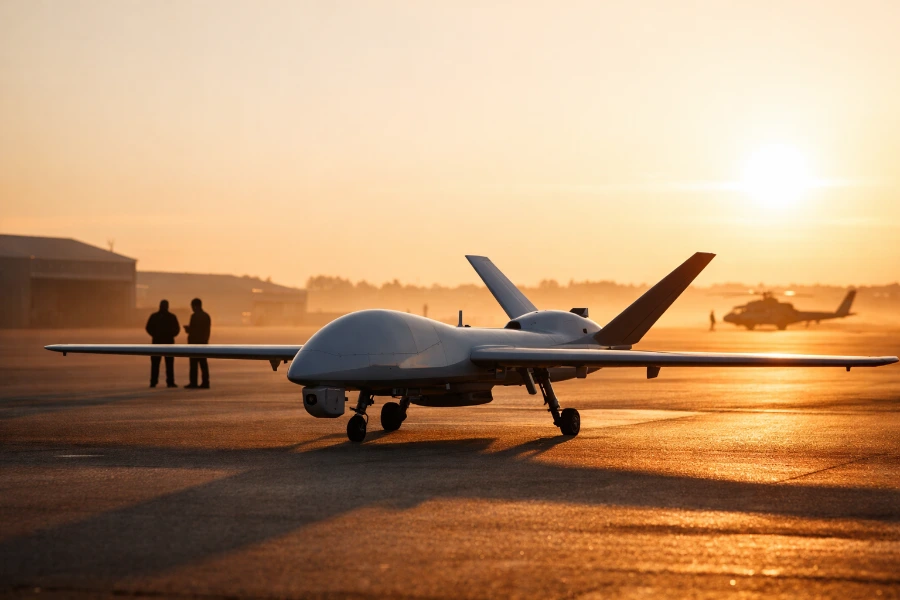
TEKEVER develops AI-centric autonomous systems for defence, security and civil use, with surveillance and intelligence as its core. Its uncrewed aircraft platforms include the AR3 and the larger AR5. The company says its systems have logged more than 50,000 operational flight hours in Ukraine since 2022, and that the AR3 has passed 10,000 hours with over 100 modifications made from field feedback.
Government contracts anchor the story. The company has long-term arrangements with Germany, the United Kingdom and Portugal. That includes a £400M, ten-year deal with the UK Ministry of Defence to supply AR5 aircraft under Project CORVUS. It also holds a USSOCOM procurement agreement in the United States. Operations already span Portugal, the UK, France, Germany and Estonia, and a Munich hub opened recently.
Why Odense, and Why Now?
Odense offers a ready-made drone ecosystem, which is why TEKEVER chose it. The city hosts Odense Robotics, UAS Denmark's International Test Centre, and the University of Southern Denmark's SDU Drone Centre and Flight Lab.
TEKEVER plans to build the site in phases, "in response to demand and approvals." It is setting up a local entity and starting recruitment. Production, R&D, business development and sales are all under consideration, with no single function committed. The company also intends to explore dual-use systems for monitoring offshore energy infrastructure, a Danish and North Sea priority that fits its maritime surveillance record.
The timing follows a pattern: European governments are directing more defence spending toward domestic suppliers, and state-backed investors increasingly attach local-presence conditions to their money. Denmark gets a foreign drone producer with proven battlefield data. TEKEVER gets a route into Nordic procurement.
What Will the Money Fund?
The company has named three uses: international expansion, manufacturing and technology development, and potential acquisitions. The acquisition line deserves attention. A company valued at €5.7B can pay in expensive paper, and consolidating smaller European drone and sensor firms is a plausible route to scale. No targets have been named.
The bear case is straightforward. Defence unicorns priced on order books depend on contract conversion, and multi-year frameworks such as CORVUS pay out gradually. A valuation built on government demand also inherits political and budget risk. Production ramp-up in several countries at once adds execution risk.
Outlook
TEKEVER now holds a €520M war chest, a €5.7B valuation and a widening European footprint, with more closings still to come. The Odense site will show how fast the company converts investor capital into local capacity. The next markers are the final round size, the first Danish hires and the first acquisition. Contract revenue in 2027 will test whether the valuation was set correctly.