Pomegra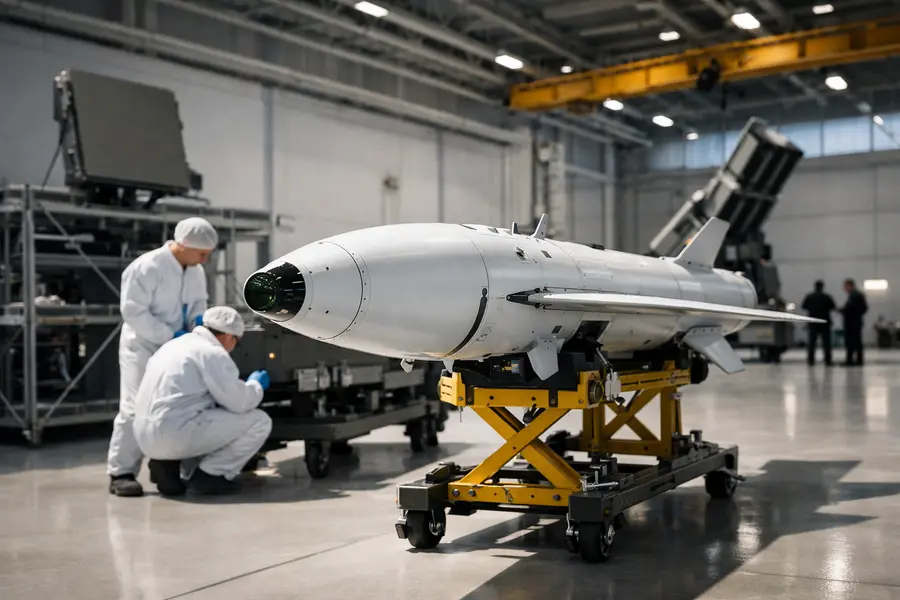
Cambridge Aerospace raised $300M in a Series C led by DFJ Growth at a $3.4B valuation to scale production of its Skyhammer drone interceptor now under UK MoD contract.
- DFJ Growth led the round, joined by Accel, Lakestar, Lux, Never Lift, Ora Global, and Elad Gil - the broadest syndicate Cambridge Aerospace has assembled.
- Skyhammer is a tube-launched, radar-guided interceptor with a 30km+ range and 700 km/h top speed, designed to defeat Shahed-class drones at a lower cost per kill than existing systems.
- The UK Ministry of Defence has contracted the company to supply Skyhammer to British Armed Forces, with deliveries beginning May 2026 and Gulf partners on the customer list.
Lead
Cambridge Aerospace closed a $300M Series C on 10 August 2026 at a $3.4 billion post-money valuation, led by DFJ Growth with participation from Accel, Lakestar, Lux Capital, Never Lift, Ora Global, and investor Elad Gil. Founded in late 2024 in Cambridge, UK, the company went from first flight test to Ministry of Defence contract in roughly 14 months - a timeline that would have been unthinkable in traditional defence procurement. The funds will go toward expanding manufacturing capacity to meet existing and anticipated contracts.
What Does Skyhammer Actually Do?
The core product is an X-band radar-guided interceptor fired from a standard tube launcher. It tracks and destroys unmanned aerial vehicles and subsonic missiles at ranges beyond 30 kilometres in all-weather conditions, using an onboard seeker for autonomous target acquisition. That autonomy - no operator in the loop for terminal guidance - is the engineering bet that makes the per-unit economics viable against drone swarms.
The company's product line extends beyond Skyhammer. Starhammer, a missile interceptor variant, is expected to reach market in 2027. Looking Glass, Cambridge Aerospace's radar system, pairs with both interceptors. The intention is a layered kill chain sold as a package.
What Does This Round Imply About the Last One?
Cambridge Aerospace has raised $136M across its prior rounds. The jump to a $3.4B valuation on a $300M Series C is steep, though not exceptional in the current defence-tech cycle, where NATO-aligned drone-interdiction companies have commanded multiples historically reserved for late-stage software firms. What the valuation does signal is investor confidence that the MoD contract converts to recurring revenue - and that the contract itself validates the technology at a level prototypes alone cannot.
The lead investor, DFJ Growth, has a record of backing defence and dual-use technology companies at growth stage. The presence of Accel and Lakestar alongside specialist defence funds suggests the round attracted both generalist and sector-specialist capital, which reduces concentration risk for future follow-on.
The MoD Contract and What It Means for Production
Defence Secretary John Healey announced the Skyhammer contract at the London Defence Conference, framing it as part of a broader acceleration of procurement from British innovation companies applying lessons from Ukraine and the Middle East, where cheap drones have repeatedly defeated expensive legacy air-defence systems. The contract covers launchers, interceptors, integration, training, and technical support. Deliveries began May 2026 and continue over six months.
Gulf partners are also named as customers, though contract values and volumes for that line have not been disclosed. Cambridge Aerospace currently employs more than 125 people across the UK and Europe; the MoD deal is projected to add 50 positions.
The manufacturing challenge ahead is substantial. Drone-warfare economics demand high-volume, low-cost production - exactly the opposite of how British defence contractors have historically operated. Cambridge Aerospace's stated use of funds targets this directly: production buildout, not further R&D. That is a meaningful shift in posture for a two-year-old company.
Why Did This Round Close Now?
The timing tracks the contract, not the market. A signed MoD agreement dramatically de-risks the investment case - investors are not funding a prototype, they are funding a supplier already on a government payroll. The $300M gives Cambridge Aerospace the runway to scale before any competitor replicates the approach and enters the same procurement cycle.
The broader context matters too. UK defence spending is rising, NATO members are under pressure to plug air-defence gaps, and the Shahed-style drone threat has proven persistent and cheap to sustain. Any interceptor that credibly undercuts the cost-per-kill of legacy systems will face a large and immediate demand signal.
Outlook
Cambridge Aerospace is now a funded, contracted supplier with a defined delivery schedule and a second product in development. The $3.4B valuation prices in substantial future contracts that do not yet exist. Whether the company can sustain that valuation depends on its ability to manufacture at volume and secure follow-on orders beyond the initial MoD tranche. The Gulf customer line, if converted to sizeable contracts, would be the clearest validation. The Starhammer programme adds upside but also execution risk for a team that has been building products for less than two years.