 Pomegra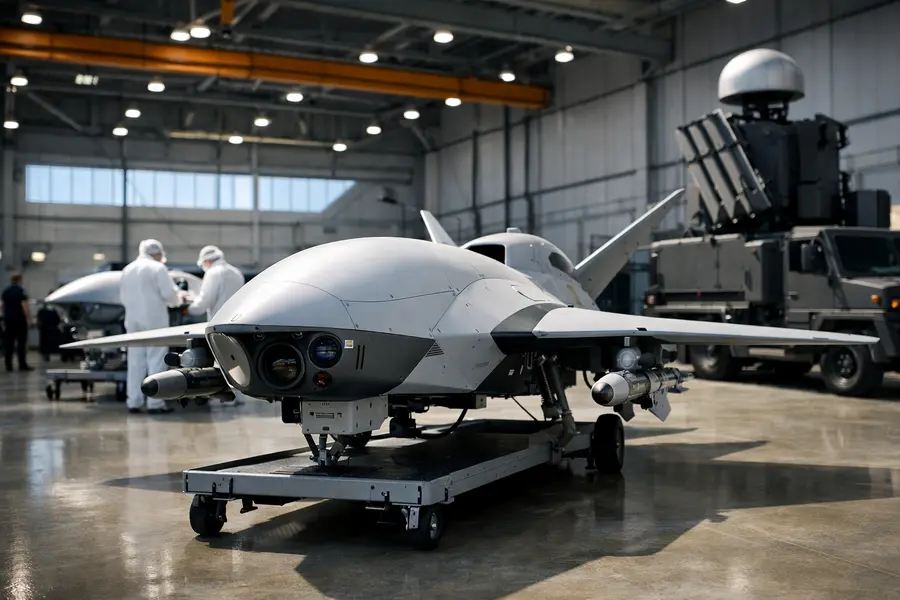
Cambridge Aerospace, the UK's two-year-old counter-drone startup, raised $300M led by DFJ Growth and Accel, tripling its valuation from $1.3B to $3.4B in just four months.
Key Takeaways
- The $300M Series C, closed August 10, 2026, brings total capital raised to over $630M since the company's 2024 founding.
- Skyhammer interceptors cost tens of thousands of dollars per unit versus millions for legacy missile systems - the cost asymmetry is the entire pitch.
- Cambridge Aerospace targets production of 2,500 Skyhammer units per month by March 2027, with the Starhammer variant entering the market in 2027.
Lead
Cambridge Aerospace closed a $300 million Series C on August 10, 2026, led by DFJ Growth alongside Accel, Lux, Lakestar, Never Lift, Ora Global, and Elad Gil. The round values the UK counter-drone startup at $3.4 billion - up from $1.3 billion at its April 2026 Series B, a 2.6x jump in four months for a company that did not exist two years ago. The capital is earmarked for manufacturing scale-up and continued delivery under UK defence contracts.
What Does Cambridge Aerospace Actually Build?
The core product is Skyhammer, a ground-launched autonomous interceptor designed to neutralize Shahed-class attack drones. It flies at roughly Mach 0.7, carries radar guidance, and reaches targets at up to 30 kilometers. Unit cost sits in the tens of thousands of dollars - a deliberate design constraint, not an afterthought. The logic is straightforward: if a drone costs $20,000 and your interceptor costs $200,000, the attacker wins the economics. Skyhammer inverts that equation.
Starhammer is the companion system for faster, higher-value threats. Rocket-powered, it reaches Mach 2 and engages targets within a 10-kilometer envelope, with a stated capability window extending to ballistic missiles. Commercial entry is set for 2027. Together, the two systems are designed to cover different velocity bands in a single integrated air-defense layer.
Cambridge Aerospace started Skyhammer flight testing in January 2025 and completed initial tests within six weeks. The UK government has already placed orders for Skyhammer interceptors, a contract that gives the production ramp-up a committed customer at its base.
Why Is the Valuation Moving This Fast?
The April-to-August revaluation from $1.3 billion to $3.4 billion requires some scrutiny. That is not organic product maturation - it reflects the broader capital market's re-rating of counter-drone defense as a category. The war in Ukraine, persistent Houthi drone campaigns in the Red Sea, and the UK's stated ambition to rebuild domestic defense capacity have made sub-$100,000 interceptors a procurement priority across NATO allies.
DFJ Growth previously backed Anduril, the US defense technology firm that has set the template for software-defined weapons programs. Bringing the same investor to Cambridge Aerospace signals a bet that the European market will follow the Anduril model: small teams moving faster than prime contractors, building consumable hardware at scale. Whether that comparison holds at the execution level remains open. Anduril had years and more capital before it secured major US government contracts at volume.
What Does This Imply About the Last Round?
The Series B at $1.3 billion in April 2026 was already a notable valuation for a startup with no revenue history beyond initial government contracts. The Series C implies that the April investors paid a price the market now considers conservative. That can reflect genuine de-risking - the UK orders, the production progress, the product demonstrations at DSEI 2025 - or it can reflect investor enthusiasm running ahead of delivery. At 250 employees and a production target still months away, Cambridge Aerospace is raising into expectations rather than proven output.
The 2,500-units-per-month target for March 2027 is the number to watch. That volume, if reached, would represent a genuine manufacturing story. If it slips, the valuation narrative shifts.
Competitive Position
No dominant incumbent owns the low-cost interceptor category in Europe. Legacy missile systems from established primes are priced for a different threat environment and a different procurement cycle. That gap is real, and Cambridge Aerospace is not the only startup addressing it - but it is currently the best-funded UK entrant by a significant margin, with over $630 million raised in total and government procurement already in hand.
Starhammer's 2027 timeline will determine whether the company can hold that position as competitors develop their own high-velocity alternatives.
Outlook
Cambridge Aerospace's $300 million Series C puts substantial capital behind a specific bet: that the drone threat environment is permanent, that legacy solutions are too expensive to scale, and that a UK-built answer can capture both domestic and allied market share before a larger player fills the gap. The valuation jump is aggressive. The production targets are ambitious. The next eighteen months - Skyhammer volume delivery and Starhammer first flights - will show whether the numbers behind both claims are real.