Pomegra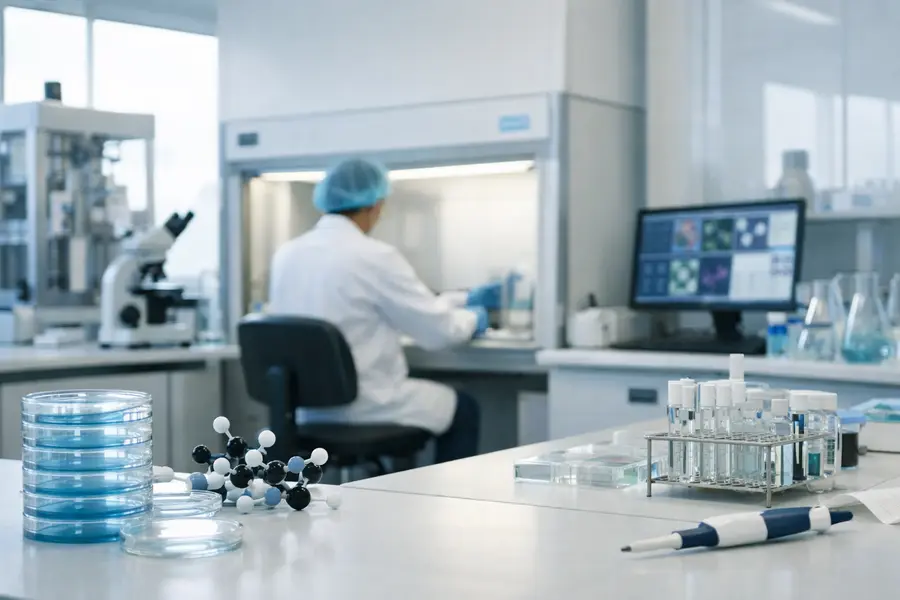
Toronto AI startup Biossil raised $70M from Founders Fund and OpenAI to revive shelved drug candidates, emerging from stealth with a nine-figure valuation after three years of quiet development.
- Biossil's $43M latest round, co-led by Founders Fund and OpenAI, closed April 21, 2026, bringing total equity raised to $70M.
- The company holds 10 repurposed drug candidates, two in advanced clinical trials and three approaching regulatory submission.
- Valuation exceeds $100M; exact figure undisclosed.
Lead
Toronto-based Biossil surfaced from three years of stealth operations in April 2026, disclosing $70 million in total equity funding and a portfolio of 10 drug candidates built entirely from discarded pharmaceutical compounds. The most recent tranche - a $43 million round co-led by Founders Fund and OpenAI - closed April 21 and pushed the company's valuation into nine-figure territory. Two drugs are in advanced clinical trials. Three more are nearing regulatory submission. The company has roughly 30 employees split across offices in Toronto and Boston.
What Does Biossil's AI Actually Do?
The platform maps failed drug compounds to new patient populations rather than developing new molecules. Biossil's system converts textual descriptions of drug attributes into numerical vectors, then compares those vectors against genetic data tied to specific diseases. Where distances are close, the algorithm flags a potential therapeutic match. The central premise is that many late-stage clinical failures were not caused by a flawed molecule - they reflected patient cohorts too heterogeneous to produce a clean efficacy signal.
Biossil licenses or acquires candidates directly from original developers, bypassing years of preclinical research and avoiding the hundreds of millions in costs typically required to advance a compound through early-stage trials. Its current pipeline covers sickle cell disease, idiopathic pulmonary fibrosis, glioblastoma, breast cancer, and Alzheimer's disease, with trials for nearly a dozen additional indications planned.
The Founders
Co-founder Anthony Mouchantaf spent years heading Royal Bank of Canada's venture capital investment arm before moving into biotech. His partner, Dr. Alexander Mosa, trained as an internal medicine specialist before leaving clinical practice to start the company. The pairing - financial operator alongside physician-scientist - mirrors the founding structure of several AI drug discovery platforms that have drawn institutional capital over the past three years.
Both founders are University of Toronto alumni, connecting Biossil to a cluster of computational biology programs that have produced credible early-stage drug discovery tools since at least 2020.
Why Is Pharma's Discard Pile an Attractive Asset?
Fewer than 10 percent of compounds entering clinical trials ever reach market approval. Late-stage failures - those clearing Phase I and II before collapsing in Phase III - represent the most expensive write-offs in pharmaceutical development. For Biossil, those failures function as off-price inventory with established safety profiles and documented human data already attached.
Founders Fund led Biossil's $22 million round in 2024, then returned to co-lead the April 2026 close alongside OpenAI. Earlier backers include Staircase Ventures, Golden Ventures, and Panache Ventures, which combined for a $3.7 million seed in 2023. The investor roster's consistency across three rounds suggests Biossil has cleared internal milestones rather than benefiting purely from favorable sentiment toward AI-adjacent biotech.
How Does Biossil Stack Up Against AI Drug Discovery Peers?
Drug repurposing as a deliberate venture category gained traction around 2023, when AI biology companies began publishing results from earlier-generation models. Biossil's use of large language models - processing clinical and genetic text rather than structural biology data from protein-folding simulations - is a meaningful technical distinction from better-funded competitors. Its $70 million total at a nine-figure valuation is modest relative to peers that have raised nine figures in single rounds, but the company is earlier-stage and operates on a narrower, more tractable thesis: find the right patient for the right shelved drug.
OpenAI's participation goes beyond capital. The company's models underpin Biossil's platform, making the investment partly strategic. For OpenAI, backing applied science companies that depend on its infrastructure extends its footprint into regulated industries where model switching costs are high.
Outlook
Biossil's near-term priorities are regulatory submissions for three pipeline candidates and continued enrollment in two ongoing advanced trials. The company has not disclosed a timeline for commercialization or potential partnerships with large pharmaceutical manufacturers holding the original compound rights. Whether AI-guided patient stratification can consistently rescue late-stage failures remains an open empirical question. Biossil's pipeline is the test. The next meaningful signal will come from clinical data, not another fundraise.