Pomegra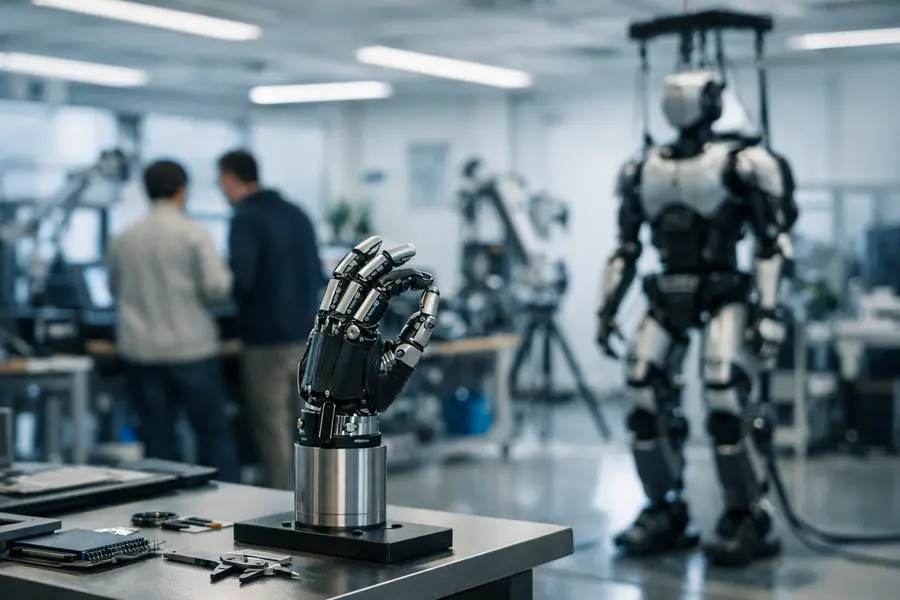
Algomatic Dynamics raised ¥5 billion from DMM.com on September 9, 2026, to build AI dexterous hands, motion-data infrastructure, and bipedal locomotion control technology for broad robot deployment in Japan.
Key Takeaways
- DMM.com backed Algomatic Dynamics with ¥5 billion (~$33 million) in the company's first institutional financing, announced September 9, 2026.
- The company is targeting physical AI infrastructure - dexterous robotic hands, motion-data collection, bipedal locomotion - deployable across multiple robot platforms and industries.
- An AI multi-finger hand platform is planned for domestic release before the end of 2026.
Lead
Algomatic Dynamics, a Tokyo-based physical AI startup, closed a ¥5 billion (~$33 million) first institutional round on September 9, 2026, with DMM.com as the sole backer. The company, led by CEO Yuki Nanri, emerged from a June 2026 restructuring of DMM Group's AI venture Algomatic into three distinct entities. Algomatic Dynamics is the robotics arm of that split, and the ¥5 billion is its first dedicated capitalization as a standalone company.
What Is Algomatic Dynamics Building?
The company is not building a single humanoid robot. Its mission - "bringing smoothness to every robot" - targets the infrastructure layer that makes robots useful in unstructured environments. That means three interconnected bets: AI-enabled multi-finger robotic hands, motion-data collection systems that capture and encode human dexterity, and control software for bipedal locomotion.
The distinction matters. Most robot startups race to ship a complete platform. Algomatic Dynamics is positioning its technology as deployable across multiple robot bodies and use cases, selling the layer beneath the hardware rather than the hardware itself. Its AI multi-finger hand platform is the nearest-term product, with a domestic Japan release targeted before year-end 2026.
Funds will go toward hardware investment for R&D, computing resources, and formal partnerships with corporations and research institutions. The company has not disclosed headcount targets or commercial pricing.
Why Is DMM.com the Only Investor?
DMM.com, the Japanese internet conglomerate, is not a passive financial backer here. It is the direct corporate parent of the Algomatic family of companies. The ¥5 billion round is structured as a third-party allotment with DMM.com as the underwriting entity - meaning this is strategic capital from a controlling shareholder rather than external venture money. No co-investors are listed.
That structure carries a trade-off. The company gets a clean capital table and a connected corporate patron with interests in logistics, entertainment, gaming, and services - all industries where dexterous robotics could eventually apply. What it does not get is independent validation from outside investors. The absence of arms-length VCs means the market has not yet put a price on Algomatic Dynamics that outside parties would endorse.
What Does This Signal for Japan's Physical AI Race?
Japan's physical AI sector is competing on two fronts simultaneously. Domestically, chronic labor shortages across manufacturing, logistics, and healthcare create strong demand for robots capable of handling real-world variability. Internationally, Chinese humanoid companies have moved fast on hardware volume, while U.S. firms such as Figure and Physical Intelligence have attracted multi-hundred-million-dollar rounds.
Algomatic Dynamics enters with a narrower, potentially more defensible position. Dexterous hands and motion-data systems are genuinely hard engineering problems. The ability to collect and encode nuanced human motion - the kind of know-how that resists explicit programming - is one of the central technical bets in physical AI. If Algomatic Dynamics can build that data flywheel, the value accrues across every robotic platform that licenses the hands or the control stack, not just a single product line.
Japan's robotics heritage also provides advantages. Deep manufacturing networks, established relationships with automation users in automotive and electronics, and decades of institutionalized robotics expertise give a local physical AI startup structural advantages that software-only competitors lack.
Outlook
Algomatic Dynamics faces the standard pressures of deep-tech hardware startups - long development cycles, capital-intensive prototyping, and a product roadmap where the first milestone (a multi-finger hand platform by end of 2026) still needs to be hit. The DMM.com anchor provides runway and corporate infrastructure, but also limits the market signal until outside investors weigh in. The company's infrastructure-first positioning, if it holds, could make it a supplier to the broader robotics industry rather than a single-platform competitor - a structurally different business with a different risk profile. How quickly it can put working hardware into real industrial environments will determine whether ¥5 billion is a foundation or a floor.