Pomegra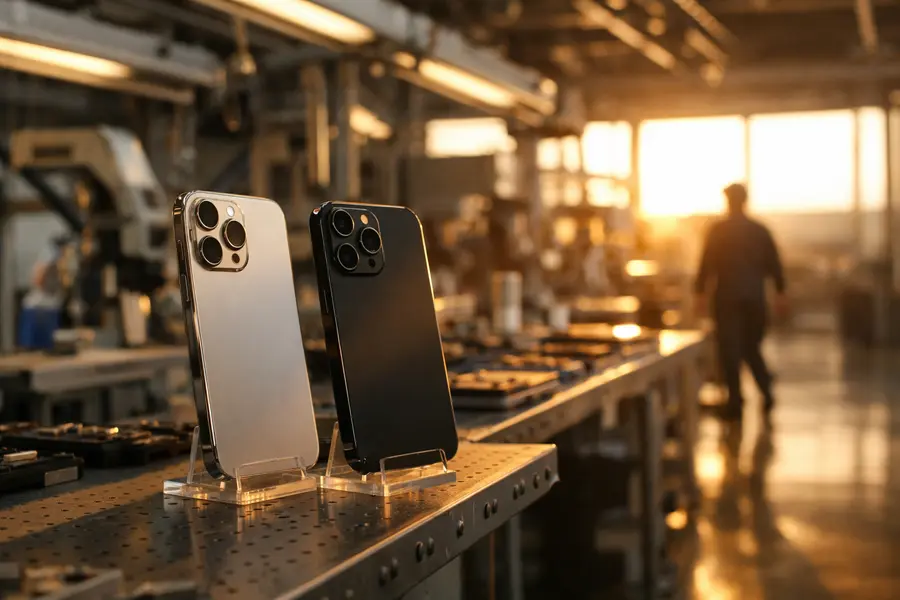
Apple's first foldable iPhone debuts alongside a $100 Pro price hike, but AAPL shares fell as investors flagged that Samsung display costs will undercut the premium-cycle earnings lift.
- Apple launched the iPhone Duo at $1,999, its highest-priced iPhone ever, marking its entry into the global foldable smartphone segment.
- The iPhone 18 Pro received a $100 base price increase, signaling Apple's continued push toward hardware premiumization.
- AAPL shares fell as investors determined that sourcing foldable displays from Samsung would compress gross margins and dilute the upgrade-cycle tailwind.
Lead
Apple (AAPL) introduced the iPhone Duo - its first foldable handset - at a starting price of $1,999 while raising the iPhone 18 Pro by $100, completing the company's most aggressive dual-tier pricing move in years. The product announcements failed to lift shares. Investors focused instead on the cost implications of Apple's reliance on Samsung for the flexible OLED display panels central to the iPhone Duo's design, a supply arrangement that analysts view as a structural drag on the margin profile typically associated with new iPhone cycles.Why Did AAPL Shares Fall After the iPhone Duo Launch?
The selloff reflects investor concern over input cost economics, not demand. Foldable display panels sourced from Samsung's display division carry production costs estimated at two to three times those of the conventional glass screens used in standard iPhone Pro models. Because Apple developed the iPhone Duo's display technology externally rather than through its own supply chain, the company cedes the cost control that has historically underpinned its industry-leading gross margins, which have held above 40% in recent iPhone cycles.
The iPhone 18 Pro price increase was broadly anticipated and carries a straightforward revenue-per-unit benefit. The market's muted response to that hike signals that investors view incremental Pro pricing gains as insufficient to offset the embedded cost disadvantage in the Duo's Samsung-supplied hardware stack.
Will Samsung's Display Supply Crush Apple's Foldable Margins?
The iPhone Duo's supply chain structure is the defining financial variable for near-term AAPL performance. Flexible OLED panels require precision manufacturing infrastructure that Samsung Display has spent years building, giving it both scale and pricing leverage. Apple, entering the foldable category without a proprietary flexible display solution, faces a supplier dynamic unlike any it has navigated with standard iPhone components.
At a $1,999 retail price, the iPhone Duo positions itself above Samsung's Galaxy Z Fold series and targets a luxury-tier buyer willing to pay for Apple's ecosystem and industrial design. Whether that price premium can absorb Samsung's display margin take, hinge mechanism costs, and elevated warranty reserves for a first-generation foldable form factor remains the central unknown heading into the product's commercial launch.
How to Buy Apple Stock
AAPL is listed on the Nasdaq and is a top holding in broad market index funds including the SPDR S&P 500 ETF Trust (SPY) and the Vanguard S&P 500 ETF (VOO), making it accessible to investors through index exposure as well as direct share purchases on major brokerage platforms. The stock's near-term trajectory is likely to track iPhone Duo sell-through data and Apple's gross margin guidance at its next earnings event.
Strategic Context
Apple's entry into foldables is a significant category expansion regardless of first-cycle margin dynamics. The global foldable smartphone market has grown consistently since Samsung introduced the format, and Apple's participation is expected to accelerate mainstream adoption by drawing iOS users who had not previously considered a foldable device. The iPhone 18 Pro price increase, meanwhile, extends Apple's years-long strategy of raising average selling prices to sustain revenue growth even as unit replacement cycles lengthen.
The intersection of both moves - a $1,999 flagship and a $100 Pro hike - tests whether Apple's brand commands sufficient pricing power to manage higher input costs without demand destruction. Consumer electronics spending has shown modest recovery from two years of post-pandemic normalization, though sustained replacement rates at elevated price points remain uncertain.
Outlook
Apple's near-term margin trajectory will be shaped by the commercial performance of the iPhone Duo and the pace at which the company can negotiate display procurement costs or develop alternative supply. The iPhone 18 Pro's price increase provides a reliable per-unit revenue gain but does not resolve the structural question at the center of the AAPL selloff. Institutional investors will look to Apple's next earnings call for gross margin guidance and any indication of progress toward alternative foldable display sourcing. Until those answers emerge, the iPhone Duo represents both Apple's boldest product bet in a decade and its most consequential supply chain risk.