Pomegra
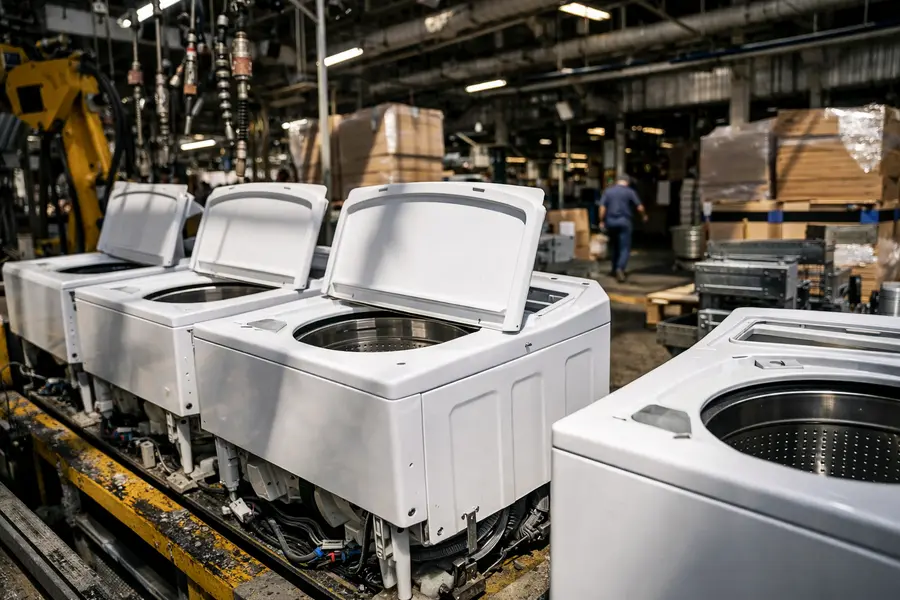
Whirlpool shares tumbled after hours as a Q3 2026 loss, a revenue miss and a third 2026 guidance cut pointed to a full-year loss on weak appliance demand.
- Whirlpool posted a Q3 adjusted loss of $0.21 a share on sales of $3.68 billion, down 8.8%.
- Full-year ongoing EPS guidance fell to a loss of about $1.30, the third reduction of 2026.
- Shares fell between roughly 9% and 15% in extended trading, adding to a year-to-date slide of more than 60%.
Lead
Whirlpool Corp. (NYSE: WHR) reported a third-quarter loss and a revenue shortfall on Monday and lowered its 2026 outlook for the third time this year. Shares dropped sharply in after-hours trading, with extended-session quotes ranging from high single digits to as much as 15%. Net sales fell 8.8% from a year earlier to $3.68 billion. The consensus was about $3.9 billion. Ongoing earnings were a loss of $0.21 per share against a consensus profit of about $1.00. The stock had already closed about 5% lower in the regular session.What Did Whirlpool Report for the Third Quarter?
Whirlpool reported a GAAP net loss of $249 million, or $3.80 per diluted share, compared with a profit of $1.29 per share a year earlier. Ongoing EPS, which strips out one-time items, swung to a loss of $0.21 from a profit of $2.09. Ongoing EBIT margin narrowed to 2.6% from 4.5%.
GAAP results carried several charges:
- A $124 million impairment on the company's equity investment in Whirlpool India.
- A $54 million charge tied to the bankruptcy reorganization of Brazilian retailer Grupo Casas Bahia, a major trade customer.
- $35 million of restructuring costs.
The company declared no common dividend for the quarter, against $0.90 a share in the prior-year period.
Why Did Whirlpool Miss Estimates?
Soft industry demand in North America drove the miss, compounded by cost pressure and the Brazilian customer bankruptcy. The North America major domestic appliance segment, the company's largest, posted sales of $2.50 billion, down 8.3%. Segment EBIT margin fell to 3.0% from 4.9%, and operating profit dropped about 45% to $74 million.
Latin America was the only major region to grow sales, up 6.9% to $858 million. Its EBIT margin slid to 2.0% from 5.7%, and operating profit fell about 61% to $18 million. The small domestic appliance unit, SDA Global, held sales nearly flat at $286 million and improved its margin to 18.6% from 16.5%. It was the one segment to expand profitability.Chief executive Marc Bitzer said structural cost reductions and pricing realization produced consecutive margin progress through the quarter. Those gains were not enough to offset lower volumes.
How Far Has Whirlpool's 2026 Outlook Fallen?
The company now expects full-year ongoing EPS of about negative $1.30. That compares with a range of $2.50 to $3.00 before this revision and roughly $7.00 in its January guidance. GAAP EPS is projected at about negative $4.95. The update also trims net sales guidance to about $14.5 billion.
Cash flow guidance centers on about $700 million of operating cash flow and about $300 million of free cash flow. Management lowered its year-end net debt target to below $4.5 billion from below $5.0 billion, which signals a focus on the balance sheet over shareholder returns.
To offset volume weakness, Whirlpool plans fourth-quarter price increases of about 7% in North America and up to 10% in Latin America. Higher prices can support margins, but they carry the risk of further demand erosion in a category where consumers already defer big-ticket purchases.
Market Reaction
Whirlpool had shed about 5% during Monday's regular session before the report. Extended trading deepened the move. Some quotes showed a decline near 8% to 9%, while others showed a fall of as much as 15% to around $24. Premarket trading Tuesday touched a new 52-week low near $25.73. The stock is down more than 60% so far in 2026.
The scale of the guidance cut explains the reaction. The new ongoing EPS outlook sits far below the profit the market had been modeling for the year. It also marks a reversal from the earnings expansion the company projected at the start of 2026.
Strategic Context
Appliance demand tracks housing turnover, remodeling activity and consumer confidence, and all three have been weak. Higher input costs and inflation have added pressure on a business with a large fixed manufacturing base. The Casas Bahia reorganization shows how exposed the Latin American business is to the credit quality of a few large retail customers. It also contributed to deeply negative free cash flow in the quarter.
Management's response has centered on cost take-out, price increases and balance-sheet repair. The company is also working through portfolio actions, such as the impairment on its India investment.
What Comes Next for Whirlpool?
The fourth quarter is the test of whether pricing and cost actions can stabilize margins without a further drop in volumes. The guidance implies a continued loss on an ongoing basis. Investors will watch North American industry shipments, the effect of the price increases, and the pace of cash generation against the $300 million free cash flow target. A fourth guidance change would extend a year in which the outlook has been revised down at every quarterly report.
Outlook
Whirlpool enters the final quarter of 2026 with a full-year ongoing loss of about $1.30 per share, no common dividend this quarter and net debt targeted below $4.5 billion. Margin improvement in a weak demand backdrop is the central issue for the stock heading into 2027.
Mentioned tickers: WHR