Pomegra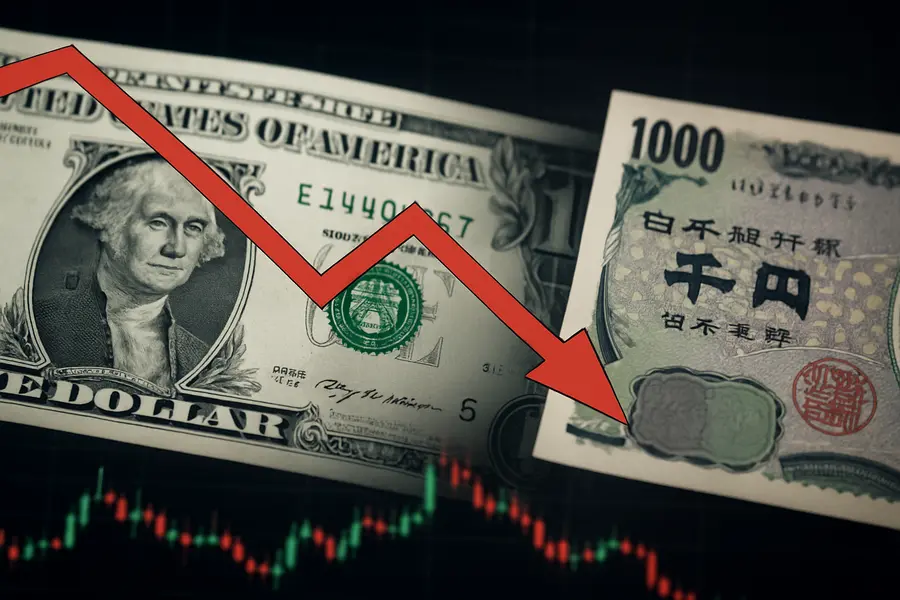
The Japanese yen slid to its weakest level since 1986 on Monday, pushing USD/JPY past 162 and placing global forex markets on high alert as Tokyo weighs its next move.
- USD/JPY touched 162.41 on June 30, 2026 — the yen's lowest close against the dollar since 1986.
- Japan has deployed over ¥11 trillion in yen-buying intervention since late April, with limited lasting effect.
- The U.S.–Japan rate gap of roughly 300 basis points continues to be the primary structural driver of yen weakness.
Lead
The Japanese yen fell to a four-decade nadir on Tuesday, June 30, 2026, printing 162.41 per U.S. dollar during the Asian session — its weakest level since 1986. Verbal warnings from Finance Minister Katayama and Chief Cabinet Secretary Kihara failed to arrest the slide, underscoring the limits of jawboning against an entrenched interest-rate differential. The U.S. Dollar Index (DXY) stood at 101.32, up 0.20% on the session and 4.65% over the prior twelve months, reflecting broad US dollar strength driven by the Federal Reserve's hawkish pivot and an energy-driven inflation shock.
What Happened
USD/JPY has appreciated 12.61% over the past year, a move that accelerated sharply in June as the Fed held its benchmark rate at 3.50%–3.75% and signaled additional tightening ahead. U.S. headline CPI reached 4.2% in May 2026 — the highest reading since April 2023 — with energy prices up more than 23% year-on-year following disruptions tied to Middle East tensions. That inflation picture strengthened the case for the Fed to keep rates elevated, cementing the dollar's yield advantage.On the Japanese side, the Bank of Japan lifted its policy rate to approximately 1% in mid-June — the highest level since 1995 — yet that move was insufficient to close the yield gap. With U.S. short rates more than 250–300 basis points above Japan's, global carry traders continue to borrow yen cheaply and invest in higher-yielding dollar assets, a structural flow that systematically pressures the currency lower.
Intervention Watch
Yen intervention watch in 2026 has been a fixture of global forex market commentary since April, when Tokyo executed its first yen-buying operation since July 2024. Between April 28 and May 27, the Ministry of Finance deployed an estimated ¥11.7 trillion in the spot market — a record pace — yet USD/JPY retraced all of those gains within weeks. Markets now treat each intervention as a temporary dislocation rather than a trend reversal.The mechanics explain the skepticism. Currency intervention can compress a move in the short term but cannot sustainably override the rate differential that creates structural selling pressure. So long as the Federal Reserve signals higher-for-longer policy and the BOJ moves cautiously, capital will continue to flow toward dollar-denominated assets. Japan's foreign reserves, while substantial, are finite, and repeated, ineffective deployments risk exhausting both the financial ammunition and the market's behavioral response to intervention threats.
Officials have kept the door open to further action. Finance Minister Katayama described intervention as a legitimate tool to counter "speculative and disorderly" moves, language that historically precedes or coincides with actual market operations.
Market Reaction
Forex market trends on June 30 showed the yen as the worst-performing G10 currency for the session. The DXY briefly touched a 14-month high of 101.8 on June 24 before easing modestly as some Fed-hike bets were trimmed. Japanese government bond yields edged higher in Tokyo trading, reflecting the BOJ's incremental tightening path, but the move was not enough to attract material yen buying. Equity markets in Tokyo absorbed the currency move with relative composure; exporters, for whom a weaker yen typically boosts overseas earnings when repatriated, saw selective strength.Strategic Context
Japan imports roughly 90% of its oil, predominantly from the Middle East. At current USD/JPY levels, elevated crude prices translate into a compounding energy shock: the commodity costs more in global markets and more again when converted to yen. That dynamic erodes corporate margins for energy-intensive industries and squeezes household purchasing power, complicating the BOJ's otherwise-improving domestic demand picture.
The structural tension is acute. The BOJ is tightening — gradually — while simultaneously watching a currency depreciation that risks importing inflation well above its 2% target. The Ministry of Finance, for its part, controls the intervention tool but not the monetary policy lever that would address root causes. The resulting policy split leaves the yen exposed.
Geopolitical Dimension
US dollar strength in 2026 has been amplified by its safe-haven status. Elevated geopolitical risk in the Middle East, which has kept Brent crude near multi-year highs, has reinforced capital flows into dollar-denominated assets — Treasuries in particular — at the expense of higher-risk or lower-yielding currencies. The yen, paradoxically, retains its own safe-haven reputation in crisis scenarios, but that quality has been overwhelmed this cycle by the carry-trade dynamic and the domestic rate gap.What Comes Next
The BOJ's next policy decision is scheduled for July 31. Markets will scrutinize any guidance on the pace of further rate increases. A rate hike exceeding consensus expectations could offer temporary relief to the yen, though analysts widely note that a single 25-basis-point move would not materially close the differential with the Fed. The Fed's September meeting is the next focal point for U.S. policy, with futures markets assigning elevated probability to an additional hike.
Tokyo's intervention calculus grows more complex with each successive deployment that fails to hold. A coordinated intervention — ideally with U.S. Treasury endorsement — would carry greater market impact, but Washington has shown little appetite for direct currency cooperation amid its own inflation fight.
Outlook
The USD JPY 40-year low reached on June 30 crystallizes a cycle that has been building for over a year: divergent monetary policy, energy-driven inflation, and an asymmetric carry trade favoring the dollar. Japan's authorities have demonstrated both the willingness and the financial capacity to intervene, but without a meaningful narrowing of the U.S.–Japan rate differential, each operation is likely to offer only transient support. Yen intervention watch 2026 will remain active through the summer, with the July 31 BOJ decision and the September Fed meeting serving as the most consequential near-term catalysts for any sustained directional shift in forex market trends.