Pomegra
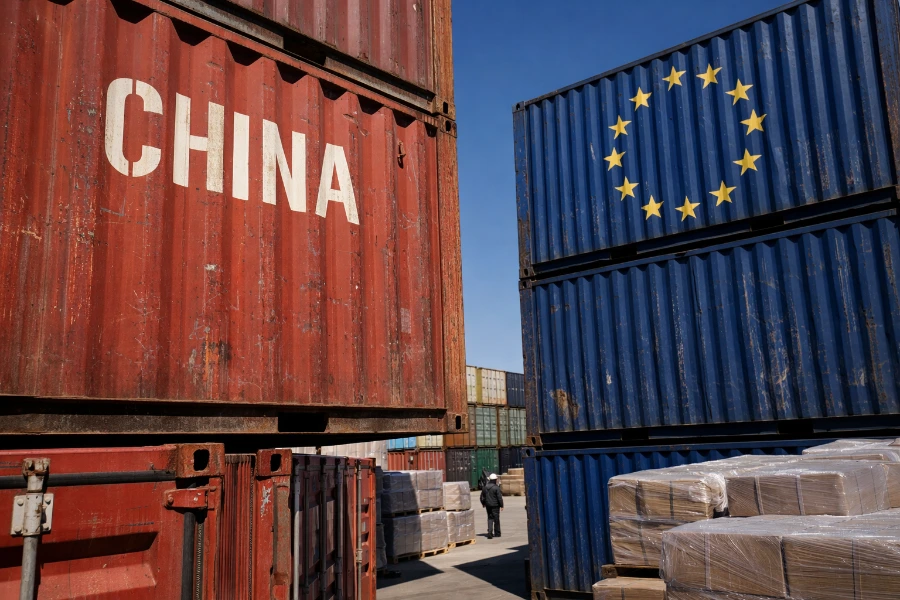
The US proposed Section 301 tariffs of up to 20% on China, the EU and 12 other economies, with China and Vietnam highest and earliest start in January 2027.
- USTR proposed new tariffs on 14 economies over industrial overcapacity, with China and Vietnam at the top at 20%.
- China's rate rises to 40% and Vietnam's to 35% if trade talks fail; the EU is held near its 15% cap.
- Comments close January 5, 2027, hearings begin January 25, and the earliest start is January.
Lead
The Trump administration on Wednesday, November 25, proposed new tariffs of up to 20% on China, the European Union and 12 other trading partners. The move is meant to replace the broad duties the Supreme Court struck down in February 2026. The US Trade Representative determined that the 14 economies run "structural excess capacity" in manufacturing that burdens US commerce. It proposed economy-specific tariffs on nearly all of their goods under Section 301 of the Trade Act of 1974. The administration expects the earliest start to be January 2027.
What Did the Trump Administration Propose?
The proposal sets country-specific rates, with China and Vietnam at the top of the range at 20%. Those rates are tied to trade-deal outcomes.
- China: 20%, rising to 40% if negotiations fail ahead of the January 10, 2027 expiry of the current trade truce. The rate is added to the 2018 Section 301 duties but not to the forced-labor tariffs imposed in July 2026.
- Vietnam: 20% with a deal, 35% without.
- European Union: 15% base, with a higher alternative rate of 20%.
- Japan, South Korea, Switzerland and Taiwan: about 15% base, reflecting earlier agreements with Washington.
- Cambodia, Indonesia, Malaysia, Thailand and Bangladesh: 18% to 20% base.
- India: 25%, or 17% with a deal.
- Singapore: 20%, or 10% with a deal.
Investigations into Mexico and Norway remain pending. A separate Brazil proposal replaces the 25% sugar tariff with specific per-kilogram duties and adds a 10% tariff on regional aircraft.
Which Goods Are Exempt?
Exemptions cover goods already hit by Section 232 duties: steel, aluminum, copper derivatives, vehicles, wood, pharmaceuticals and semiconductors. Most agricultural products, ores, energy and precious metals are also excluded. China's notice differs. Its Annex A products face a 10% tariff rather than an exemption, and only the "30-for-30" list of consumer goods is fully exempt.
Why Did US Stocks Swing on the Tariff News?
US equities swung sharply because futures priced a broad tariff shock. Cash markets then recovered most of the early losses. S&P 500 futures fell 2.1% and Nasdaq 100 futures fell 3.2%. The Nasdaq Composite dropped more than 4% in early trading before closing down 0.6%. The S&P 500 ended down 0.25%, and the Dow Jones Industrial Average gained 0.3%.
Technology stocks took the brunt of the selling. Nvidia (NVDA) fell 2.68% and Micron Technology (MU) fell 2.35%. Gold dropped more than 3% to its lowest level in over a year. The 10-year Treasury yield slid 6.8 basis points to 4.834%, a sign of demand for safer assets. The dollar edged higher.
The muted close reflects a consensus that the plan largely rebuilds the tariff structure the court removed rather than adding a new layer. Most proposed rates match earlier levels, and the deal-linked caps limit the near-term inflation effect.
How Have Governments Responded?
China and the EU have rejected the overcapacity premise. The Chinese foreign ministry called it a "false issue" and urged stable relations. The European Commission said Europe is among those most exposed to overcapacity, not a cause of it, and insisted that Washington honor the 15% ceiling in the 2025 joint statement. Switzerland also rejected the findings. Vietnam pledged to conclude its trade negotiations, and Norway welcomed the decision on its own investigation.
What Happens Next for the Tariff Timeline?
The timeline runs through a formal process. Public comments and hearing requests are due January 5, 2027. The US International Trade Commission begins public hearings in Washington on January 25. The notices do not set an effective date for final action. The US Trade Representative has said implementation is "a couple of months" away.
The key date for Beijing is January 10, when the trade truce expires. That makes the next several weeks a negotiating window, since the higher alternative rates for China, Vietnam and India work as leverage.
Outlook
The proposal restores a tariff framework of 15% to 20% on most major partners and uses the higher alternative rates to push deals. For markets, the near-term questions are whether the EU and Japan keep their 15% caps and whether China and Vietnam reach agreements before the January deadlines. Technology and semiconductor shares remain the most sensitive to the outcome.