Pomegra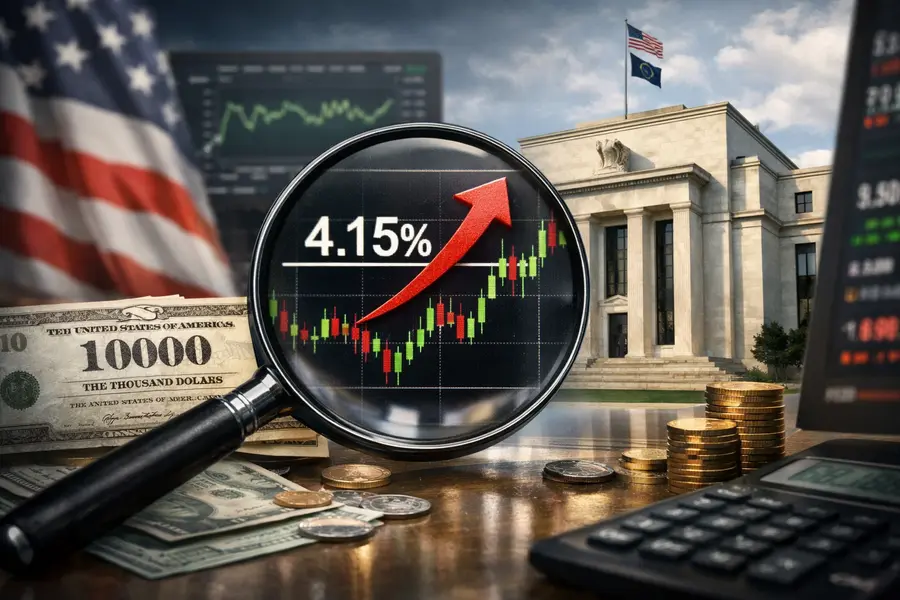
Softer-than-expected June inflation has revived expectations for Federal Reserve rate cuts, pulling Treasury yields off recent peaks and pointing the 10-year note toward the 4.15% range last seen in early 2026.
- June CPI printed at 3.5% year-over-year, below the 3.8% consensus, triggering a broad decline in Treasury yields.
- The 10-year Treasury yield has retreated toward 4.55% from peaks above 4.63%, with 4.15% emerging as the key downside target if Fed pivot bets deepen.
- The FOMC is widely expected to hold rates at 3.50%–3.75% at its July 29 meeting, but markets are increasingly pricing a cut by the fourth quarter.
Lead
WASHINGTON, July 22, 2026 — Softening U.S. inflation is reshaping the US bond market, pushing the benchmark 10-year Treasury yield off its recent 4.63% high as traders step up bets that the Federal Reserve is approaching a pivot. The Bureau of Labor Statistics reported on July 14 that the consumer price index rose 3.5% in June year-over-year — well below the 3.8% forecast — with core CPI, excluding food and energy, registering an unexpected 0% month-over-month reading. The data set off the biggest single-day Treasury rally in weeks, and market participants are now squarely focused on whether 4.15% can come back into view on the 10-year Treasury yield.What Happened
The June CPI report blindsided a market that had been bracing for inflation to stay stubbornly above 3.5%. Energy prices fell 0.4% on the month, carrying the headline index lower even as shelter and services costs remained elevated. Core CPI held at 2.6% on a 12-month basis — unchanged from May — signalling that underlying price pressure is finally plateauing.
The reaction in fixed income was immediate. The 10-year Treasury yield declined from 4.63% to 4.55% over the sessions following the release, while the 2-year note — the maturity most sensitive to near-term interest rate outlook — dropped more than 7 basis points to 4.185%. Treasury prices across the curve notched their first weekly advance in more than a month, led by the front end.
Market Reaction
Equity and credit markets welcomed the data, but the most decisive repricing happened in the rates complex. Futures traders rapidly reduced the implied probability of a Federal Reserve rate increase at or before the September meeting, with the probability of a July hike falling sharply after the print. As of July 21, roughly 83% of market participants expect the Fed to leave its benchmark rate unchanged at the July 29 FOMC meeting, according to CME FedWatch pricing — an outcome that requires no new drama to materialize.
What is shifting is the longer-dated narrative. The Fed pivot 2026 trade, largely priced out after inflation surprised to the upside in the spring, is being re-engaged. Futures now assign meaningful odds to at least one 25-basis-point cut before year-end, with the September and December meetings viewed as the most likely windows. If that sequence plays out, models from major fixed income desks place the 10-year Treasury yield in a 4.15%–4.25% band by December — a range that aligns with where the benchmark note traded as recently as February.
Strategic Context
The US bond market is caught between two competing forces. The disinflationary impulse from energy and goods is genuine: goods deflation has resumed, global shipping costs have moderated, and domestic demand has cooled modestly. Those dynamics support the bond bull case and underpin the growing Fed pivot 2026 narrative.
On the other side, geopolitical pressures are sustaining a risk premium in longer-dated Treasuries. Escalating U.S.–Iran tensions have pushed crude oil prices higher — a development that could interrupt the decline in energy's contribution to CPI as quickly as it began. The 10-year yield eclipsed 4.6% on July 21 partly because crude moved, and that dynamic has not resolved.
The Federal Reserve is threading a narrower needle than at any point this cycle. Fed funds remain at 3.50%–3.75%, and the central bank's June dot plot showed committee members split: some projecting one cut in 2026, others seeing rates unchanged, and a minority still penciling in a hike. The absence of an updated Summary of Economic Projections at the July 29 meeting means Chair Jerome Powell's press conference will carry outsized interpretive weight.
Interest Rate Outlook
The interest rate outlook for the remainder of 2026 hinges on three variables: the trajectory of core services inflation, labor market resilience, and the geopolitical oil-price pass-through. If core CPI remains near 2.6% year-over-year and the labor market continues to show gradual softening, the case for a September cut strengthens materially — and the 10-year Treasury yield has room to approach 4.15%.
Conversely, a rebound in energy prices or a fresh round of tariff-driven goods inflation could reopen the rate-hike debate and push the 10-year back above 4.75%. Year-end forecasts from major sell-side research desks cluster around 4.20%–4.25% for the 10-year on a base-case hold-then-cut scenario, with bear-case projections stretching to 4.75%–5.00% if the Fed is forced to tighten again.
The 2-year/10-year yield curve, which remains modestly inverted at around negative 37 basis points, will be closely watched as a barometer. A further steepening — driven by front-end yields falling faster than long-end — would confirm that the market has fully embraced the pivot thesis.
Outlook
The US bond market is at an inflection point. June's softer-than-expected CPI has meaningfully reinvigorated Fed pivot 2026 expectations and placed the 10-year Treasury yield on a path that could test 4.15% if the disinflationary trend holds and the Federal Reserve delivers at least one rate cut before December. The July 29 FOMC meeting will not produce a rate move, but Powell's guidance on the balance of risks — and whether the Fed views June CPI as a signal or a blip — will determine whether bond markets can sustain the current rally or give back recent gains. Near-term volatility around oil prices and geopolitical developments represents the primary risk to that scenario.
Mentioned tickers: TLT, IEF, SHY, TNX, BND, AGG