Pomegra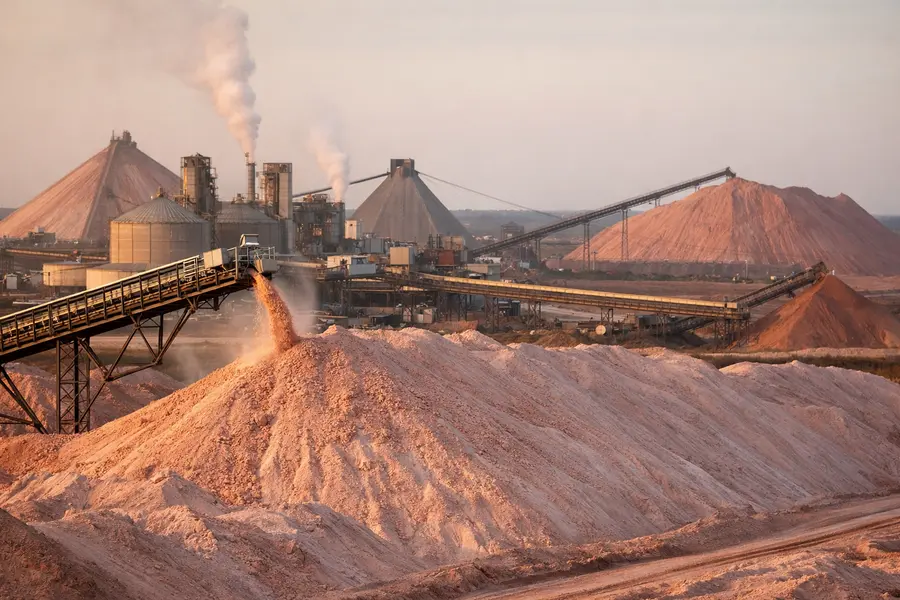
White House finalization of a below-market Belarusian potash purchase sent Nutrien down 4% and Mosaic over 2% lower as Lithuania vows to keep its Baltic ports closed to Belarusian cargo.
- The White House is finalizing a potash procurement deal with Belarus at prices well below current Canadian benchmark rates.
- Nutrien (NTR) fell 4% and Mosaic (MOS) dropped more than 2% on fears of structural market share erosion in North American fertilizer supply.
- Lithuania declared its ports will remain shut to Belarusian shipments, exposing a critical logistics gap in the deal's structure.
Lead
The White House confirmed Monday it is finalizing an agreement to purchase potash directly from Belarus at prices well below prevailing Canadian market rates, triggering an immediate selloff across North American fertilizer producers and raising urgent questions about sanctions compliance and viable export corridors. Nutrien (NTR), the world's largest potash producer by capacity, dropped 4% in New York trading, while Mosaic (MOS) shed more than 2%, as investors began pricing in the prospect of a structural realignment in global fertilizer supply chains - one that could permanently disadvantage Canadian producers in their own domestic market.
What Is the Belarus Potash Deal?
The agreement under negotiation would have the U.S. government procure potash from Belaruskali, the state-controlled Belarusian mining company that ranks among the world's three largest producers of the crop nutrient. The administration characterized the purchase as a cost-reduction measure for American agriculture, citing pricing differentials that could lower input costs for U.S. farmers. Belarus currently accounts for roughly 15 to 20% of global potash supply, and its output has historically traded at a discount to Canadian product - a gap widened further after Western sanctions imposed following President Alexander Lukashenko's post-2020 crackdown suppressed international demand and compressed Belarusian export pricing over the intervening years.
Why Did Fertilizer Stocks Sell Off So Sharply?
The market reaction reflects fear that a U.S. government-backed purchase agreement normalizes Belarusian potash as a legitimate supply source for American agriculture at the direct expense of Canadian producers. Nutrien, headquartered in Saskatoon, Saskatchewan, derives significant revenue through its Canpotex export consortium with Mosaic, which jointly markets Canadian potash across global markets including the United States. Any erosion of that domestic pipeline - even through a single government procurement contract - threatens the pricing power and volume assumptions embedded in current earnings models for both companies. The 4% drop in NTR reflects not only near-term revenue risk but also concern that an official U.S. government imprimatur could prompt other commercial buyers to re-evaluate Belarusian supply as a long-term alternative, compounding the structural threat beyond the immediate deal.
The Lithuania Problem: Can Belarusian Potash Actually Reach U.S. Ports?
Lithuania's declaration that its Baltic ports - specifically Klaipeda, historically the primary export terminal for Belarusian potash before Vilnius banned transit in February 2022 - will remain closed to Belarusian cargo exposes a critical logistical fault line in the deal's structure. Belarus is landlocked, and its traditional export corridors through Lithuania have been severed for years. Alternative shipping routes exist but carry substantially higher costs and compounding geopolitical complications: rail transit through Russia to Baltic or Pacific terminals, or overland routing through other regional hubs. Each pathway introduces friction that could narrow or eliminate the price advantage the administration cited as justification for pursuing the deal in the first place.
Who Bears the Sanctions and Logistics Risk?
The White House has not publicly specified which party - the U.S. government, Belaruskali, or a third-party intermediary - assumes responsibility for arranging compliant shipping. European Union sanctions on Belarusian potash exports, which remain in force, constrain the range of vessels, port operators, and cargo insurers that can legally handle the material without exposure to secondary sanctions risk. Belaruskali's continued presence on U.S. Treasury designations further complicates the transaction, requiring either a bespoke sanctions carve-out from the Office of Foreign Assets Control or a complex legal workaround that could invite significant congressional scrutiny.
Geopolitical Dimension
The deal represents one of the most direct U.S. economic engagements with a sanctioned Lukashenko-era entity since Belarus entered broad Western isolation after 2020. The administration's framing - domestic agricultural cost relief - sidesteps the strategic signal it sends: that Washington is willing to extend economic relief to Minsk on a flagship export commodity at a moment when Belarus remains a close military and logistical partner of Moscow. NATO's eastern flank members, particularly the Baltic states, have maintained a coordinated Western economic posture toward Belarus as leverage against both Lukashenko and Russia. Lithuania's immediate and public rejection of any port facilitation role signals that European allies regard the deal as a breach of that collective approach, adding diplomatic friction to an already complex transaction.
Outlook
The fertilizer sector faces sustained uncertainty while the deal's legal architecture, logistics pathway, sanctions status, and purchase volume remain undefined. Nutrien and Mosaic are likely to address the development in near-term investor communications, with analysts expected to press for clarity on competitive implications and any market-share assumptions requiring revision. The pivotal variable is whether the administration pursues a formal OFAC sanctions carve-out for Belaruskali - a step with sweeping implications well beyond the potash market - or allows the deal to stall under the weight of its own logistical and legal complexity. Until that determination is made public, both NTR and MOS carry elevated headline risk.