Pomegra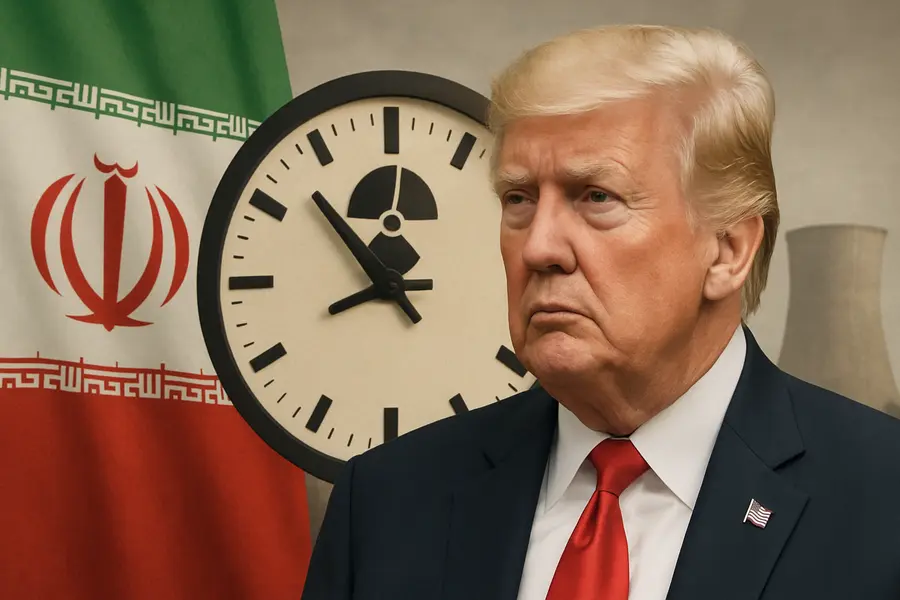
A 60-day roadmap signed on June 17 is already under strain as Iran blocks UN inspectors from enrichment sites and an IRGC drone strikes a cargo ship in the Strait of Hormuz, testing the ceasefire's durability.
- Trump warns he will do "what I have to do" if Iran fails to honor the Islamabad Memorandum's 60-day framework
- IAEA Director General says nuclear-site inspections "going to happen" despite Tehran insisting access comes only after a final accord
- An Iranian drone struck a Singapore-flagged cargo ship in the Strait of Hormuz on Thursday, rattling the fragile ceasefire
Lead
President Donald Trump issued a pointed warning to Tehran on Thursday that Washington will act militarily if Iran fails to honor the 60-day nuclear roadmap both sides signed on June 17, even as an Iranian drone attack on a Singapore-flagged cargo vessel in the Strait of Hormuz and fresh IRGC orders for three oil tankers to reverse course underscored how precarious the truce remains. The confrontation marks the sharpest test yet of the Islamabad Memorandum, which Trump signed alongside French President Emmanuel Macron at the Palace of Versailles following the G7 summit, with Iranian President Masoud Pezeshkian countersigning from Tehran.
What Happened
The immediate flashpoint on June 26 was dual: an Islamic Revolutionary Guard Corps drone disabled a cargo ship operating under a Singapore flag in the Strait of Hormuz, and the IRGC separately compelled three foreign oil tankers to abort transit, citing unresolved "security protocols." Both actions occurred within the 60-day window established under the Islamabad Memorandum and directly contradict the accord's terms for unhindered commercial navigation.
Trump, speaking Thursday, declared the armada of U.S. naval vessels positioned in the Persian Gulf is ready for "violence" should Tehran continue to undercut the agreement. "Time is running out," the president said, echoing language he deployed in February 2026 when he first set a 10-to-15-day ultimatum that, after lapsing without a deal, triggered the 2026 Iran war.
The United States and Iran concluded their most recent round of face-to-face negotiations at Switzerland's Bürgenstock resort on June 21–22, with mediators Qatar and Pakistan confirming the two sides had formalized a roadmap covering nuclear verification, sanctions relief, and the final status of the Strait of Hormuz. Technical working groups on nuclear stockpiles, sanctions, and security were established. Trump downplayed the 60-day window as a "not hard" deadline, but his Thursday statement reversed that tone sharply.
Nuclear Verification Standoff
The central sticking point in Iran nuclear deal 2026 negotiations is physical access to enrichment facilities. Since Israel's 12-day air campaign in 2025 destroyed Iran's three principal enrichment sites, the IAEA has been barred from those locations. Without access, the agency cannot verify the status of Iran's stockpile, which Western governments estimate contains enough highly enriched uranium to potentially arm as many as 10 nuclear devices.
IAEA Director General Rafael Grossi stated Wednesday that inspectors will visit Iranian enrichment sites under the terms of the Islamabad Memorandum. "This is going to happen," Grossi said, adding only timing remained under discussion. Tehran's foreign ministry issued a counter-statement the same day insisting no IAEA access will be granted until a comprehensive Iran nuclear deal is finalized — a sequencing dispute that could stall talks for weeks.
Vice President JD Vance, who has led the U.S. technical delegation, called Iran's tentative agreement to host IAEA inspectors a "major milestone," noting the agency expects to send personnel "this week." The divergence between Vance's public optimism and Tehran's formal position illustrates the gap separating a ceasefire framework from a binding accord.
Strategic Context and US-Iran Relations
The Tehran tensions that shadow current negotiations trace back to a structural failure in early 2026: the original 60-day deadline Trump set in spring 2025 expired without agreement, enabling Israel to launch military strikes that drew the United States in. The subsequent conflict pushed Brent crude from the mid-$60s to a peak near $99.58 per barrel in late May 2026, when Iran threatened retaliation against U.S. bases. Prices receded to $87.33 by mid-June on initial deal optimism, fell further to $83.17 after the Islamabad Memorandum was signed, and settled at $77.90 after the U.S. Treasury authorized limited Iranian crude sales — still roughly 20% above pre-war levels.
The economic leverage embedded in US-Iran relations extends beyond oil. Trump on Thursday offered U.S. agricultural commodities as a goodwill gesture, a move calibrated to appeal to Iran's civilian population facing food-import strains under the partial blockade. The U.S. naval cordon — which Trump threatened to extend to Venezuelan oil shipments earlier in the standoff — remains in place pending a final agreement.
Geopolitical Dimension
The drone attack and tanker interdictions signal that hardline elements within the IRGC retain the ability to disrupt negotiations independent of signals from Iran's presidency. The Islamabad Memorandum was negotiated primarily through diplomatic back-channels in Switzerland, with Pakistan and Qatar serving as intermediaries. The IRGC's Thursday actions suggest institutional actors in Tehran not party to those conversations are prepared to test the accord's limits.
For global shipping markets, the Strait of Hormuz remains the critical node: roughly 20% of seaborne oil and 25% of global liquefied natural gas transits the waterway. Any re-closure or sustained harassment campaign would immediately reverse the commodity-price relief that followed the June ceasefire announcement, with cascading effects on European energy costs and Asian manufacturing supply chains.
The Trump Iran warning also carries implications for the broader regional architecture. Lebanon's de-escalation talks with Israel, which Tehran credits the Swiss track with enabling, depend on Iranian cooperation. A breakdown over nuclear access could recouple the Lebanon file to the nuclear impasse — a scenario European mediators have worked to prevent.
What Comes Next
The 60-day clock under the Islamabad Memorandum began running on June 17, leaving roughly seven weeks for negotiators to bridge gaps on enrichment caps, stockpile disposal, sanctions sequencing, and IAEA access before the framework expires. U.S. and Iranian technical delegations are scheduled to reconvene at Bürgenstock in the coming days.
The IRGC's latest provocations add urgency and uncertainty simultaneously. If Tehran chooses to rein in the Guard Corps, Thursday's incidents may serve as a controlled pressure valve — a signal to Washington that concessions require reciprocal moves on sanctions. If the IRGC acts again at scale, Trump's stated willingness to resume airstrikes becomes the operative scenario.
Outlook
The Iran nuclear deal 2026 remains alive but increasingly fragile. The Islamabad Memorandum established a viable architecture, and the IAEA's readiness to send inspectors closes one gap. What endures is a structural tension between Washington's demand for verifiable nuclear rollback before full sanctions relief and Tehran's insistence that concessions be reciprocal and sequential. The next 48 to 72 hours — covering the Bürgenstock technical session and Iran's response to Trump's Thursday warning — will determine whether the deal holds its trajectory or enters a crisis phase.
Mentioned tickers: USO, BNO, XOM, CVX, BP, SHEL