Pomegra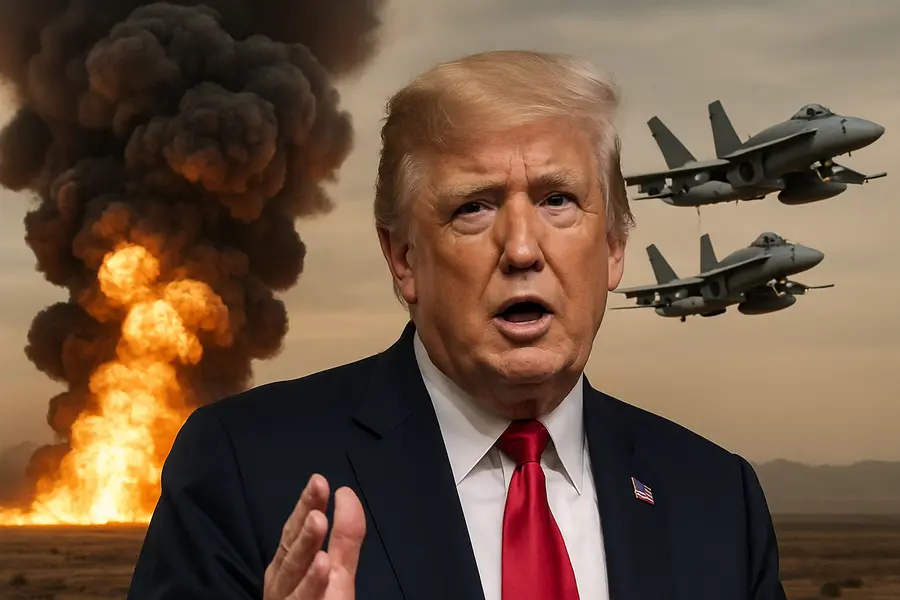
President Trump cautioned at the G7 summit in Évian that the ceasefire memorandum with Tehran remains provisional, threatening a return to U.S. airstrikes if Iran rejects or violates the emerging framework.
- Trump told G7 leaders in Évian the Iran MOU is not final and the U.S. would "go right back to dropping bombs" if negotiations break down.
- A 14-point draft MOU would extend the ceasefire 60 days, reopen the Strait of Hormuz within 30 days, and impose a nuclear enrichment moratorium on Iran.
- Global oil prices declined as markets priced a higher probability that a formal signing in Geneva would restore Hormuz transit flows.
Lead
Standing alongside Egyptian President Abdel Fattah el-Sisi at the Group of Seven summit in Évian-les-Bains, France, on June 17, 2026, President Donald Trump issued an unambiguous warning: the memorandum of understanding his administration has reached with Iran is not the final settlement, and the United States would resume striking Iranian targets if he finds the completed agreement unsatisfactory. "If I don't like it, we'll go back to shooting at them—dropping bombs on their heads," Trump said. "If they don't behave, we'll go right back to dropping bombs right smack in the middle of their head."
What Happened
The statement comes days before a formal signing ceremony scheduled for Friday in Geneva, at which the United States and Iran would codify a ceasefire framework that pauses the direct hostilities initiated by U.S.-Israeli strikes—known as Operation Epic Fury—earlier in 2026. The MOU, approximately a page and a half in length, extends the existing ceasefire by 60 days and establishes a negotiating structure for resolving longer-term disputes over Iran's nuclear program.
A 14-point draft text contains sweeping commitments from both governments. Washington has agreed to lift oil sanctions and release up to $25 billion in frozen Iranian assets. In exchange, Tehran would reopen the Strait of Hormuz within 30 days and accept a moratorium on uranium enrichment. A reconstruction financing package of approximately $300 billion is also outlined, contingent on progress toward a permanent peace agreement. Pakistan and Qatar have served as the principal mediators since negotiations began in earnest in March 2026.
Trump characterized the deal as favorable, saying it is "a great deal for a lot of reasons," while placing prevention of Iranian nuclear weapons acquisition at "99.9 percent" of his stated concerns.
Strategic Context
The backdrop for Trump's comments is one of the most significant military escalations in the Middle East conflict cycle in more than two decades. The United States launched its largest regional military buildup since the 2003 Iraq invasion in late January 2026, deploying air, naval, and missile defense assets as tensions with Tehran intensified. Operation Epic Fury followed, targeting Iranian nuclear facilities and military infrastructure in a coordinated U.S.-Israeli campaign.
The conflict inflicted substantial economic disruption. The Strait of Hormuz, through which approximately one-fifth of global oil supply transits daily, was effectively closed to commercial traffic during peak hostilities, driving energy prices sharply higher and snarling shipping routes across the Persian Gulf. Dubai International Airport, among the world's busiest aviation hubs, sustained drone strike damage during the opening phase of operations.
Geopolitical Dimension
G7 leaders in Évian voiced collective support for the emerging U.S.-Iran agreement. The broader alliance's endorsement reflects how much Middle East conflict dynamics now carry systemic global weight—disruptions to Hormuz transit feed directly into energy pricing, shipping insurance costs, and sovereign risk spreads across emerging markets.
Iran's domestic position remains under strain. Supreme Leader Mojtaba Khamenei declared in early June 2026 that U.S. military bases in the Middle East were "no longer safe," signaling internal pressure on the Tehran government to resist concessions. Iran's delegation suspended nuclear talks briefly following Israeli strikes on Beirut before re-engaging under the current framework.
The 60-day ceasefire window in the MOU is designed to allow time for technical negotiations on the granular points that the one-and-a-half-page MOU does not resolve: verification mechanisms, the sequencing of sanctions rollback, the pace of the Hormuz reopening, and terms governing Iran's existing enriched uranium stockpiles.
Market Reaction
Oil markets moved lower on the prospect of a durable resolution. A reopened Strait of Hormuz would unlock between 17 million and 20 million barrels of daily crude and petroleum product flows that were constrained during peak hostilities. Energy sector equities and airline stocks in particular responded positively to expectations that supply disruptions are nearing an end, while defense sector valuations faced modest headwinds on reduced near-term conflict expectations.
Outlook
The Geneva signing ceremony represents the first formal diplomatic milestone in US-Iran relations since direct hostilities began in 2026. Trump's public warning at the G7 makes clear that the agreement is explicitly conditional: the United States retains both the declared will and the military infrastructure to resume strikes if the final deal terms fall short of his administration's demands, or if Tehran is found non-compliant during the 60-day negotiating window.
Geopolitical risk 2026 remains elevated. The 14-point framework leaves substantial room for interpretive dispute, and Iran's domestic political dynamics add a further layer of uncertainty to any durable settlement. Whether the Geneva ceremony produces a lasting peace architecture or a temporary pause ahead of renewed escalation will turn on negotiations that have not yet reached their most difficult phases.