Pomegra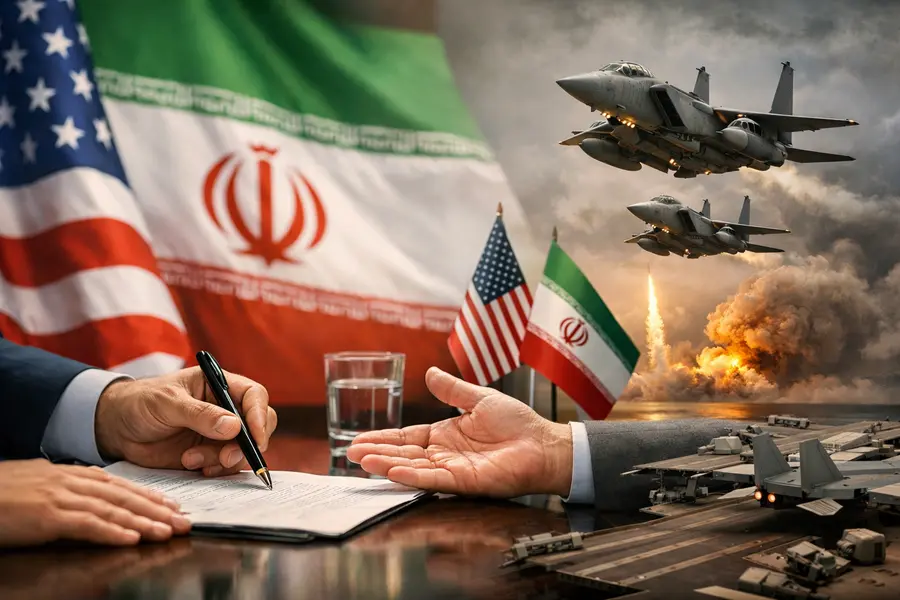
President Donald Trump said Monday there is a "good chance" of progress in U.S.-Iran negotiations following a pause in American military strikes, even as Tehran denied being in active talks and oil markets moved sharply on the diplomatic uncertainty.
- Trump told supporters in Michigan he sees a "good chance" of a deal with Iran, while warning strikes will resume if talks fail.
- Brent crude fell 3.9% to $84.91 a barrel on Tuesday as Iran held separate Strait of Hormuz discussions with Saudi Arabia and Oman.
- Iran's Foreign Ministry denied current negotiations with Washington, saying Tehran "will never allow the United States to determine the timing of war and peace."
Lead
Standing before supporters in Michigan on Monday, July 28, President Donald Trump described "very friendly negotiations" with Iran following a U.S. pause in military strikes, saying there was "a good chance" of progress. Trump left no ambiguity about the alternative, warning: "If we don't make a deal, we go back to the same thing." The remarks came as Brent crude declined 3.9% to $84.91 per barrel and West Texas Intermediate fell 3.3% to $79.87, reflecting cautious market optimism that five months of escalating conflict could give way to a durable agreement.
What Happened
Trump, speaking from both the podium and through senior envoys, confirmed the United States had halted strikes after Iran's regime made a direct appeal — "They asked us very nicely, 'Please stop, let's meet,'" he told reporters aboard Air Force One — and that a diplomatic window was being held open. U.S. Ambassador to the United Nations Mike Waltz described the posture as deliberate: "What the president is doing right now, as we've seen all along, is giving some talks some space."
Iran offered a sharply different characterization. Foreign Ministry spokesperson Esmaeil Baghaei said in a televised news conference that no current negotiations with Washington are underway and that Tehran "will never allow the United States to determine the timing of war and peace." The divergence in framing reflects a central tension in the diplomatic process: both governments see value in a pause, but disagree on whether it constitutes talks.
Backdrop: From Ultimatum to War to Partial Agreement
The current crisis traces to January 2026, when Trump gave Iran 10 to 15 days to agree on a nuclear framework or face consequences. U.S. and Israeli forces launched joint strikes on February 28, targeting Iranian military sites, air-defense systems, and infrastructure across the country. An April ceasefire followed, and a preliminary memorandum of understanding was formally signed on June 19, opening a 60-day period of negotiations over Iran's nuclear program and U.S. sanctions relief.
That framework collapsed in July after disputes over transit fees and governance of the Strait of Hormuz — the narrow waterway through which roughly 20% of global oil trade flows. Iran, which had moved to restrict passage through the strait, suggested the June MoU was "suspended." Washington resumed strikes. By mid-July, at least 50 people had been killed in U.S. strikes according to Iran's Health Ministry, and three U.S. service members had died in combat operations. The U.S. military struck air-defense systems, maritime surveillance infrastructure, and more than 60 small boats operated by Iran's Islamic Revolutionary Guard Corps; strikes also hit bridges and power stations in Iran's south, affecting desalination facilities serving tens of thousands of civilians.
The Strait of Hormuz as Central Flashpoint
All meaningful negotiation now converges on the Strait of Hormuz. Iranian and Omani negotiators met in Tehran over the weekend, with Oman playing its traditional role as a back-channel facilitator between Washington and Tehran. Iran is also holding separate discussions with Saudi Arabia on restarting commercial passage — a trilateral dynamic that gives the Gulf states unusual leverage in the outcome.
Pakistan is separately mediating broader U.S.-Iran talks, though it is not a party to the Israeli dimension of the conflict. Israel participated in the February 28 strikes but is not directly engaged in the current ceasefire process.
The economic stakes are acute. A fully closed or restricted Strait of Hormuz would disrupt crude flows from the Gulf Cooperation Council states, elevate LNG freight costs, and ripple through global supply chains already absorbing elevated energy prices. Tuesday's oil price decline reflects the market's incremental confidence that the pause in strikes is more than tactical — but analysts note that disagreements over the strait "could see hostilities reignite," leaving energy markets structurally volatile.
Strategic Context
Trump's dual-track posture — projecting openness from the podium while keeping military assets positioned — mirrors the approach that preceded the February strikes. Senior officials have framed the conflict as being about three overlapping objectives: preventing Iran from acquiring a nuclear weapon, dismantling the reach of Iranian ballistic and maritime military capabilities, and reopening the Strait of Hormuz on terms favorable to U.S. allies.
Iran's position, publicly at least, insists it retains the right to determine when and whether it meets with Washington. The Iranian regime is navigating the pressure of sustained infrastructure damage, the weight of international sanctions, and deep domestic political constraints — factors that simultaneously push it toward a deal and make concessions politically costly.
Geopolitical Dimension
The conflict has drawn in neighbors by geography and alliance. Iranian strikes this year struck targets in Kuwait, the UAE, Saudi Arabia, Israel, and Qatar — broadening the conflict's footprint and testing Gulf security architecture. For NATO allies, the war represents a test of alliance coherence and an indirect drain on U.S. military attention toward the Indo-Pacific. China and Russia have refrained from direct military involvement while opposing Western-aligned frameworks for ending the conflict.
Outlook
The coming 72 to 96 hours are likely to be decisive for the fragile pause. Iran's willingness to resume talks at the negotiation table — even indirectly through Omani intermediaries — will be the clearest signal of whether a renewed ceasefire is achievable. Trump has shown consistent willingness to authorize military force and equal willingness to halt it when diplomatic conditions materialize. A deal centered on Hormuz transit governance, paired with phased sanctions relief, remains the most plausible near-term path. The cost of failure, measured in oil market disruption, regional escalation, and U.S. military exposure, gives both sides structural incentive to find common ground — but the gap between their public positions remains wide.
Mentioned tickers: BNO, USO, XOM, CVX, OXY