Pomegra
Valero (VLO), Marathon Petroleum, and Phillips 66 hit simultaneous 52-week highs as the Iran war drives crack spreads to $64/barrel, a multi-year peak.
- VLO posted Q2 2026 adjusted EPS of $12.54, up 450% year-over-year, as refining margins per barrel surged to $23.62 from $12.35 in the prior-year period.
- The 3-2-1 crack spread reached $64.34 per barrel in September 2026, more than triple the long-run $19/barrel median, on Iran-driven Strait of Hormuz supply disruptions.
- The S&P 500 Oil and Gas Refining and Marketing Sub-Industry index jumped 104% in 2026 versus 11% for the broader market, making independent refiners the year's standout sector.
Lead
Valero Energy (VLO) tagged a fresh 52-week high this week as the WTI 3-2-1 crack spread crossed $64 per barrel - its highest level since the disruptions of 2022 and more than three times the $19-per-barrel long-run median. The move extended a sweep of simultaneous annual peaks across U.S. independent refiners: Marathon Petroleum (MPC) and Phillips 66 (PSX) logged fresh highs in the same session, as the ongoing U.S.-Iran conflict sustained elevated crude oil prices and transformed downstream processing into the energy market's most profitable trade. The S&P 500 Oil and Gas Refining and Marketing group has gained 104% in 2026, dwarfing the broader market's 11% advance.Why Are Refiners Outperforming Even as Crude Climbs?
Independent refiners profit from the margin between raw crude inputs and refined product outputs - the crack spread - rather than from crude prices alone. When crude oil price levels rise on supply disruptions but product demand holds firm, that margin widens and refiner earnings surge non-linearly. The 3-2-1 crack spread at $64.34 per barrel as of September 2026 stands 15% below the May 2022 record of $75.89 but exponentially above the long-run $19-per-barrel median. Diesel crack spreads went further, topping $100 per barrel during the second quarter of 2026 - the first time that threshold had been crossed. Upstream producers benefit directly from higher crude prices but face geopolitical expropriation risk, export-restriction exposure, and rising operational costs in conflict-adjacent regions. Refiners sit downstream of those variables while capturing the spread premium that the disruption generates.What Is the Iran Conflict's Direct Impact on Crude Prices?
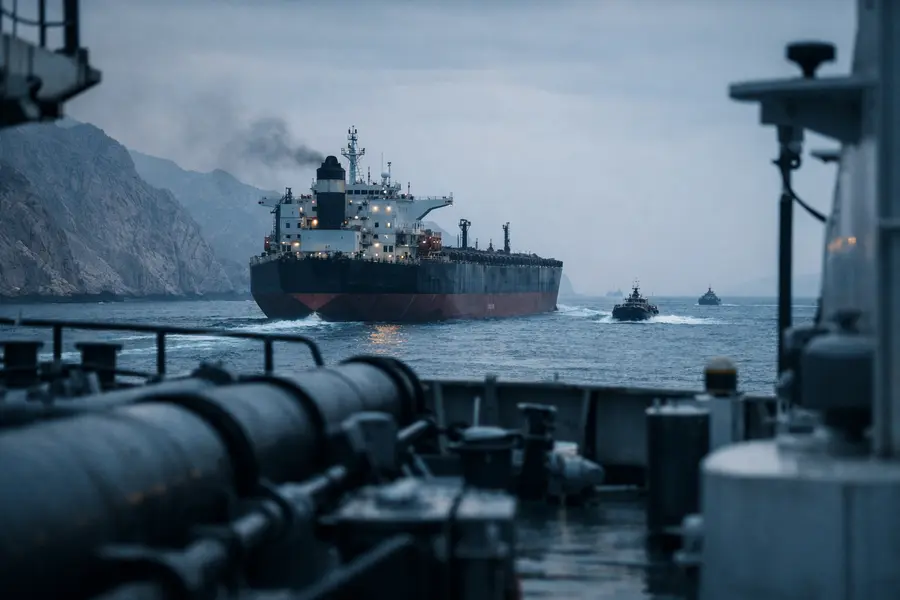
The U.S.-Iran conflict, which escalated through mid-2026, disrupted flows through the Strait of Hormuz, the chokepoint through which approximately 20% of global crude supply transits. Iraq and Kuwait both curtailed exports in response to regional escalation. Brent crude rose to $99.05 per barrel by September 8, with WTI at $94.04; during peak escalation, Brent briefly exceeded $109 per barrel. The elevated crude oil price environment is precisely the input condition that widens crack spreads toward multi-year levels: crude costs rise faster than feedstock contracts allow adjustment, while product prices track higher alongside demand that has not meaningfully deteriorated. Goldman Sachs raised its Brent outlook by $5 for December 2026, signaling sustained supply-side pressure through year-end.
Market Reaction
Valero Energy's Q2 2026 results defined the earnings leverage at stake. VLO posted record quarterly adjusted earnings per share of $12.54, a 450% year-over-year increase from $2.28, on record quarterly net income of $3.7 billion. Refining margin per barrel reached $23.62 against $12.35 in the prior-year period, with throughput volumes rising 3.6% to 2.9 million barrels per day. Jefferies raised its VLO price target following the report. Marathon Petroleum's Refining and Marketing segment contributed $1.4 billion in Q2 2026, nearly triple the year-ago level, lifting MPC toward its own 52-week high near the $400 level, with Wells Fargo revising its price target higher. Phillips 66 reported Q2 2026 adjusted results approximately 300% above the prior year as refining margins roughly doubled; PSX shares have risen nearly 94% over the trailing 52 weeks. HF Sinclair (DINO), a smaller independent, joined the sweep with an 80%-plus 2026 advance that mirrors its larger peers.
Strategic Context: The Downstream Rotation
The convergence of 52-week highs across VLO, MPC, and PSX traces the same pattern as prior Middle East supply disruptions: energy equities initially reward crude producers, then migrate decisively downstream as crack spreads sustain elevated readings and investors seek earnings leverage uncoupled from upstream risk. The current rotation has been more pronounced than prior cycles because the Hormuz disruption is larger in scale and longer in duration than most prior conflicts affecting the waterway. With no coordinated OPEC+ supply response to offset Iranian-linked outages, the crude oil price premium has proved durable, sustaining refiner margins well into the third quarter.
How Does This Affect Refiner Earnings Into Q3 2026?
With the 3-2-1 crack spread at $64.34 per barrel in September 2026 and diesel crack spreads having exceeded $100 per barrel in Q2, the backdrop for Q3 earnings remains strongly supportive. VLO's Q2 refining margin of $23.62 per barrel provides the baseline: each dollar of crack spread widening translates directly into throughput-weighted margin improvement. Throughput volumes rising 3.6% simultaneously with margin expansion compounds the earnings effect. Barring a ceasefire that restores Hormuz flows and collapses the supply premium, Q3 2026 results for the independent refiner group are structurally positioned well above year-ago levels.
Outlook
The independent refiner trade retains structural support as long as the Iran conflict continues constraining Hormuz supply without triggering equivalent demand destruction. Brent near $99 per barrel, the WTI 3-2-1 crack at $64.34, and diesel crack spreads at multi-year highs form the conditions that drove VLO, MPC, and PSX to simultaneous annual peaks. Goldman Sachs' upward revision to Brent forecasts suggests the supply disruption premium has not been fully absorbed. Historical precedent indicates wide crack spreads eventually attract higher refinery utilization and margin compression over a 12-to-18-month horizon; the pace of that correction depends on the duration and resolution of the Gulf conflict. The energy sector's center of gravity sits downstream, and the independent refiners are its clearest expression.
Mentioned tickers: VLO, MPC, PSX, DINO