 Pomegra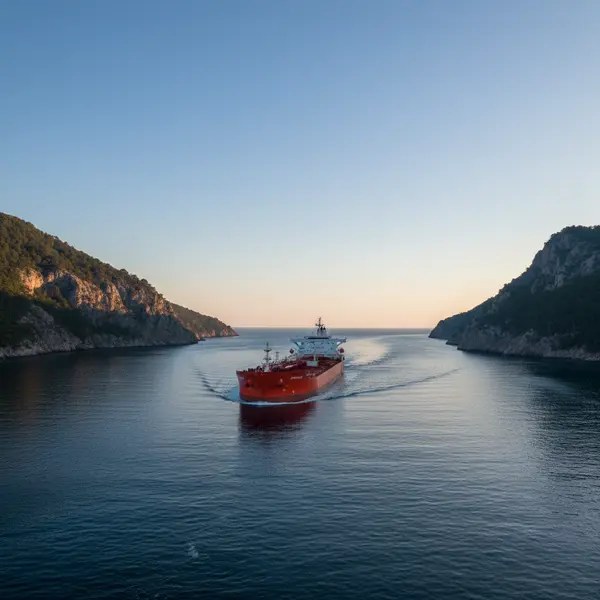
The Strait Falls Silent — Then Opens Again
The Strait of Hormuz, the 34-kilometre-wide chokepoint between Iran and Oman through which approximately 20 million barrels of oil per day once transited freely, has been the centre of the worst energy crisis the world has seen in half a century. Iran formally announced the closure on March 4, 2026, following coordinated US-Israeli airstrikes on February 28 — Operation Epic Fury — that killed Supreme Leader Ali Khamenei and struck Iranian military and nuclear facilities. The Iranian Revolutionary Guard Corps (IRGC) swiftly declared passage "not allowed," attacked dozens of merchant vessels with speedboats, drones, and cruise missiles, and laid naval mines throughout the waterway.
- Brent crude dropped 4.83% to $94.77/bbl on May 27, while WTI fell 5.68% to $88.56/bbl, on Hormuz transit resumption signals.
- The US Navy restarted escort operations through the strait on May 26, per Wall Street Journal reporting citing anonymous US military officials.
- The closure, active since March 4, 2026, caused the largest global energy supply disruption in the history of the oil market, with Brent peaking at $126/bbl.
Now, for the first time in nearly three months, commercial tankers are moving again under US naval protection. The Wall Street Journal reported on May 26 that the US Navy had quietly restarted guiding vessels through the strait, following weeks of US-Iran diplomatic engagement. Oil markets responded immediately, with Brent crude plunging over 4.8% and West Texas Intermediate falling 5.68% on May 27 — a sharp reversal from the astronomical highs reached in the preceding weeks.
Three Months of Crisis: The Scale of Disruption
The 2026 Strait of Hormuz crisis stands as the largest disruption to global energy supply since the 1970s oil shocks, and the largest in the recorded history of the world oil market. The consequences were catastrophic in scope and speed.
Oil prices surged faster than during any conflict in recent history. Brent crude crossed $100 per barrel on March 8 — the first time in four years — and rocketed to a peak of $126 per barrel. Dubai crude oil hit an all-time high of $166 per barrel on March 19. California gasoline prices exceeded $5 per gallon within days. By mid-March, Gulf Arab states had collectively cut oil output by at least 10 million barrels per day. Saudi Aramco reduced production by 20% after two offshore fields, including the critical Safaniya field, were shut down. Iraq declared force majeure on all foreign-operated oilfields on March 17. QatarEnergy stopped gas production on March 2 and declared force majeure on all contracts two days later.With tanker traffic dropping to near-zero and over 600 tankers stranded inside the Persian Gulf — per Saudi Aramco CEO Amin Nasser's May 11 remarks — the International Maritime Organization reported 20,000 mariners and 2,000 vessels trapped. Major container shipping lines, including Maersk, CMA CGM, and Hapag-Lloyd, suspended all Hormuz and Red Sea operations. Fifteen thousand cruise passengers were stranded across six vessels in the Persian Gulf.
A Fractured Reopening: False Dawns and Dual Blockades
The path to May 27 was marked by repeated diplomatic failures and short-lived ceasefires. A temporary truce brokered on April 8 collapsed within days after Iran began charging ships tolls exceeding $1 million per transit — which the UK and other nations flatly rejected. Following the breakdown of the Islamabad Talks on April 12, the US imposed a naval blockade of Iranian ports, creating what observers described as a "dual blockade": Iran blockading the Gulf, and the US blockading Iran.
On April 17, Iran announced a brief reopening tied to an Israel-Lebanon ceasefire, and all six stranded cruise ships managed to clear the strait in a narrow window. But within 24 hours, Iran reimposed restrictions when the US refused to lift its naval blockade. On May 4, President Trump launched Operation Project Freedom — a US Navy mission to escort commercial ships out of the Gulf — only to pause it two days later citing "great progress" toward a possible agreement.
On May 6, Brent crude had briefly slumped 11% to below $98 per barrel on ceasefire hopes, before reversing sharply the following week as talks stalled and Iran launched fresh attacks. A Chinese-owned chemical tanker, the JV Innovation, became the first Chinese vessel targeted on May 4, drawing a direct rebuke from the US Ambassador to the UN and raising fears that the conflict was drawing in Beijing.
May 26-27: The Market Inflection Point
The Wall Street Journal's May 26 report — citing anonymous US military officials — confirmed that US Navy destroyers had resumed guiding commercial vessels through the Strait of Hormuz. The report arrived after weeks of intensifying diplomatic pressure, including Chinese leader Xi Jinping's April 21 statement to Saudi Crown Prince Mohammed bin Salman that "the Strait of Hormuz should remain open to normal navigation."
Crude oil prices fell sharply on May 27 in direct response. Brent crude settled at $94.77 per barrel, down 4.83% on the session. WTI dropped to $88.56, a decline of 5.68% on the day. Over the prior month, Brent had already fallen 9.22% from its war-time peaks, reflecting accumulated diplomatic optimism. European natural gas benchmarks also dropped, reflecting the same easing in supply anxiety that had driven European imports of Russian Yamal LNG to a record high between January and April 2026 — a £3 billion surge that alarmed European energy security officials.Supply Chain Damage Will Take Months to Reverse
Despite the positive market signal, the road to full supply normalisation remains long. Saudi Aramco's CEO, speaking on May 11, stated that oil markets will take months to fully normalise due to the extent of Hormuz-related disruption. An estimated 84% of Hormuz crude shipments are destined for Asian markets, with China receiving roughly a third of its oil via the strait and holding approximately one billion barrels in strategic reserves — sufficient for several months at best.
The disruption extended well beyond crude oil. Fertilizer prices surged 50% from the war's start through late March, as the Gulf region accounts for roughly 30-35% of global urea exports and 20-30% of ammonia exports — nearly one-third of all internationally traded fertilizer transits Hormuz. Aluminium prices climbed on Gulf smelter output cuts. A global helium shortage emerged, with distributors rationing deliveries by early April as Qatar's LNG disruption knocked out roughly a third of world helium production.
The combined capacity of the Saudi East-West Crude Oil Pipeline (Yanbu), the UAE's Abu Dhabi Crude Oil Pipeline (Fujairah), and Iraq's Kirkuk-Ceyhan pipeline totals approximately 9 million barrels per day — less than half the 20 million barrels per day that transited the Strait before the crisis.
A Fragile Path Forward
With the US Navy escort mission now quietly operational, energy traders are cautiously repricing the geopolitical risk premium built into crude since late February. Analysts at Barclays and Goldman Sachs, who had warned repeatedly of sustained triple-digit oil prices if the strait remained restricted over the medium term, are now revisiting their supply and demand balances.
The formation of the Persian Gulf Strait Authority, announced by Iran on May 5 as a mechanism to regulate and authorise maritime transit, introduces a new layer of complexity. Iran's IRGC also formally redefined the strait as a "vast operational area" extending from Jask to Siri Island — a legal and tactical escalation that Western maritime lawyers describe as a violation of UNCLOS transit passage provisions.
Global markets on May 27 are treating the US Navy resumption as a decisive signal that free passage through the world's most critical oil chokepoint is being re-established — but ceasefire negotiations between Washington and Tehran remain unresolved, and the structural vulnerabilities exposed by three months of closure will shape global energy security policy for years to come.
Mentioned tickers: BNO, USO, XLE, CVX, XOM, BP, SHEL, TTE, SLB, BKR, HAL