Pomegra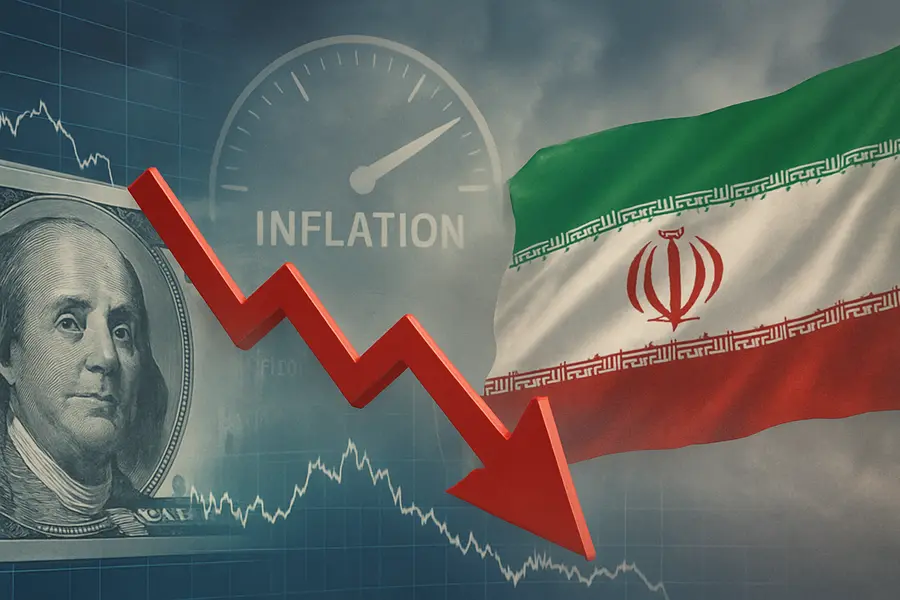
S&P 500 futures pulled back Tuesday, with May's 4.1% PCE print and rising Federal Reserve rate-hike odds capping the equity gains sparked by the US-Iran ceasefire.
- S&P 500 futures traded in a 7,437–7,464 range Tuesday, retreating from Monday's 1.18% cash-session surge driven by Iran ceasefire optimism.
- May headline PCE accelerated to 4.1% annually — highest since April 2023 — while core PCE hit 3.4%, the highest since October 2023.
- CME FedWatch puts the probability of a September rate hike at 72.8%, with Bank of America projecting three total hikes before year-end.
Lead
S&P 500 futures edged lower in Tuesday pre-market trading, pulling back from a broad risk-on rally after US and Iranian officials confirmed the durability of a mid-June truce. The session's restraint stems from a separate, domestic headwind: sticky inflation data that has systematically revised Fed policy expectations higher through June. With May's Personal Consumption Expenditures index running at 4.1% on an annualized basis — released June 25 — traders have spent the past week recalibrating a policy path that now tilts toward tightening.What Happened
Monday's session delivered one of the stronger single-day gains of the year. The S&P 500 closed at 7,440.43, up 1.18%, while the Nasdaq Composite surged 2.07% to 25,820.14 and the Dow Jones Industrial Average rose 306.63 points, or 0.59%, to a record close of 52,182.74. The catalyst was confirmation that the US-Iran framework signed in mid-June — which halted more than 100 days of conflict and reopened the Strait of Hormuz — remains intact.
By Tuesday pre-market, however, S&P 500 futures were oscillating between 7,437.25 and 7,463.75. The muted tone reflected the inability of geopolitical relief alone to push markets higher against a stubborn inflation backdrop. The momentum that followed the ceasefire announcement on June 14–15 has largely been priced in. What remains unpriced — or, more accurately, what the market is still wrestling with — is the Federal Reserve's next move.
The Inflation Problem
The May PCE report confirmed what bond markets had been telegraphing for weeks. Headline PCE rose to 4.1% year-over-year, up from 3.8% in April, with a 0.4% month-over-month acceleration. Core PCE — the Fed's preferred inflation measure, excluding food and energy — climbed to 3.4%, the highest reading since October 2023 and up from 3.3% the prior month. Services inflation and shelter costs remain the primary culprits. Shelter rose 3.4% over the year, and housing-driven disinflation, which provided relief through much of 2024 and 2025, has largely run its course.
The persistence of price pressures in the services sector points to a structural dynamic rather than a transitory one. Tariff pass-through, elevated wage growth in labor-intensive industries, and the reversal of pandemic-era demand distortions have all kept a floor under core prices well above the Federal Reserve's 2% target. The Fed's own June Summary of Economic Projections reflected this: Chair Kevin Warsh revised the 2026 year-end PCE projection upward by 0.9 percentage points to 3.6%, a substantial shift that acknowledges the stickiness of the current inflation regime.
Fed Policy: Tightening Back on the Table
At its June meeting, the Federal Open Market Committee held the target range for the federal funds rate at 3.50%–3.75%, but the tone of the accompanying statement and dot plot left no ambiguity about the directional bias. The June dot plot, for the first time in two cycles, projected a rate increase in 2026 rather than a cut. CME FedWatch currently prices the probability of a September hike at 72.8%.
Major bank forecasts have shifted decisively. Bank of America now projects three rate increases in 2026, penciling in hikes in September, October, and December for a total of 75 basis points of additional tightening. Deutsche Bank anticipates two further 25-basis-point moves in September and December. The shift in expectations has anchored Treasury yields higher and compressed the equity risk premium at a moment when index valuations remain historically elevated.
Iran Truce: Relief Rally, Bounded Upside
The US-Iran ceasefire, formalized in a 14-point memorandum of understanding in mid-June, ended more than 100 days of conflict and reopened the Strait of Hormuz — the maritime chokepoint through which approximately one-fifth of global oil and gas flows. The deal lifted the US naval blockade, suspended Iranian attacks on Gulf Arab states, and opened a 60-day window for negotiations on Iran's nuclear program and sanctions relief.
Markets initially priced the deal as a meaningful de-escalation: Brent crude dropped nearly 5% on ceasefire news and has since settled around $72.47 per barrel, while West Texas Intermediate stabilized above $70. Gulf Arab states — particularly Bahrain, Iraq, Kuwait, and Qatar, which had no alternative to the Strait for maritime exports — are the primary economic beneficiaries.
The ceasefire is real, but its longevity remains conditional. US and Iranian officials have diverged on implementation details, including the sequencing of asset releases and longer-term Hormuz management authority. Those unresolved fault lines limit the degree to which markets can treat the truce as a structural risk reduction rather than a temporary suspension of hostilities. The Strait remains vulnerable to renegotiation dynamics throughout the 60-day negotiating window.
Looking Ahead
Markets face a compressed schedule. The monthly nonfarm payrolls report, normally released on the first Friday of the month, is due Thursday, July 2, shifted earlier due to the Independence Day holiday on Saturday. A strong labor print would likely reinforce rate-hike expectations; a miss could introduce competing interpretations about whether the Fed might pause.
The data picture entering Q3 2026 is one of sticky inflation meeting a resilient but slowing economy. The Iran truce removes a tail risk that had destabilized energy markets and global shipping, but it does not change the domestic monetary calculus. Equities gained on the geopolitical news; inflation data limits where those gains can go.