Pomegra
SOXX, the benchmark semiconductor ETF, trades 15.8% below its July 2026 high of $598 as a $725 billion hyperscaler capex cycle re-accelerates chip demand into year-end.
- SOXX closed at $504.89 on August 2, down 15.8% from its July 2026 peak of $598, after a sector-wide selloff erased more than $1 trillion in chip-stock market value in a single week.
- Microsoft, Alphabet, Amazon, and Meta plan a combined $725 billion in 2026 capital expenditure — up 77% from 2025 — sustaining structural demand for advanced semiconductors.
- TSMC has committed $52–56 billion in 2026 chip fab capex, including Arizona facilities now entering high-volume production, anchoring the AI infrastructure supply chain.
Lead
The iShares Semiconductor ETF (SOXX), the dominant semiconductor ETF tracking 30 of the largest U.S.-listed chipmakers, closed at $504.89 on August 2, 2026 — down 15.8% from its July intraday high of $598.00 and 27.6% below its all-time high of $696.85 set in March 2024. The pullback has widened the gap between semiconductor equity valuations and an accelerating AI infrastructure buildout, as the four largest hyperscalers commit a combined $725 billion in 2026 capital expenditure to data center expansion and AI chip procurement.
What Happened
The Philadelphia Semiconductor Index (SOX) entered correction territory in late July 2026, shedding nearly 20% from its 2026 peak and briefly confirming a technical bear-market reading. Chip stocks collectively erased more than $1 trillion in market capitalization in the week ending July 29. Nvidia (NVDA) alone shed $238 billion in market value. Samsung Electronics and SK Hynix, two of the largest high-bandwidth memory (HBM) suppliers, each declined more than 15% in a single session. Micron Technology (MU) fell sharply alongside them.
The catalyst was a reassessment of AI return-on-investment timelines. Investors questioned whether the magnitude of hyperscaler spending — up 77% year-over-year — would translate into near-term revenue growth for chip suppliers at the pace priced into semiconductor equities earlier in the year. The SOX index had posted 17 consecutive trading days of gains in April 2026 — its longest winning streak in the index's 32-year history — before the July reversal. A 52-week low of $233.67, set earlier in the year before the sector's 103% rebound, underscores the range of sentiment SOXX has traversed in 12 months.
Market Reaction
SOXX's 52-week range of $233.67 to $655.95 captures a sector tethered simultaneously to cyclical memory dynamics and the structural AI demand wave. The ETF's recovery from its 2026 low to the July peak represented a gain exceeding 150%, and the current pullback to the $500–$505 range has reset valuation multiples while leaving the underlying demand thesis intact. The Philadelphia Semiconductor Index is now retesting a critical 11,200 support level as the market weighs near-term earnings risk against accelerating downstream capital commitments.
AI Infrastructure Trade: Re-Acceleration
The divergence between chip-stock prices and AI capex commitments defines semiconductor ETF positioning heading into the second half of 2026. Microsoft (MSFT), Alphabet (GOOGL), Amazon (AMZN), and Meta Platforms (META) plan a combined $725 billion in capital expenditure for the full year — up from $410 billion in 2025. Microsoft reported fiscal Q3 capex of $30.88 billion, up 84% year-over-year, with AI-related revenue crossing a $37 billion annual run rate. Meta raised full-year capex guidance to $125–$145 billion, citing higher component and data center costs.
Three structural forces sustain the buildout: compute requirements for training frontier AI models continue to scale with each successive generation; inference demand for deployed AI applications is outpacing existing capacity at every major cloud provider; and each hyperscaler is now developing proprietary silicon to reduce dependence on single-vendor GPU supply chains and lower per-token costs over time.
Chip Fab Expansion
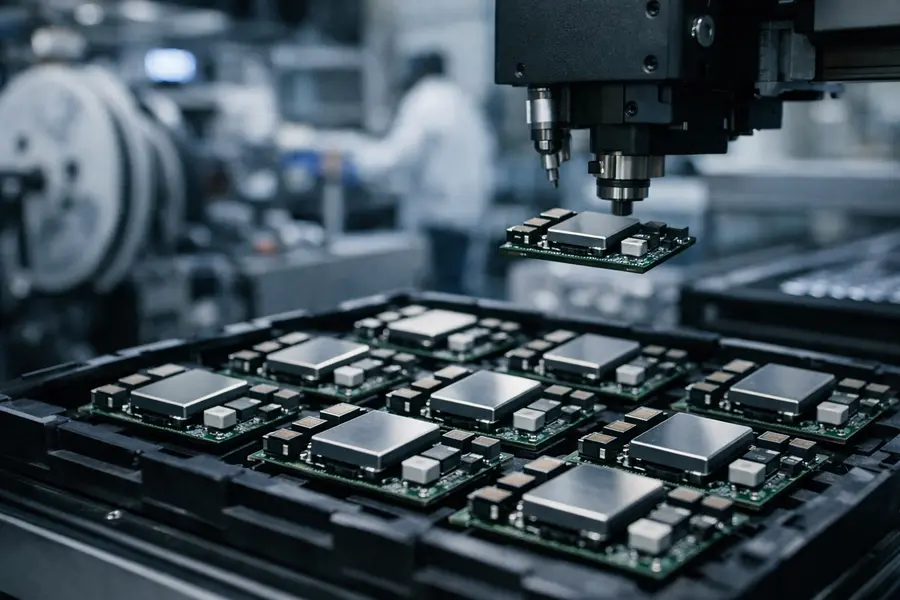
TSMC (TSM), the world's dominant chip fab with more than 90% of leading-edge production share, has committed $52–56 billion in 2026 capital expenditure — a 25% increase from 2025 levels and part of a $200 billion commitment to U.S.-based manufacturing through 2030. TSMC's Arizona facilities entered high-volume production ahead of schedule, securing Nvidia's advanced packaging business as AI chip demand compresses available advanced-node capacity. Intel (INTC) allocated $14.6 billion in fab capex in 2026, advancing its foundry strategy in parallel with TSMC's domestic expansion.The CHIPS and Science Act's $52.7 billion allocation continues to underwrite onshore manufacturing incentives across the semiconductor value chain. Global semiconductor market revenue is forecast to surpass $1 trillion in 2026, with WSTS projecting more than 10% sector-wide growth for the full year.
Strategic Divergence
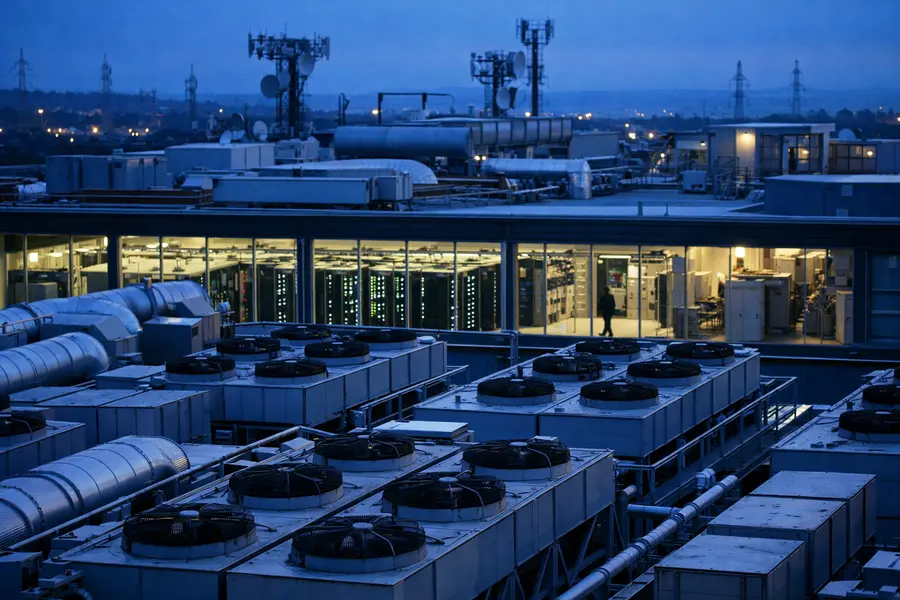
The gap between hyperscaler capex and chip-stock performance reflects a structural timing mismatch rather than demand deterioration. AI data centers require 12 to 18 months from capex commitment to chip procurement to supplier revenue recognition. Power infrastructure — not chip supply — has emerged as the binding constraint, with approximately 40% of announced AI data center projects facing delays tied to grid connectivity and transformer availability.
Broadcom (AVGO), which designs custom AI networking and application-specific chips for hyperscalers, has maintained stronger relative performance than pure memory or general-purpose GPU names, reflecting the market's differentiation between AI-specific architectures and commodity components. AMD (AMD) has gained inference deployment share as hyperscalers diversify GPU supply chains, adding a second competitive layer beneath Nvidia's dominant training-chip franchise.Outlook
SOXX's 15.8% gap to its July 2026 peak persists against a backdrop of accelerating AI infrastructure commitment, expanding chip fab capacity, and a global semiconductor market approaching $1 trillion in annual revenue. The near-term trajectory of the semiconductor ETF is linked to second-half procurement orders from hyperscalers, TSMC's advanced-node yield ramp cadence, and Q2 2026 guidance from major chip suppliers. The 52-week high of $655.95 marks the first structural recovery level; the all-time high of $696.85, set in March 2024, represents the broader sector's unfinished business.
Mentioned tickers: SOXX, NVDA, MU, TSM, INTC, MSFT, GOOGL, AMZN, META, AVGO, AMD