Pomegra
South Korea commits $576 billion to AI chips and data centers, led by Samsung and SK Hynix, cementing its role at the center of global AI infrastructure.
- Samsung and SK Hynix will invest 800 trillion won ($518B) to build four new chipmaking sites in southwest South Korea
- A parallel 550 trillion won commitment targets 8.4 gigawatts of AI data-center capacity by 2029
- South Korea controls roughly 80% of global high-bandwidth memory production, giving it structural leverage in the AI era
Lead
South Korean President Lee Jae Myung unveiled sweeping investments of more than 880 trillion won — approximately $576 billion — in AI chips and data centers on June 29, framing the initiative as the nation's "great leap forward" built on a "triple axis" of semiconductors, physical AI, and data-center capacity. The announcement, made in Seoul alongside the heads of Samsung Electronics and SK Hynix, represents one of the largest coordinated technology investment pledges of the AI era and marks a decisive escalation in Korea tech policy toward sovereign AI infrastructure.
What Happened
Samsung Electronics and SK Hynix, together with their suppliers, committed 800 trillion won ($518 billion) to develop four new semiconductor fabrication sites — two per company — in South Korea's southwestern region. Samsung Executive Chairman Lee Jae-yong identified Gwangju as the leading candidate for a new chip complex, citing electricity supply, water access, an available workforce, and planned government infrastructure incentives.In a parallel track, some 550 trillion won was committed to AI data centers by a coalition of South Korean companies including internet leader Naver Corp., targeting 8.4 gigawatts of AI computing capacity by 2029. SK Group separately announced plans to reach up to 15 gigawatts of data-center capacity, with SK Hynix expanding production of high-bandwidth memory, advanced packaging, and next-generation chip manufacturing alongside the buildout.
The total investment horizon extends further still. Samsung Group's broader plan calls for 1,000 trillion won — roughly $649 billion — over a decade, spanning semiconductors, AI data centers, and physical AI including robotics. Combined corporate commitments across all participating conglomerates exceed 3,755 trillion won.
Strategic Context
The plan is simultaneously an industrial and a political document. President Lee, who took office in 2025, has made narrowing regional economic disparities a signature pledge; the southwest, long under-industrialized relative to the Seoul metropolitan corridor, accounts for the bulk of the proposed chipmaking expansion. Critics have noted that approximately 85% of voters in the targeted regions backed Lee in last year's presidential election, raising questions about the commercial rationale behind site selection.
The strategic case is nonetheless grounded in structural reality. Samsung and SK Hynix together produce roughly 80% of the world's high-bandwidth memory — the specialized chip architecture that feeds data to AI accelerators. SK Hynix alone supplies approximately 90% of Nvidia's HBM requirements. That concentration makes South Korea a linchpin of global AI hardware supply chains, but equally a single point of systemic risk if production is disrupted.
South Korea's AI Framework Act, which took effect January 22, 2026, provides the legislative backbone for the initiative. The law — among the first comprehensive AI regulations in Asia — establishes regulatory clarity around high-risk applications and creates government mandates to support AI data-center construction and research infrastructure, directly enabling the South Korea AI investment drive announced this week.
Geopolitical Dimension
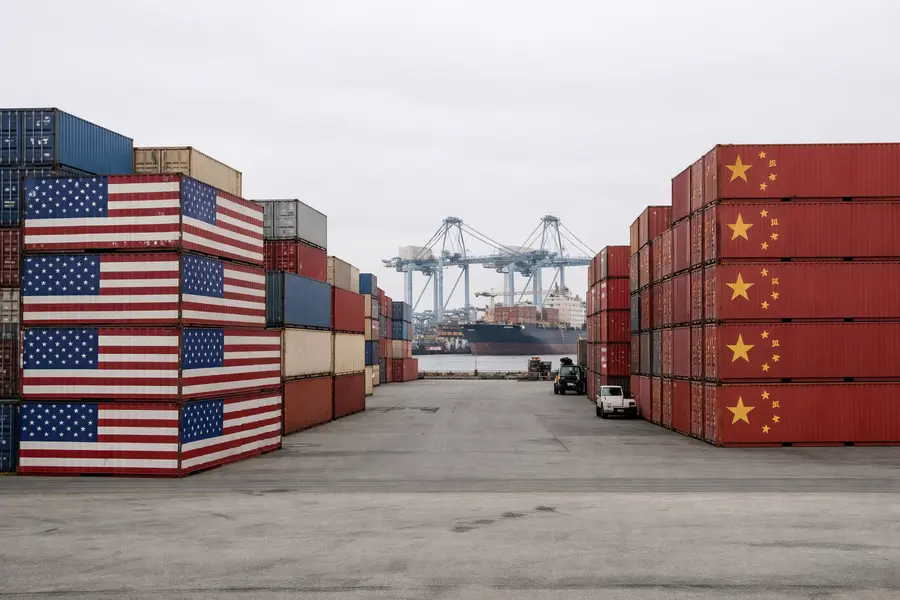
The investment push arrives against a backdrop of intensifying US-China semiconductor competition that is reshaping South Korea's strategic calculus. South Korean chip exports reached a record $37.16 billion in May 2026, up 169.4% year on year. Exports to China jumped 243% as Beijing's AI buildout accelerated memory demand, even as Nvidia export restrictions throttled the flow of AI accelerators into China — pressuring Korean chipmakers that serve both US and Chinese customers simultaneously.
China's domestic HBM producers remain years behind. CXMT, Beijing's leading DRAM manufacturer, is producing second-generation HBM comparable to South Korean technology from 2016. That technological lag defines South Korea's strategic window — the period during which no credible competitor can displace its HBM dominance — and explains the urgency behind accelerating domestic investment now rather than waiting for market signals alone.
US policymakers have treated the HBM supply relationship as a managed dependency. The dense concentration of production in South Korean facilities in Icheon, Pyeongtaek, and now the proposed southwest sites sits outside the geographic scope of US domestic chip incentives, creating alignment between Washington and Seoul even as export-control regimes continue to complicate third-market access.
What Comes Next
South Korea has set targets of doubling DRAM production capacity within five years and expanding national AI computing capacity to approximately 18.4 gigawatts by 2035. Regulatory approvals, land acquisition, and labor mobilization for the southwest semiconductor hub are expected to accelerate through the second half of 2026.
The scale of commitment also implies a substantial electricity infrastructure challenge. Grid operators face a parallel buildout requirement to deliver the power volumes demanded by new fabrication sites and the planned data center expansion — a constraint that regional and national agencies are now treating as a first-order priority alongside the chip investments themselves.
Outlook
South Korea's $576 billion South Korea AI investment drive marks the country's most ambitious effort yet to convert existing hardware dominance into long-term structural advantage. With Samsung and SK Hynix controlling the majority of the global HBM supply chain and the AI Framework Act providing regulatory architecture, the conditions for sustained investment are in place. Execution risks — including grid capacity, site permitting, and the political optics of regionally concentrated spending — will determine whether the initiative meets its aggressive timelines. Formal site approvals for the southwest chipmaking hub are expected later in 2026 and will serve as the first measurable test of the program's credibility.
Mentioned tickers: 005930.KS, 000660.KS, 035420.KS