Pomegra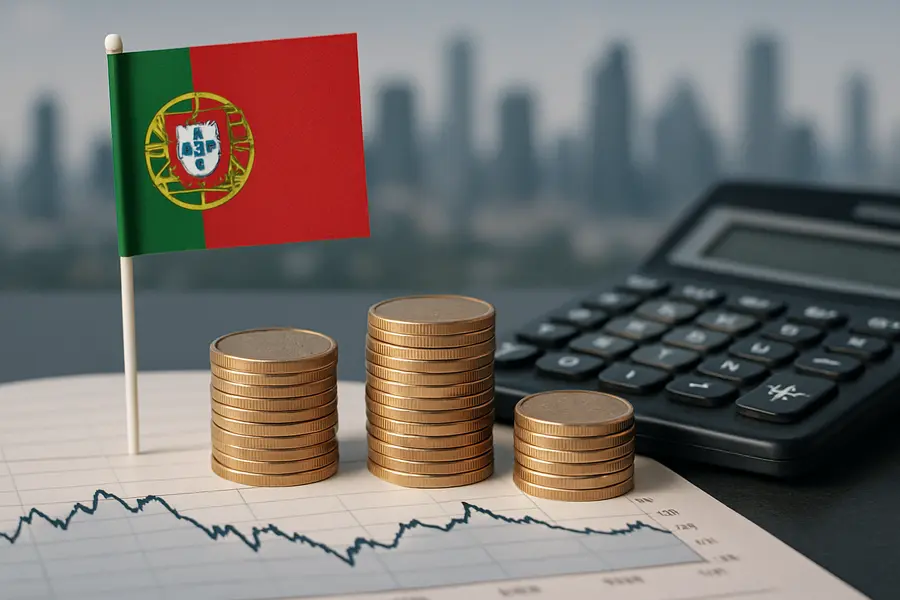
I have all the data needed. Writing the article now.
- Montenegro announced the fund at the PSD National Congress in Anadia on June 21, targeting energy, banking, telecommunications, and airport infrastructure.
- The vehicle would consolidate existing state shareholdings and enable new equity positions in companies deemed strategically important to Portugal's economy.
- Portugal's Iniciativa Liberal party warned the plan risks repeating past errors of excessive state intervention in private enterprise.
---
Prime Minister Luís Montenegro unveiled the Fundo Soberano on June 21, 2026, positioning the state-backed vehicle to take equity positions in energy, banking, and telecoms — a signal of Lisbon's strategic investment ambitions within the European sovereign wealth debate.
Lead
Portuguese Prime Minister Luís Montenegro announced on June 21, 2026, at the closing session of his Social Democratic Party's National Congress in Anadia, plans to establish a state-backed sovereign wealth fund — the Fundo Soberano — empowering the government to acquire and hold equity stakes in companies operating in sectors it deems strategic. The announcement, made before assembled party delegates, sets Lisbon on course to join a growing number of European governments deploying state capital as an instrument of economic sovereignty, though Montenegro offered no timeline, capitalization figure, or detailed financing model.
What Happened
Montenegro framed the fund explicitly as a dual-purpose instrument: a savings mechanism for future generations and a lever of national sovereignty. "We want to have shareholdings that guarantee a savings vehicle for future generations and an instrument to ensure national sovereignty," he said.
The vehicle would be housed within the operational structure of Portugal's Treasury and Public Debt Management Agency (IGCP), consolidating existing state shareholdings under a unified management framework while also enabling the acquisition of new stakes. Targeted sectors include energy, banking, telecommunications, and airport infrastructure — with Montenegro signaling willingness to step in if private concessionaires in those industries fail to meet their obligations to the state.
The announcement came without specifics on initial scale, funding sources, or governance structure. The government has indicated further details will follow as legislation is drafted.
Strategic Context
The move reflects a broader recalibration of Portugal's economic strategy after years of fiscal consolidation. The country recorded a budget surplus of 0.7% of GDP in 2025, equivalent to €2.1 billion, while public debt fell to 89.7% of GDP — its lowest level in over a decade. With borrowing costs contained and fiscal space rebuilt, Lisbon has greater latitude to deploy capital offensively rather than defensively.
The Fundo Soberano would align strategic investment in Portugal with a European-wide reassessment of state capitalism. Across the continent, governments have revisited their relationships with critical industries following supply-chain disruptions, energy price volatility, and the strategic competition between the United States and China. The debate over European sovereign wealth vehicles has intensified, with proposals for EU-level instruments gaining traction in Brussels, while Norway's Government Pension Fund Global — now exceeding $2 trillion in assets — continues to be cited as the benchmark model for long-horizon state-owned capital deployment.
Geopolitical Dimension
Portugal's interest in maintaining state influence over energy and infrastructure reflects pressures felt across Southern and Western Europe, where foreign capital — particularly from non-EU state-backed entities — has acquired stakes in sensitive sectors. Airport concessions, energy grids, and telecommunications networks have all attracted outside investment in recent years, prompting governments to examine whether strategic assets should remain under domestic or allied control.
Montenegro's explicit reference to airport infrastructure, in particular, signals awareness of debates over the terms of concession arrangements currently in place. His statement that the fund could intervene "if concessionaires fail to meet their obligations" introduces a conditional mechanism that preserves private management under normal circumstances while establishing a state backstop.
Political Response
The proposal drew immediate criticism from Portugal's Iniciativa Liberal (IL) party. IL parliamentary leader Mário Amorim Lopes warned that greater state involvement in private enterprise risks repeating historical mistakes, arguing that the government should focus on improving the regulatory and tax environment rather than accumulating equity positions. The party, which espouses market-oriented liberalization and a reduced state footprint, represents a significant constituency within Portugal's center-right coalition landscape.
The criticism highlights a structural tension in Portugal's economy: the government's need to demonstrate strategic assertiveness while managing coalition dynamics and maintaining investor confidence.
What Comes Next
Montenegro's announcement opens a legislative and institutional design process with no confirmed timetable. Decisions on capitalization — whether the fund draws from budget surpluses, existing state-owned enterprise dividends, or debt issuance — will materially affect its scope and credibility. Governance frameworks, including independence from short-term political pressures, will also be closely watched by ratings agencies and EU fiscal monitors.
Outlook
The Fundo Soberano proposal marks a significant shift in how Portugal's economy is managed at the strategic level, moving from passive shareholder to active investor across critical sectors. Whether the fund emerges as a lean, professionally governed vehicle capable of generating returns — or as a political instrument subject to the intervention risks that critics cite — will depend on institutional design choices yet to be made. As European sovereign wealth instruments gain policy momentum continent-wide, Lisbon's model, once detailed, will be scrutinized well beyond its borders.
Mentioned tickers: EDP, NOS, TAP