Pomegra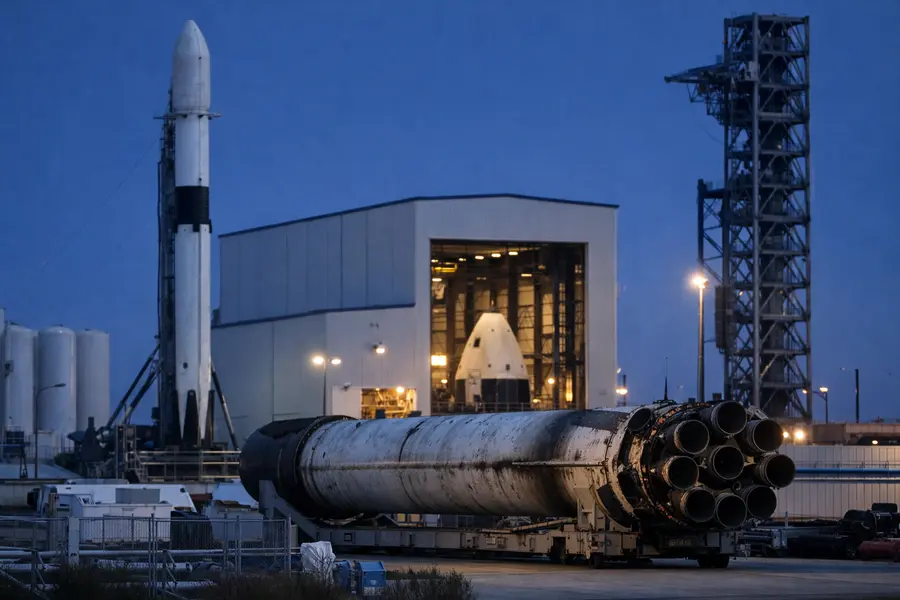
SpaceX's first post-IPO share lockup expires today, releasing up to 911.5 million insider shares worth roughly $101 billion as the market digests a volatile earnings reaction and a 14% rebound.
- SpaceX's first share lockup expires August 6, freeing up to 911.5 million insider shares and more than doubling the company's public float.
- SPCX closed nearly 14% higher Wednesday ahead of the unlock, paring a sharp post-earnings selloff triggered by $18.4 billion in quarterly capital expenditure.
- CEO Elon Musk's stake — representing more than 40% of the company's value — remains restricted until June 2027 under a separate extended lockup agreement.
Lead
Space Exploration Technologies Corp. (Nasdaq: SPCX) reached its first major post-IPO inflection point Thursday as the initial share lockup expired, rendering up to 911.5 million insider-held shares eligible for sale. The unlock, valued at approximately $101 billion at Wednesday's closing price of $125.33, more than doubles the company's freely tradable float — from roughly 639 million shares to as many as 1.55 billion — just 55 days after the largest IPO in U.S. market history.What Happened
SpaceX debuted on Nasdaq on June 12, 2026 at $135 per share, raising capital while initially making less than 5% of total shares available to the public. The company adopted an unusual staggered lockup structure — nine separate tranches spread across the calendar rather than a single fixed expiration — designed to moderate the risk of a sudden supply shock.Thursday's first tranche gives insiders the right to sell up to 20% of their restricted holdings. A second release of 319 million shares follows on August 12, with additional tranches running through year-end. The full 180-day lockup concludes in early December, at which point up to 5.33 billion shares would theoretically be eligible for trading. One constraint limits Thursday's release: approximately 455.8 million shares remain frozen because the stock is currently trading below the $135 IPO price, a condition embedded in the lockup agreement.
Market Reaction
After initially surging above $225 in the first week of trading, SPCX shed more than half its peak value amid concerns about aggressive capital spending and a broader reassessment of AI infrastructure economics. The stock briefly fell below its IPO price in mid-July.
Wednesday's 14% rebound followed days of selling pressure that began immediately after the company released second-quarter earnings on August 4. Those results showed quarterly revenue of $7.8 billion — 92% above the year-ago period and nearly $1 billion ahead of consensus estimates — but also disclosed capital expenditure of $18.37 billion for the quarter, with $15.83 billion directed toward AI infrastructure. The net loss narrowed to $541 million from $1 billion a year earlier, while adjusted EBITDA nearly tripled to $3.5 billion.
Strategic Context
Starlink, the company's satellite internet service, anchors the revenue base with $4.3 billion in quarterly segment revenue and 12 million subscribers, double the figure from a year ago. The SpaceX rocket launch business — the industrial backbone that underwrites the company's cost-of-access advantages — remains the most visible and operationally differentiated segment, providing both proprietary launch capacity and the reusable infrastructure that makes high-frequency orbital deployment economically viable.The AI segment, which covers the company's large-scale compute and data center buildout, generated $2.6 billion in revenue in the quarter, up 247% year-over-year. That growth rate drove initial investor enthusiasm but the $15.83 billion in AI-related capex attached to it raised immediate concerns about the trajectory of free cash flow.
The Float Arithmetic
Thursday's unlock lifts the freely tradable share count to as many as 1.55 billion, raising the public float to approximately 11.8% of total shares outstanding from 4.9% at IPO. Even at that level, SpaceX remains tightly controlled: Elon Musk's holdings, representing more than 40% of the company's equity value, are subject to a separate lockup running until June 2027, insulating the stock from its largest potential seller for at least another ten months.
Outlook
Whether Thursday's unlock produces sustained selling pressure or proves a paper event depends heavily on insider intentions that are not publicly disclosed in advance. The staggered structure was explicitly designed to prevent a single-day supply cliff. The more consequential test arrives in early December, when the full 180-day lockup expires and the universe of eligible sellers expands to encompass the majority of pre-IPO shareholders. Until then, quarterly earnings cadence, Starlink subscriber trajectory, and the pace of AI capex relative to segment revenue growth will likely drive SPCX more than any single lockup tranche.
Mentioned tickers: SPCX