Pomegra
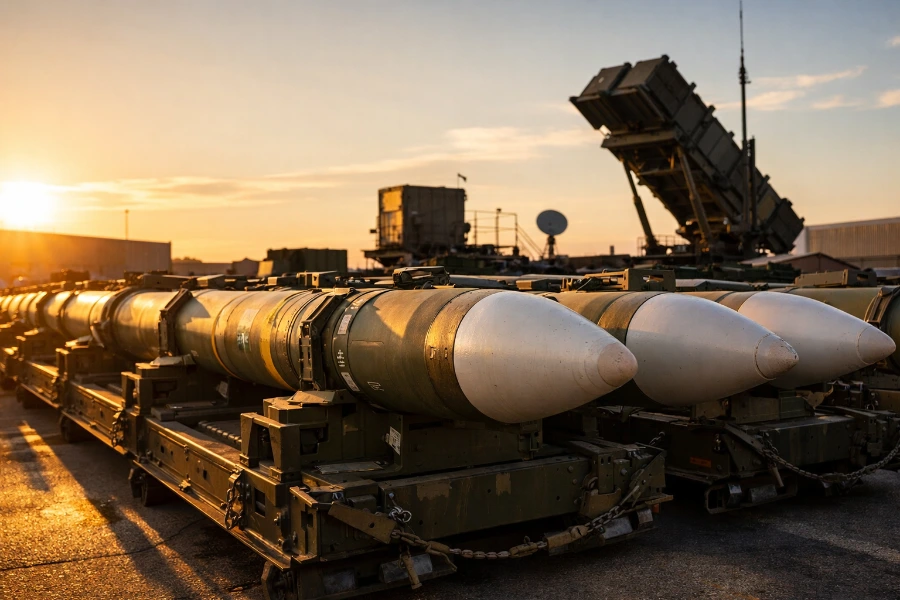
Hegseth's Pentagon has not cleared about 60 Patriot interceptors allocated to Ukraine as Russian strikes on cities and energy sites intensify before winter.
- About 60 Patriot interceptors earmarked for Ukraine still await sign-off from US Defense Secretary Pete Hegseth.
- No PAC-3 batch scheduled from September through December has cleared the Pentagon.
- A separate process to license Ukrainian production of Patriot interceptors has also stalled.
Lead
The Pentagon, under Defense Secretary Pete Hegseth, has held up the transfer of about 60 Patriot interceptors that Washington had already allocated to Ukraine. The delay was reported on November 24. It comes as Russia steps up missile and drone attacks on Ukrainian cities and critical infrastructure ahead of the cold season. A Pentagon spokesperson said US policy on supporting Ukraine has not changed but declined to comment on specific deliveries.
What Has the Pentagon Delayed?
The Pentagon has withheld approval for roughly 60 American-made PAC-3 and PAC-2 interceptors, including missiles held in Europe and already paid for by allied governments. The PAC-3 schedule called for eight interceptors in September, 10 in October, 10 in November and 12 in December. None of those batches has been released. About 20 older PAC-2 missiles are also awaiting approval.
The PAC-3 is Ukraine's most effective defense against Russian ballistic missiles. The Patriot system is produced by RTX Corp (RTX), and the PAC-3 interceptor is built by Lockheed Martin (LMT). Both are the main industrial beneficiaries of sustained Western demand for the system.
Why Does the Delay Matter Before Winter?
The delay matters because Ukraine's supply of interceptors is already well below the pace of Russian ballistic missile launches. Ukraine received an average of about 12 Patriot interceptors a month through 2026. Russia fires roughly 150 ballistic missiles a month. That gap leaves most incoming ballistic missiles unchallenged, and a stalled shipment widens it.
Russia's campaign against power generation, heating and gas facilities typically peaks in the coldest months. Ukrainian officials have pressed Washington to release the missiles, citing the need to protect urban centers and the energy grid. Outages in winter raise civilian risk and add to the cost of repairing and sustaining infrastructure.
Is Ukraine's Own Interceptor Production Also Stalled?
Yes. A separate Pentagon process that would authorize Ukraine to produce its own interceptors for Patriot systems has also been delayed. That track was meant to reduce Kyiv's long-term dependence on scarce US and European stockpiles. Without a license, Ukraine remains reliant on deliveries from limited inventories that Washington, Europe and other Patriot operators also need.
Strategic Context
The allocation of interceptors sits at the center of a broader tension over US stockpiles. Patriot interceptors are in demand across Europe, the Middle East and Asia. Production of the PAC-3 has risen but remains constrained by missile seeker and propulsion supply chains. Each decision to send missiles to Ukraine competes with US readiness requirements and with orders from other customers.
The Pentagon's hold applies to missiles whose transfer had already been agreed. That makes it a question of political sign-off at the top of the department. It differs from a debate over new appropriations or production capacity. European governments that financed part of the package have an interest in the outcome, as they have increasingly paid for US-made systems for Ukraine.
What Comes Next for Ukraine's Air Defense?
In the next three to 12 months, the outcome depends on whether Hegseth approves the held shipments and on how quickly deliveries reach Ukrainian batteries. Release of the December batch would add 12 PAC-3 interceptors to a monthly flow that is already inadequate. If the hold continues, Ukraine will have to ration scarce interceptors and rely on cheaper, shorter-range systems. These are less effective against ballistic threats.
For defense contractors, the episode shows how order books for air defense depend on both demand and political release authority. Allied governments may respond by pursuing more European-built systems, though none matches the PAC-3's performance against ballistic missiles at scale.
Outlook
About 60 Patriot interceptors allocated to Ukraine remain stuck at the Pentagon while Russian attacks intensify before winter. The decisive variable is Hegseth's sign-off on the September to December PAC-3 batches and on the older PAC-2 stock. Absent a release, Ukraine faces the coldest months with a thinner shield against ballistic missiles. Its path to domestic interceptor production also remains blocked.
Mentioned tickers: RTX, LMT