Pomegra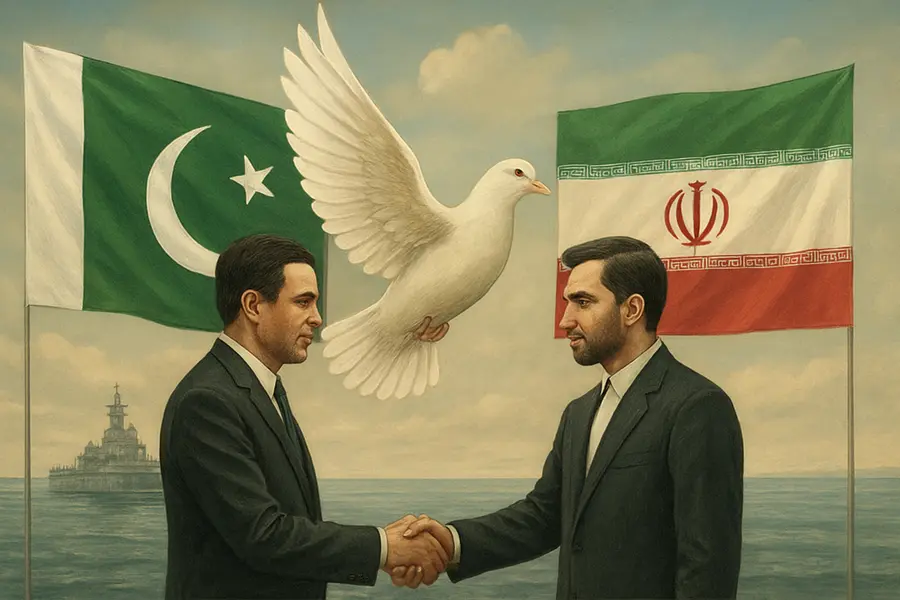
Pakistan's mediation of a June 2026 U.S.-Iran memorandum of understanding has repositioned Islamabad as a pivotal broker in Middle East stability, earning rare diplomatic capital from Washington, Riyadh, and Tehran simultaneously.
- Pakistan brokered a June 17 U.S.-Iran deal that reopened the Strait of Hormuz and halted four months of conflict.
- Brent crude surged past $120 per barrel at the peak of the Strait closure; normalization could take until mid-to-late 2027.
- Islamabad's dual leverage — Iran neighbor, U.S. strategic partner, Saudi mutual-defense ally — made it uniquely suited for Gulf security 2026 mediation.
Lead
Islamabad, June 2026 — Pakistan cemented its status as the primary Pakistan Iran peacemaker on June 17, 2026, when U.S. President Donald Trump and Iranian President Masoud Pezeshkian signed a memorandum of understanding brokered by Pakistani Prime Minister Shehbaz Sharif and Field Marshal Asim Munir. The agreement, finalized after more than 100 days of war that began with U.S. and Israeli strikes on Iran on February 28, mandates the immediate reopening of the Strait of Hormuz, lifts the U.S. naval blockade on Iranian ports, and initiates a 60-day negotiation window on Iran's nuclear program and sanctions relief — marking the most consequential act of Iran war diplomacy since the conflict's opening salvo.
What Happened
The 2026 Iran war began on February 28 when the United States and Israel launched large-scale strikes against Iranian military and nuclear infrastructure, killing Supreme Leader Ali Khamenei and triggering a cascade of Iranian retaliatory strikes across the region. The opening weeks drew in Lebanon, disrupted oil flows, and produced what the International Energy Agency characterized as the "largest supply disruption in the history of the global oil market."
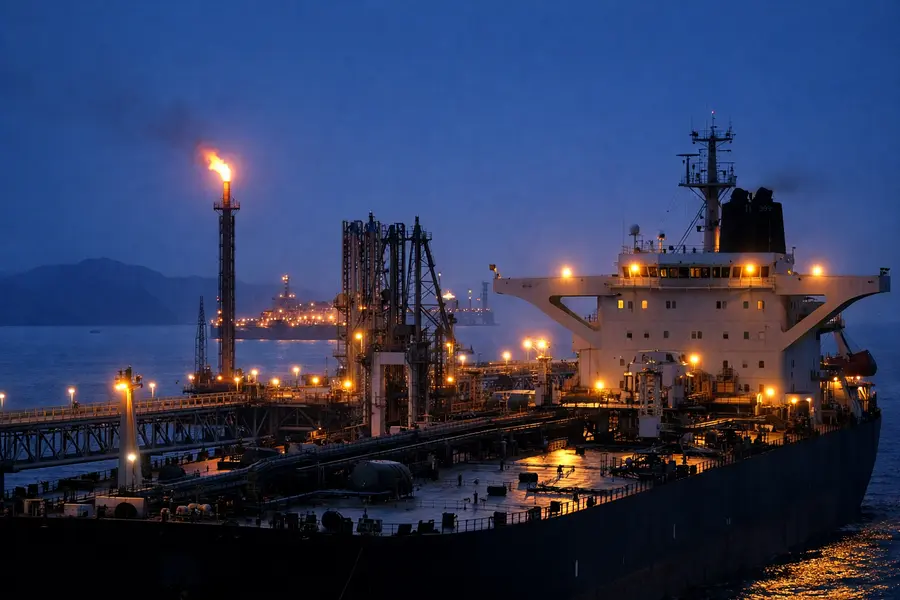
Beginning March 4, Iranian forces declared the Strait of Hormuz — the narrow chokepoint through which roughly 20 percent of global oil trade passes — formally closed, and began attacking vessels attempting to transit. Brent crude surged from approximately $80 per barrel at the conflict's outset to above $120 per barrel within days; analysts at Wall Street institutions began modeling scenarios approaching $200 per barrel. Gulf Cooperation Council oil production fell by a reported 10 million barrels per day by mid-March. More than 80 percent of food imports to GCC states, which depend on the Strait for the overwhelming majority of their caloric intake, were disrupted within two weeks.
A fragile two-week ceasefire took effect April 7. On April 11 and 12, Pakistan hosted the first direct talks between U.S. and Iranian delegations in Islamabad, in sessions spanning 21 hours across three rounds. The talks, led by Sharif, Munir, and Deputy Prime Minister Ishaq Dar, failed to produce a final agreement — core disputes over Iran's nuclear program and the future status of the Strait proved intractable — but kept the diplomatic channel open through a period of recurring low-level strikes and political threats.
Pakistan's Diplomatic Architecture
Pakistan's suitability as mediator was grounded in its structural position: a 1,000-mile land border with Iran, a mutual-defense pact with Saudi Arabia signed in September 2025, and the United States as its principal global partner and source of multilateral financing lifelines. No other state in the region carried simultaneous credibility with all three principal parties.The ceasefire of April 7 had direct strategic significance for Islamabad beyond the humanitarian dimension. Any Saudi decision to invoke the mutual-defense understanding with Pakistan — possible had hostilities escalated further — would have forced Islamabad into an unwinnable choice between its Iranian neighbor and its Gulf patron. Pakistan's peacemaking resolved that dilemma before it materialized.
On March 12, Sharif and Munir traveled to Jeddah to meet Saudi Crown Prince Mohammed bin Salman, expressing solidarity while urging restraint. Saudi Foreign Minister Prince Faisal bin Farhan Al Saud later acknowledged Pakistan's "consistent and sustained efforts in support of mediation and dialogue throughout the process."
Gulf Security and Economic Damage
The economic toll on Gulf states underscores the stakes driving Gulf security 2026 negotiations. By March 31, the combined cost to Arab countries from conflict-related disruptions was estimated at $120 billion. Kuwait, Iraq, Saudi Arabia, and the UAE collectively lost upward of 6.7 million barrels per day of production by March 10, worsening to at least 10 million barrels per day by March 12. A parallel food supply emergency — with 70 percent of regional food imports disrupted by mid-March — tested social stability in several GCC states.
The June 17 memorandum's immediate reopening clause for the Strait of Hormuz provided direct economic relief, but energy analysts warn that full normalization of Middle East stability in export flows is unlikely before mid-to-late 2027, given infrastructure damage and Iran's declared intention to pursue passage tolls on commercial shipping regardless of any permanent settlement.
What Pakistan Gains
Islamabad's diplomatic dividend is substantial. Pakistan's profile as a credible neutral interlocutor — rare in a region increasingly polarized along sectarian and geopolitical fault lines — has been elevated before the United Nations, the G20, and Gulf sovereign wealth institutions, all of which are relevant to Pakistan's ongoing economic stabilization program. Analysts broadly expect Islamabad to leverage the mediation role in renegotiating energy import terms with Gulf states and in seeking faster access to multilateral credit facilities with U.S. backing.
Outlook
The June 17 agreement has reduced acute Gulf security 2026 risks, restored partial Strait of Hormuz transit, and opened a 60-day window for permanent nuclear and sanctions negotiations. Unresolved disputes — chiefly whether Tehran has committed to UN inspections of bombed nuclear sites — cloud the timeline to a durable settlement. Pakistan's continued involvement as a guarantor of the process remains the central variable determining whether Iran war diplomacy produces a lasting framework or stalls in the face of domestic political pressures in Washington and Tehran. For Islamabad, either outcome has already yielded a geopolitical return that extends well beyond the immediate crisis.
Mentioned tickers: UCO, XOP, USO, BNO