Pomegra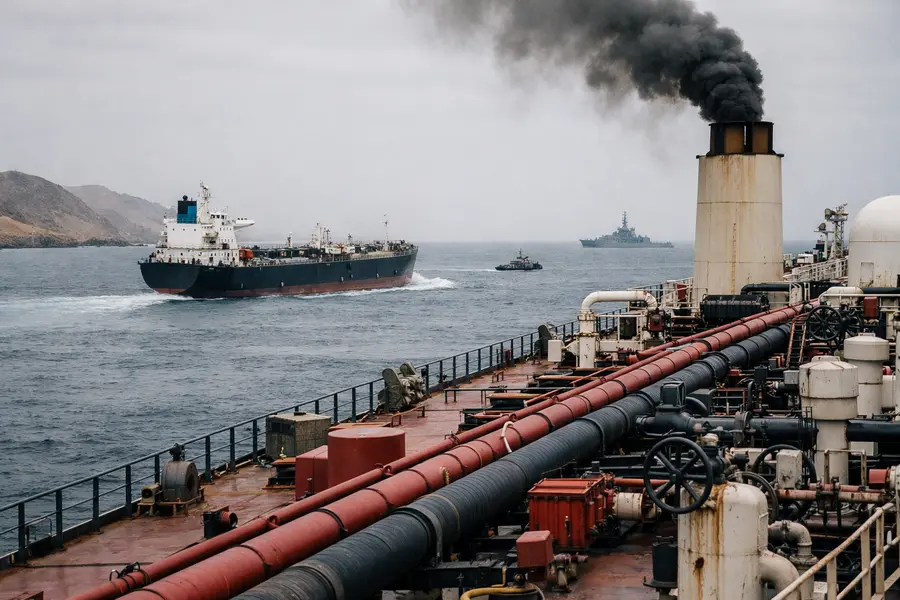
Brent crude rose about 1.2% Tuesday after a deadly Houthi double-tap strike on an oil tanker in the Bab al-Mandab Strait compounded investor anxiety over stalled U.S.-Iran Strait of Hormuz negotiations.
- Houthis killed six crew members aboard the Egyptian cargo ship Tihamah in the Bab al-Mandab Strait on August 12, the region's deadliest shipping attack since the U.S.-Israel war on Iran began.
- Brent crude traded near $89 per barrel, up roughly 1.2% on the day and more than 7% over the past month as dual chokepoint risks intensify.
- Iran's Revolutionary Guards have refused to reopen the Strait of Hormuz until Washington lifts its economic blockade first, blocking a near-complete deal brokered by Oman.
Lead
Brent crude extended gains on Tuesday, August 12, 2026, climbing approximately 1.2% to around $89 per barrel as two of the world's most critical maritime corridors — the Bab al-Mandab Strait at the southern tip of the Red Sea and the Strait of Hormuz at the Persian Gulf's mouth — both came under fresh pressure within hours of each other. A Houthi ballistic-missile double-tap strike on the Egyptian-owned cargo vessel Tihamah killed six crew members and wounded ten others, while U.S.-Iran diplomacy over freedom of navigation through Hormuz remained deadlocked over sequencing demands from Tehran.What Happened
A Houthi cell fired three ballistic missiles at the Tihamah as the vessel transited the Bab al-Mandab Strait, according to Yemen's internationally recognized government. The second missile struck rescue personnel responding to the initial hit, a tactic designed to maximize casualties. Six people were killed — including three Pakistani nationals and one Indonesian national — with ten others wounded. The ship sustained significant structural damage. Yemen's government described the attack as a deliberate double-tap strike intended to kill aid workers and first responders.
It is the first confirmed shipping fatality linked to Houthi forces since the U.S.-Israel military campaign against Iran launched on February 28, 2026, and signals a sharp re-escalation of maritime risk in the Bab al-Mandab Strait corridor, through which approximately 32 vessels transited daily as of late July, down from 50 ships per day before the conflict began.
Hormuz Deadlock
Parallel to the Houthi attack, negotiations over the Strait of Hormuz remained stuck. The United States, Iran, and Oman had reached what diplomats described as an advanced stage of a framework deal following the 14-point memorandum of understanding signed by Washington and Tehran on June 17, 2026, which set out a 60-day window to negotiate freedom of navigation, Iran's nuclear and missile programs, and sanctions relief. An initial two-week ceasefire brokered on April 8 had granted ships temporary safe passage through the strait.
That goodwill has since eroded. Iran's Islamic Revolutionary Guard Corps announced it will not reopen the Strait of Hormuz unless the United States first lifts its economic blockade — a sequencing demand Washington has rejected. Tehran has separately proposed imposing tolls on commercial vessels traversing the strait, a condition that Oman and the U.S. oppose outright. The result is a stalemate that has left oil tanker operators and charterers without clarity on when — or whether — the world's most important petroleum chokepoint will fully reopen.
Market Reaction
Brent crude held near $89 per barrel on Tuesday, a gain of roughly 1.2% intraday and approximately 7% above its level a month ago. The dual-chokepoint dynamic — Houthi attacks in the Bab al-Mandab Strait compressing southbound Red Sea shipping, and Hormuz restrictions limiting Gulf crude export flows — has compressed global oil tanker routing options, pushing freight costs higher and adding a security premium to physical crude benchmarks.The International Maritime Organization has recorded a dozen commercial vessel attacks in waters near Hormuz since July 6, resulting in two seafarer deaths and more than a dozen injuries before Tuesday's strike. Marine insurers have re-rated the entire Red Sea–Gulf of Aden corridor as a war-risk zone, substantially raising operating costs for oil tanker operators that had returned to the lane.
Strategic Context
The Bab al-Mandab Strait, a 30-kilometer-wide passage between Yemen and Djibouti, is the gateway through which Red Sea traffic connects to the Indian Ocean. Houthi forces, which control Yemen's western coastline, have used the waterway as a pressure lever since late 2023, and their campaign has intensified since the U.S.-Israel war on Iran began in February 2026. By simultaneously threatening the Bab al-Mandab Strait and supporting Iran's posture on Hormuz, the Houthis extend Tehran's coercive reach across two chokepoints that together handle a significant share of global crude and refined-product flows.
Saudi Arabia's crude export routes pass through both corridors. A Houthi blockade — announced in July 2026 on ships originating from or passing through Saudi ports — adds a third layer of pressure on oil tanker operators serving the Kingdom's terminals.
Geopolitical Dimension
The Hormuz negotiations reflect a broader contest over the post-conflict regional order. The June MOU committed both sides to good-faith talks on Iran's nuclear and ballistic-missile programs, but the IRGC's hardline posture on sequencing suggests internal fractures in Tehran over the price of reopening. The United Kingdom, Germany, and France have signaled willingness to lift certain sanctions in exchange for nuclear concessions, but European leverage remains secondary to U.S.-Iran dynamics.
Oman, which has historically mediated between Washington and Tehran, has continued to facilitate talks but faces limits in bridging the sequencing gap. Any collapse of the Hormuz framework would lock in the current partial closure — effectively creating a sustained structural tightness in oil tanker supply that the market has only partially priced in.
Outlook
With Hormuz diplomacy stuck on sequencing and the Bab al-Mandab Strait recording its deadliest oil tanker attack since the conflict escalated, the risk premium embedded in Brent crude appears likely to persist through the remainder of the 60-day MOU window, which expires in mid-August. A breakthrough on the Iranian sequencing demand could trigger a sharp reversal; a breakdown would push routing costs, insurance premiums, and crude benchmarks materially higher. Until either scenario resolves, markets will continue to treat both chokepoints as active supply constraints.
Mentioned tickers: BNO, USO, XLE, TTE, BP, SHEL