Pomegra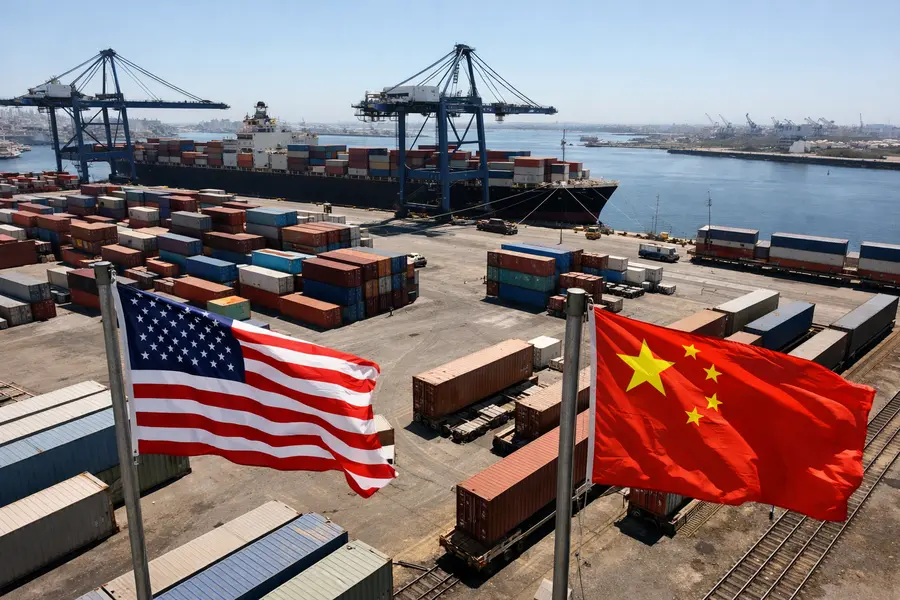
Trump and Xi agree to a trade truce and AI safety framework in Washington, but surging Treasury yields erase gains, ending markets flat to negative.
- The U.S. and China agreed to extend the bilateral trade truce and phase down tariffs on $500 billion in goods over a 12-month window
- Summit talks produced a joint framework addressing AI safety protocols, capability-threshold notifications, and Taiwan crisis-communication guardrails
- 10-year Treasury yields climbed 14 basis points to 5.18%, overwhelming diplomatic goodwill and pulling the S&P 500 into negative territory
Summit Closes With Historic Commitments
President Donald Trump and Chinese President Xi Jinping wrapped a two-day summit at the White House on Thursday, issuing a joint statement that formalized an extended trade truce, outlined tariff reductions on roughly $500 billion in bilateral goods, and established a preliminary framework for AI safety cooperation and Taiwan communication protocols. It marked the broadest joint communique on technology and security between the two governments since the 2023 San Francisco summit, and the first face-to-face meeting between the two leaders on U.S. soil in over a decade.
The tariff framework calls for phased reductions averaging 15 percentage points across targeted industrial and consumer goods categories over 12 months, contingent on verification milestones. The technology sector, which includes major U.S. exporters such as Apple (AAPL), Nvidia (NVDA), and Microsoft (MSFT), stands to benefit directly from eased export restrictions embedded in the agreement.
Why Did Markets Fail to Rally?
The positive diplomatic signal was neutralized almost immediately by a sharp rise in interest rates at the long end of the Treasury curve. The 10-year yield climbed to 5.18% - its highest close in three months - as stronger-than-expected U.S. labor market data released Wednesday reinforced expectations that the Federal Reserve would hold rates higher for longer into 2027. Higher yields compress equity valuations by raising the discount rate applied to future earnings, a mechanical force that hit rate-sensitive growth stocks hardest regardless of their China-trade exposure.
Amazon (AMZN) fell 1.2% and Nvidia (NVDA) shed 0.9% despite direct exposure to any easing on bilateral trade. The SPDR S&P 500 ETF Trust (SPY) closed down 0.3%, while the Nasdaq (QQQ) ended the session off 0.6%. Markets had partially priced in a constructive summit outcome in the days prior, which explains the muted reaction to the trade headlines and the asymmetric sensitivity to the yield move.What Does the AI Safety Framework Cover?
The joint AI framework commits both governments to a series of technical exchanges on the safety properties of large-scale AI systems, agreed notification procedures for advanced model deployments above defined capability thresholds, and a standing working group empowered to escalate concerns. It stops short of binding restrictions on model training or export and contains no enforcement mechanism, but represents the first formal bilateral architecture for AI risk governance between the two largest AI powers.
The Taiwan component establishes a dedicated diplomatic hotline and shared operational terminology to reduce miscalculation risk during potential incidents in the Taiwan Strait, modeled on Cold War-era nuclear risk-reduction agreements. Both sides characterized the channel as strictly crisis-management and explicitly not a negotiation over Taiwan's political status.
Geopolitical Context
The summit arrives as bilateral trade volumes have stabilized following two years of supply-chain decoupling and elevated tariff regimes. U.S. goods imports from China ran at an annualized rate of roughly $450 billion through mid-2026, down sharply from peak levels but still representing one of the world's largest bilateral trade flows. A credible tariff reduction path would benefit U.S. retailers, consumer electronics companies, and industrial importers, while giving Chinese manufacturers partial relief from the punitive schedules imposed since 2018.
What Comes Next for U.S.-China Relations?
Implementation will determine whether the summit produces durable economic relief. The joint statement designates a 90-day negotiating window for technical working groups to finalize tariff schedules, product lists, and verification procedures - a timeline that mirrors earlier U.S.-China phase agreements and carries similar risks of slippage. Congressional reaction to any formal trade agreement will also shape ratification timelines and market confidence in the framework's longevity.
On AI and Taiwan, the framework documents explicitly reserve the right of either party to withdraw from the dialogue mechanism with 30 days' notice, underscoring its non-binding character. Near-term attention will focus on whether the AI working group convenes on schedule and whether the Taiwan hotline is activated or remains a background diplomatic instrument.
Outlook
The Washington summit represents a genuine, if bounded, reduction in bilateral tension - the first substantive diplomatic architecture between the two powers in several years. The tariff pathway, if implemented, offers a modest tailwind to corporate earnings across technology, retail, and industrial supply chains. However, the session's market arithmetic was decided by the Treasury market, not the diplomatic room. Until the interest-rate trajectory stabilizes, geopolitical breakthroughs will face a high hurdle in equity valuations. Investors will monitor the 90-day negotiating window closely and await any Federal Reserve commentary on labor-market conditions before rerating the summit's full economic significance.