Pomegra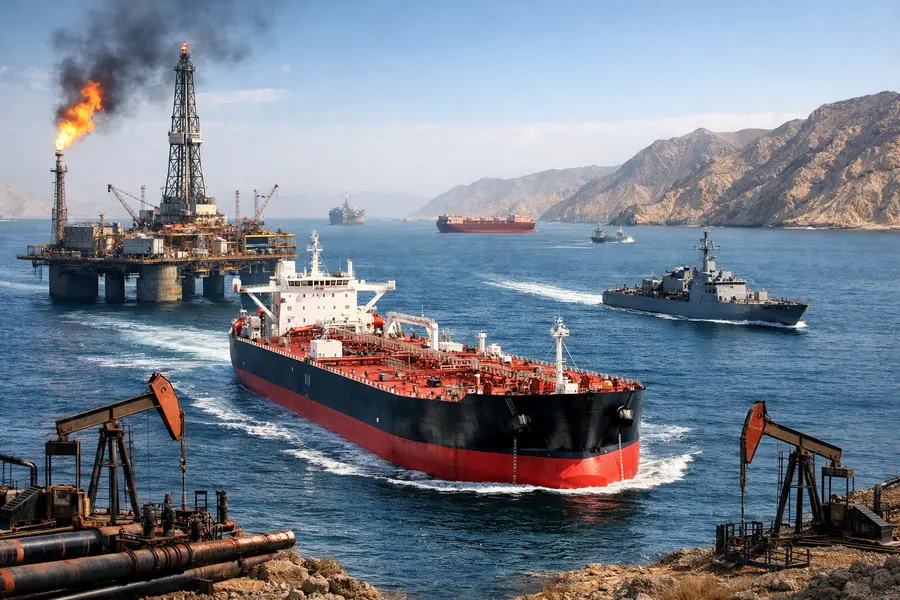
Seven major OPEC+ producers approved a 188,000-bpd output increase for August, the alliance's fifth straight monthly hike, as Strait of Hormuz traffic rebounds and Brent crude retreats toward pre-conflict levels.
- Seven OPEC+ members — led by Saudi Arabia and Russia at 62,000 bpd each — add a combined 188,000 bpd in August, extending the longest unbroken run of output hikes in three years.
- Brent crude slipped below $72 a barrel following the decision, roughly where it traded before U.S.-Israeli strikes on Iran in late February, and well below the $120 peak reached in March.
- Hormuz volumes stand at an estimated 7 million bpd — less than half the waterway's 20 million bpd pre-war throughput — with analysts warning full normalisation may take six months or more.
Lead
Seven members of the OPEC+ alliance agreed on Sunday to expand collective output by 188,000 barrels per day starting in August, marking the fifth consecutive month the group has authorized a OPEC+ oil output hike as the Strait of Hormuz works through a gradual, uneven reopening. The decision, confirmed July 6, 2026, carries Saudi Arabia's required production ceiling to 10.4 million bpd and Russia's to 9.88 million bpd, and reflects the cartel's accelerating effort to reclaim market share surrendered during a wartime supply shock that briefly pushed crude prices to multi-year highs.
What Happened
Meeting in a virtual ministerial session, the seven participating producers — Saudi Arabia, Russia, Iraq, Kuwait, Kazakhstan, Algeria, and Oman — authorized the latest tranche of output recovery under a phased unwinding of approximately 2.2 million bpd in voluntary cuts first imposed in April 2023. The August increment is identical in size to each of the prior four monthly approvals, sustaining a steady cadence that has now returned several hundred thousand barrels per day to global crude oil supply since the alliance pivoted away from price defence earlier this year.
The backdrop is a Hormuz oil recovery that is moving faster than most forecasters anticipated but remains deeply incomplete. The strait, which handled roughly 20 million bpd of oil and condensate before U.S. and Israeli military strikes against Iran's nuclear facilities in late February, was effectively closed during the height of the conflict and has been reopening since June. Current throughput is estimated at around 7 million bpd — a marked improvement over the near-zero flow seen at the crisis peak, but still far short of pre-war norms.
Market Reaction
Crude prices fell immediately after the decision circulated Sunday evening. Brent crude traded down roughly 0.76 percent to $71.55 a barrel, while WTI dropped close to 1 percent to near $68.70 a barrel. Both benchmarks are now approximately at levels prevailing before the Iran strikes — a full retreat from the $120-per-barrel spike logged in March when Hormuz closures threatened to remove the equivalent of roughly one-fifth of daily global seaborne oil flows.
The convergence of expanding OPEC+ oil output and a recovering waterway is dismantling what traders had priced as a durable geopolitical risk premium. Brent last sustained $70-75 pricing in early 2026 before the conflict premium inflated crude valuations across the forward curve.
Strategic Context
OPEC+ leadership, particularly Riyadh and Moscow, has chosen market-share recovery over price support for the fifth month running. The calculus reflects several pressures. First, several member states — notably Kazakhstan and Iraq — had been producing above their allocated ceilings throughout the cut period, eroding the group's collective discipline and incentivizing Saudi Arabia to halt the subsidy it was effectively providing over-producing partners. Second, Middle East crude exporters that pivoted to alternative pipeline and tanker routes during the Hormuz closure — including Saudi Arabia and the UAE, whose east-west pipeline capacity bypasses the strait — are now better positioned to sustain volume growth regardless of the waterway's pace of normalisation.
Geopolitical Dimension
The Hormuz oil recovery remains fragile. Despite the June reopening, commercial insurers continue to price elevated war-risk premiums on Gulf transits, tanker operators are repositioning fleets that spent months on alternative routes, and mine clearance operations in the strait's approaches are ongoing. Analysts caution that even under an optimistic scenario, only roughly 85 percent of lost volumes are likely to be restored by October, and long-run transit normalisation may plateau at 60 to 70 percent of pre-war crossing levels due to persistent risk assessments by shipping firms.
The broader energy security equation has also shifted. The crisis accelerated investment in bypass pipeline capacity from the Gulf to the Red Sea and Mediterranean, raised the geopolitical salience of non-Hormuz-dependent export routes, and prompted consuming nations — particularly in Europe and Asia — to reassess strategic reserve adequacy. Those structural adjustments will outlast the current ceasefire.
What Comes Next
With the war-risk cushion deflating and OPEC+ committed to further monthly increments, the global crude oil supply outlook for the second half of 2026 has tilted measurably toward surplus. Major investment banks have flagged the risk of a returning supply overhang, with some forecasting Brent in a $60–65 range by year-end if Hormuz throughput continues to recover and OPEC+ maintains its current pace of unwinding.
The pace of future monthly decisions will depend heavily on how quickly Hormuz volumes rebuild, whether overproducing members stay within revised ceilings, and the durability of the U.S.-Iran ceasefire. Any material reversal in Hormuz transit conditions could shift the group's calculus rapidly.
Outlook
OPEC+ has now approved five consecutive months of output increases totalling well over half a million barrels per day, unwinding the bulk of cuts put in place during the 2023 rebalancing cycle. With Brent back near pre-conflict levels and Hormuz recovering, the alliance's near-term trajectory points toward continued modest volume additions — and a tighter floor for crude prices than the market currently reflects if the geopolitical situation deteriorates again. The key variable for the energy market over the next two quarters is whether the Hormuz oil recovery proceeds smoothly enough to offset incremental OPEC+ supply, or whether residual disruption keeps a structural bid under crude even as quotas rise.
Mentioned tickers: USO, XLE, XOM, BP, CVX, SLB