Pomegra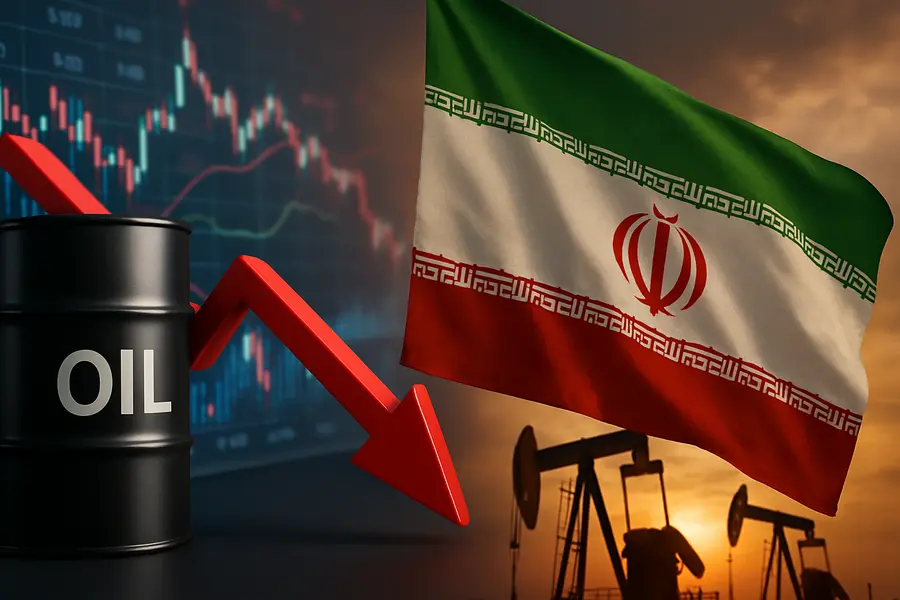
Brent crude retreats for a third straight week as weakening global demand forecasts overwhelm a fresh Hormuz shipping scare, pulling oil prices back to pre-conflict levels.
- Brent crude fell more than 2% Friday to roughly $72.86, on track for a third consecutive weekly loss as demand weakness dominates.
- A projectile strike on a cargo vessel near Oman briefly revived Iran oil news fears but failed to sustain any price recovery.
- The EIA cut its 2026 global demand forecast by 1.1 million b/d, the deepest downgrade since the conflict began.
Lead
Brent crude dropped more than 2% on Friday, June 26, settling near $72.86 per barrel and erasing the last residue of the post-war geopolitical premium as bearish energy market demand signals overtook a fresh incident in the Strait of Hormuz. The session extended what is now a third straight weekly decline for crude, returning prices to levels last seen in late February before the U.S.-Iran conflict erupted.What Happened
The trading session opened on an anxious note after the container vessel Ever Lovely was struck by an unidentified projectile southeast of Oman on Thursday, temporarily halting a United Nations evacuation plan for ships stranded near the waterway and prompting several tankers to reverse course. Brent briefly rallied as much as 4% on the news before surrendering all gains and turning sharply lower.
President Donald Trump confirmed the strait remains navigable, and shipping data showed oil flows through the Hormuz passage reaching their fastest pace since the conflict began. Between June 15 and June 21, 125 transits were recorded — the highest weekly total of the conflict period — as tankers rushed to capitalize on the 60-day memorandum of understanding signed by Trump and Iranian President Masoud Pezeshkian at the Palace of Versailles on June 17 following the G7 summit.
The Ever Lovely incident illustrated the limits of that fragile confidence. War-risk insurance premiums have surged from 0.05% to more than 0.7% of hull value per transit, a structural cost increase that remains in place regardless of headline diplomatic progress.
Energy Market Demand: The Dominant Force
The crude oil price drop today reflects a decisive shift in what markets are pricing. The geopolitical premium that drove Brent to an average of roughly $105 per barrel during peak disruption has rapidly deflated since the ceasefire framework took hold. Structural demand weakness has reasserted itself as the primary driver of the oil price drop.
The U.S. Energy Information Administration now projects global energy market demand to decline by 1.1 million barrels per day on average in 2026 — a direct reversal of the 1.2 million b/d growth forecast in February. The revision traces back to the economic fallout from months of constrained Hormuz flows: Middle Eastern producers cut output by more than 11 million barrels per day in May compared with pre-conflict levels, disrupting supply chains, raising manufacturing input costs, and accelerating demand destruction across import-dependent economies.
China, the largest single source of marginal demand growth over the past decade, has exhibited measurable softening. Industrial activity and refinery run rates have moderated, removing a key pillar from the demand thesis that underpinned crude markets entering the year.Market Reaction
The crude oil forecast among institutional participants has converged on a prolonged supply surplus scenario rather than renewed scarcity. Even with Hormuz reopening and Middle Eastern producers beginning to restore capacity, the speed of that ramp-up is constrained by demining operations, unresolved transit authority arrangements, and persistent insurer caution.
Geopolitical Dimension
Iran oil news continues to generate intraday volatility, but the market's muted response to Thursday's vessel strike illustrates a structural repricing of risk. The June 17 ceasefire framework — even though provisional and subject to a 60-day negotiation window — materially reduced the probability of a full Hormuz closure re-materializing in the near term.The larger unresolved variable is Iran's nuclear program. Talks remain embryonic, and a geopolitical risk premium will not disappear entirely until a verifiable agreement emerges. In the interim, any fresh incident — another vessel strike, a diplomatic breakdown, or military escalation — retains the capacity to push Brent back toward $80 or beyond. Absent such a trigger, however, the energy market demand trajectory is now the stronger gravitational force.
Shipping recovery is also progressing unevenly. The UN evacuation plan for stranded vessels was suspended following the Ever Lovely incident, and several major carriers have maintained precautionary rerouting via the Cape of Good Hope, keeping freight costs above pre-conflict norms and slowing the normalization of physical crude flows.
Crude Oil Forecast: What Comes Next
The IEA's June 2026 Oil Market Report projects demand recovery taking hold in late 2026 and accelerating through 2027, when global consumption is expected to rebound by 2.5 million b/d to 105.3 million b/d, contingent on full normalization of Middle East exports. The EIA's Short-Term Energy Outlook echoes that trajectory but flags operational and political constraints — including prolonged demining and unresolved transit arrangements — as meaningful downside risks to the near-term crude oil forecast.
For oil markets, the near-term path is defined by three variables: the pace of Hormuz transit normalization, OPEC+ production discipline, and whether the 60-day U.S.-Iran framework converts into a durable agreement before it expires.