Pomegra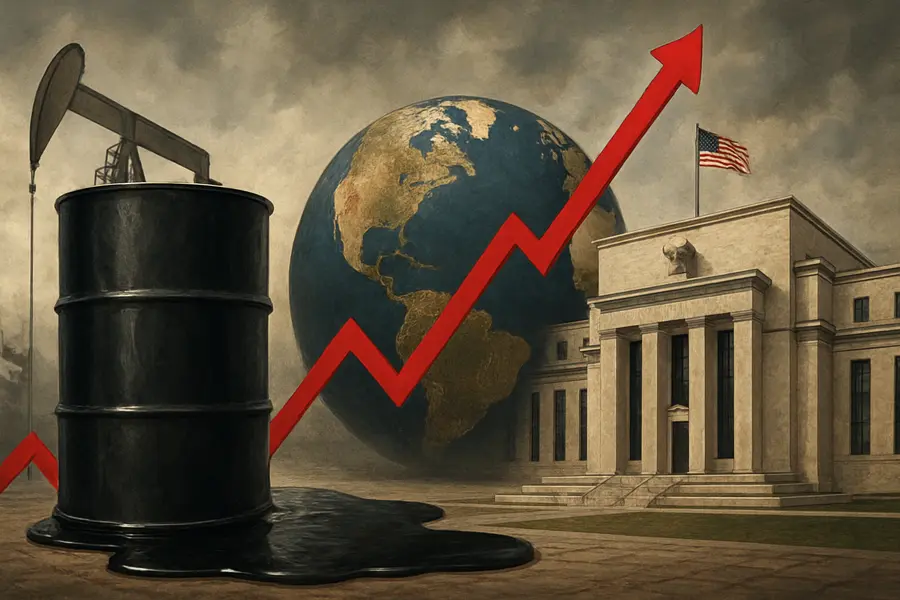
Iran's war-driven oil supply crisis has erased all Fed rate-cut expectations, pushing U.S. inflation to 4.2% and placing borrowing costs on hold — or higher — well into late 2026.
- Brent crude surged above $120/barrel after the Strait of Hormuz closed in March; prices have since retreated to near $80 amid partial reopening.
- The Fed held the benchmark rate at 3.5%–3.75% in June; nine of 18 FOMC members now project at least one rate hike before year-end.
- PCE inflation was revised sharply higher to 3.6% for full-year 2026, up from a 2.7% forecast in March, driven primarily by energy costs.
Lead
Washington — The Federal Reserve kept its benchmark interest rate unchanged at 3.5%–3.75% on June 17, 2026, in a unanimous 12-0 vote at new Chair Kevin Warsh's first policy meeting — but the decision masked a dramatic hawkish shift beneath the surface. Half of the Federal Open Market Committee's voting members now project at least one rate hike before the end of 2026, a posture that was entirely absent from the Fed's March forecasts. The driver is unambiguous: a geopolitical oil shock stemming from the 2026 Iran conflict has reignited U.S. inflation risks and forced a fundamental repricing of the monetary policy outlook that had, at the start of the year, assumed multiple rate reductions.
What Happened
The Iran war, which escalated sharply in early March 2026, triggered the closure of the Strait of Hormuz on March 4 — the narrow waterway through which roughly 20% of the world's traded oil passes. The International Energy Agency characterized the resulting disruption as the largest in the history of the global oil market, with Persian Gulf crude exports plunging from 18.3 million barrels per day to approximately 8.8 million barrels per day at the height of the crisis.
Brent crude surged past $120 per barrel in the immediate aftermath of the closure, before retreating toward $80 as diplomatic progress toward a U.S.-Iran ceasefire and the partial reopening of the Strait restored roughly 75% of prewar export volumes. As of late June, Brent trades near $78–$80 per barrel, still elevated against pre-conflict levels and well above the range that had underpinned the Fed's earlier dovish projections.Gasoline prices in the United States topped $4 per gallon at the peak — the highest since late 2023 — transmitting energy costs directly into household budgets and broader consumer prices.
Inflation and Borrowing Costs
The oil price impact on Fed deliberations has been profound. U.S. CPI inflation accelerated to 4.2% year-over-year in May 2026, primarily driven by energy costs. The Fed's preferred gauge, the PCE price index, rose to 3.3% on a core basis in April, up from 3.0% in December 2025, and the FOMC's Summary of Economic Projections now places full-year 2026 PCE at 3.6% — a full 90 basis points above the 2.7% forecast issued in March.
Fed borrowing costs 2026 have accordingly shifted from an expected easing path to a holding pattern with meaningful hike risk. Markets that entered the year pricing two to three rate cuts now assign just a 35% probability to even a single reduction. Bank of America has formally revised its forecast, projecting three 25-basis-point hikes that would carry the federal funds rate to 4.25%–4.5% by year-end. Nine FOMC members agree with that general direction, though the consensus on timing and magnitude remains unsettled.The 10-year Treasury yield has risen roughly half a percentage point since the onset of the conflict, settling near 4.4% — reflecting both the repricing of rate cut expectations and the inflation risk premium that elevated energy costs embed into long-duration debt.
Monetary Policy Outlook
Chair Warsh, who took the helm from Jerome Powell this month, signaled continuity on the inflation mandate while introducing procedural changes: a shorter policy statement, the removal of forward guidance language, and the formation of five internal task forces to review Fed processes. His tone was described as "unanimous and unambiguous" in the committee's commitment to restoring price stability.
The monetary policy outlook for the remainder of 2026 hinges on two variables: the durability of the Iran ceasefire and the trajectory of energy prices. A lasting peace deal that fully restores Strait of Hormuz throughput would ease oil-driven inflation, potentially reopening the door to one or two rate reductions in the fourth quarter. Conversely, a breakdown in negotiations — or renewed military escalation — could push Brent crude back above $100 per barrel, locking borrowing costs at current levels and validating the rate-hike projections embedded in the Fed's latest dot plot.
Stagflation Risk
The energy shock has revived the stagflation debate. Central banks facing simultaneously elevated inflation and slowing growth are pulled in contradictory directions: higher inflation risks imply the need for tighter policy, while weakened consumer demand from elevated energy costs argues for accommodation. The Fed's current posture — holding rates while signaling hike optionality — reflects precisely this tension. Households and businesses paying more for gasoline and heating fuel have reduced discretionary spending, dampening growth even as headline prices remain above target.
The Dallas Fed's research estimates that a sustained oil price increase of the magnitude seen in early 2026 adds meaningfully to U.S. inflationary pressure over a 12-to-18-month horizon, meaning the full pass-through of the energy shock has yet to appear in official data.
Geopolitical Dimension
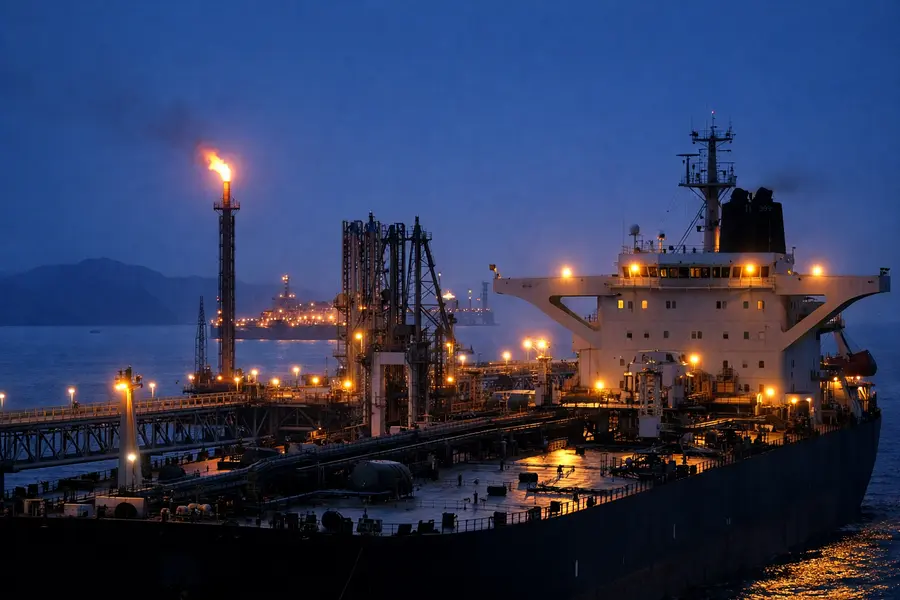
The 2026 Iran conflict has crystallized a structural vulnerability in global energy markets: the concentration of Persian Gulf crude flows through a single chokepoint. OPEC+ spare capacity, though available in principle, proved insufficient to fully offset the Hormuz disruption in the near term. Supply chains involving roughly 200 stranded tankers required weeks to normalize even after the waterway partially reopened.
For the Fed, geopolitical risk has become a formal input to the inflation outlook in a way that had not been evident since the 2022 Russia-Ukraine energy shock. Policymakers are now explicitly modeling oil supply scenarios as part of their rate path deliberations, a significant shift in the institution's analytical framework.