Pomegra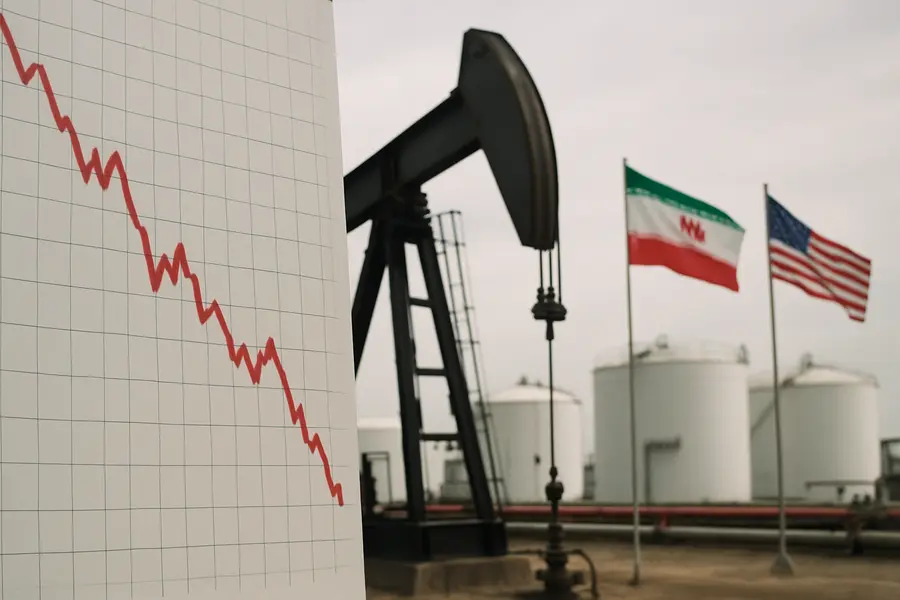
Oil holds at its weakest levels since before the US-Iran war began as Trump rules out Hormuz tolls for the 60-day ceasefire window and beyond, accelerating a broad retreat from wartime highs.
- Brent crude fell below $74/barrel on June 24, its lowest since before the February 28 US-Iran conflict began.
- Trump declared there will be "NO TOLLS" through the Strait of Hormuz during or after the 60-day ceasefire period, unless levied by the US itself.
- Oil has dropped roughly 20% from its 2026 peak as a US-Iran memorandum of understanding restores tanker traffic through the critical waterway.
Lead
Crude oil settled near multi-month lows on June 24–25 as investors priced in a sustained reopening of the Strait of Hormuz following a US-Iran memorandum of understanding signed June 17-18. Brent crude fell below $74 a barrel — its weakest level since before the conflict erupted on February 28 — while WTI dropped below $70, marking the first time the US benchmark has touched that level since the war began. The decline accelerated after President Donald Trump publicly ruled out shipping tolls through the strait, countering Tehran's reported bid to monetize its control of the chokepoint.What Happened
The US and Iran signed a memorandum of understanding in mid-June committing both sides to a 60-day ceasefire extension and the reopening of the Strait of Hormuz to commercial shipping. The deal, brokered partly through Omani intermediaries and formalized at a Swiss venue, calls for an end to hostilities across the region — including in Lebanon — and includes Tehran reaffirming a commitment not to develop a nuclear weapon. In parallel, a US blockade of Iranian ports is to be lifted.
Shipping traffic through the strait resumed with increasing confidence. Vessel operators began transiting the waterway with active satellite signals after the International Maritime Organization issued safety guarantees, and the UAE was exporting crude at roughly 85% of pre-war levels as of late June.
Trump's Toll Ruling
The sharpest catalyst for Wednesday's oil selloff was a statement from President Trump declaring: "There will be NO TOLLS in the Hormuz Strait for 60 days during the Cease Fire Period, and there will be NO TOLLS after the 60 day period has expired, unless they are imposed by and for the United States of America."
The statement directly addressed — and rejected — Iran's reported proposal to charge vessels for transit, insurance, navigation, or other maritime services once the negotiating window closes. Tehran had signaled it intended to co-manage a new fee regime for Hormuz alongside Oman. Trump's formulation preserves the US government's own right to levy future tolls while blocking Iran from doing so, a distinction that market participants read as removing a key residual risk premium from crude oil pricing.
Market Reaction
Oil prices have shed roughly 20% from their 2026 peak and approximately 40% from their wartime high as the de-escalation narrative has solidified. Brent's breach of $74 and WTI's slide below $70 represent a structural reset of the supply-risk discount that had inflated prices since the February 28 US-Israel strikes on Iran. Equity markets rallied in tandem, with energy sector stocks giving back some gains as refining margins and supply costs eased.The broader commodity complex responded in kind: natural gas futures softened as the roughly 20% of global oil and gas supply that transits Hormuz appeared increasingly accessible to buyers, and fertilizer-linked contracts eased on expectations that the approximately 30% of global fertilizer trade that moves through the strait would normalize.
Strategic Context
The Strait of Hormuz, the 21-mile-wide chokepoint between Oman and Iran, is the world's most consequential maritime energy corridor. Its closure during the US-Iran conflict triggered the largest crude oil price spike in years and contributed to a global inflation resurgence in early 2026. Even a partial blockade disrupted tanker routing, elevated insurance costs, and tightened supply from Gulf exporters including Saudi Arabia, the UAE, Kuwait, and Iraq.
The MOU's toll-free transit guarantee — now reinforced by Trump's public statement — removes both the physical and financial obstacles that had suppressed flows since late February. UAE restoration to 85% of pre-war export volumes suggests the physical supply recovery is already well advanced, with full normalization likely within weeks if the ceasefire holds.
Complications and Risk Factors
The path to a formal peace agreement remains uncertain. Iran briefly threatened to close Hormuz again on June 20, citing Israeli military activity in Lebanon as a ceasefire violation — a claim US forces denied. Negotiations at the Swiss resort of Bürgenstock paused temporarily in mid-June after a scheduled Geneva signing faced procedural delays. Iran also retains a stockpile of highly enriched uranium and has resisted committing to shipping it abroad, a sticking point in the broader nuclear dimension of talks.
A breakdown in negotiations before the 60-day window closes would likely reignite the geopolitical risk premium in oil markets. Traders are monitoring Iranian compliance with Hormuz passage guarantees, Israeli activity in Lebanon, and progress on the nuclear dossier as the principal risk tripwires.