Pomegra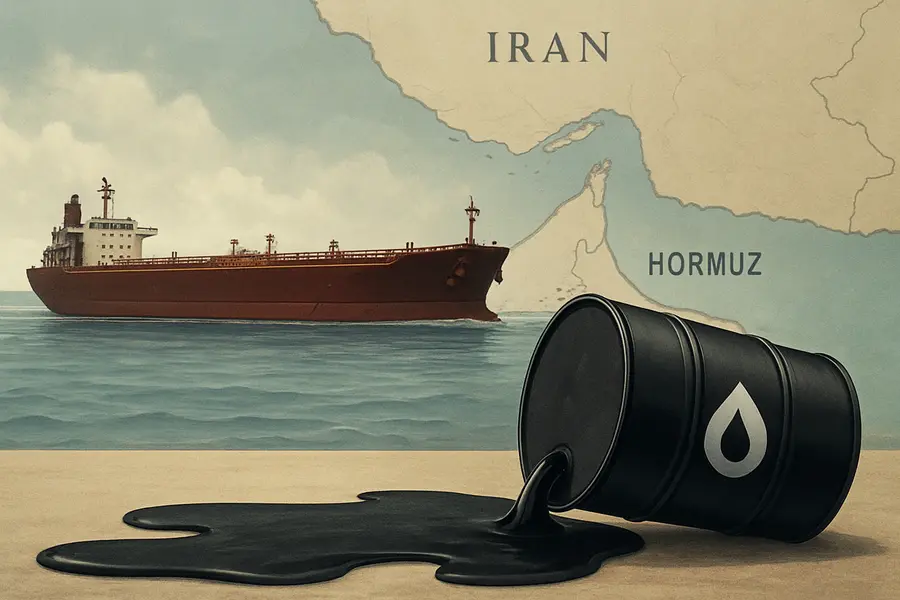
Brent crude settles at $71.99, its lowest since the war began, as 35 million barrels of oil transit the Strait of Hormuz under a fragile U.S.-Iran accord.
- Brent crude fell 4.34% to $71.99 a barrel Friday — the lowest level since February 27 — as tanker traffic through the Strait of Hormuz accelerated sharply.
- More than 20 tankers carrying roughly 35 million barrels have cleared the strait since the U.S.-Iran reopening accord, restoring Persian Gulf exports to ~75% of prewar volumes.
- The crude oil forecast remains conditional: Goldman Sachs lowered its Q4 2026 Brent target to $80, but Iranian mine-clearance and diplomatic fragility cap the downside for prices.
Lead
Brent crude oil settled at $71.99 a barrel on Friday — a price last seen the day before hostilities erupted in late February — as the Strait of Hormuz moved back into active commercial use following months of blockade. More than 20 tankers carrying an estimated 35 million barrels have navigated the waterway since the United States and Iran signed a memorandum of understanding on June 17, and global energy supply is recovering toward prewar baselines at a pace that surprised traders. U.S. West Texas Intermediate for August fell 3.74% on the same session to $69.23 a barrel.
What Happened
The oil price drop 2026 marks one of the sharpest reversals in recent energy-market history. Brent crude reached a wartime peak of approximately $120 per barrel in late April after Iran blocked the Strait of Hormuz in late February, retaliating against U.S. and Israeli air strikes with naval mines, vessel boardings, and navigation warnings. The International Energy Agency described the resulting disruption as the largest in the history of the global oil market — roughly 20 million barrels a day, or 20% of the world's seaborne oil trade, locked behind mines and blockades.
The June 17 accord set terms for a phased resolution: Iran lifts restrictions on Hormuz shipping for at least 60 days; the United States lifts its blockade of Iranian ports. Tankers began transiting the waterway within days of the agreement, and crude prices have shed their entire wartime premium in under two weeks. Brent's weekly decline exceeded 10% — its steepest single-week drop since the conflict began.
Hormuz Shipping News
The revival in Hormuz shipping news has been rapid but structurally uneven. Saudi Arabia's Ras Tanura terminal, the world's largest crude export facility, resumed tanker loadings almost immediately after the agreement — a signal watched closely by traders as a proxy for broader Gulf output intent. The United Arab Emirates, Kuwait, and Qatar are simultaneously ramping shipments, though each faces a logistical bottleneck: war-risk insurance premiums remain elevated, available tanker capacity is tighter than in a normal market, and naval inspection protocols are slowing throughput at the strait's chokepoint.
Persian Gulf exports have recovered to roughly 75% of prewar volumes. Shipping analysts estimate that clearing the backlog of vessels that accumulated during the blockade will take weeks, not days. Before the crisis, the strait handled approximately 93 ships per day; current transit rates remain well below that benchmark.
Market Reaction
Crude oil's retreat from the wartime premium has been orderly and swift. Brent has now erased all gains accumulated since late February, returning the market to what is effectively a pre-conflict pricing regime. Goldman Sachs revised its Brent forecast after the reopening accord, lowering its Q4 2026 target to $80 per barrel from $90, and projecting a 2027 average of $75 as additional Gulf barrels reach consuming nations.
The current price level implies that markets have largely front-run a best-case normalization scenario — unimpeded transit, a sustained ceasefire, and coordinated production increases from OPEC+ members. That pricing leaves Brent acutely sensitive to any deterioration in the political or physical conditions underpinning the accord.
Geopolitical Dimension
The situation remains fragile. The June 17 memorandum of understanding is a framework agreement, not a formal peace treaty. Iran has previously linked the operating status of the strait to developments in Lebanon, and a brief secondary closure followed Israeli strikes in southern Lebanon on June 19 — a pattern that illustrates how quickly access can change.
The strait itself is irreplaceable in the architecture of global energy supply. Beyond crude oil, approximately 20% of the world's liquefied natural gas also transits the 33-kilometer-wide passage at its narrowest point, serving as the primary export corridor for Gulf Cooperation Council producers. Ongoing Iranian mine-clearance operations, confirmed by U.S. Energy Secretary Chris Wright, continue to impose delays on full flow restoration and represent a persistent physical risk to tanker traffic even as diplomatic conditions hold.
Crude Oil Forecast
The crude oil forecast through year-end 2026 divides around two scenarios. In the normalization case — sustained reopening, successful mine clearance, rising Gulf output, and OPEC+ discipline — Brent settles in a $68–$80 range through Q4, as additional supply from the Gulf offsets recovering demand in Asia and Europe. In the disruption scenario — a renewed closure triggered by political escalation, a ceasefire violation, or fresh military action — a rapid return toward $100 per barrel is plausible within days.
The U.S. Energy Information Administration had projected Brent averaging $86 a barrel across 2026 before the reopening; that estimate is now under review as Gulf export volumes recover faster than originally modeled.
Outlook
The oil price drop 2026 narrative now hinges on diplomatic durability rather than supply fundamentals. The physical market is rebalancing rapidly, and Gulf producers have demonstrated the capacity to restore flows at scale once the strait is accessible. If the U.S.-Iran memorandum holds through its 60-day window and mine-clearance proceeds on schedule, Brent is positioned to consolidate in the high-$60s to mid-$70s through the summer. The structural question — how durably Iran's posture toward Hormuz has shifted — will shape energy risk premiums well into 2027 and remains the principal variable in any forward-looking crude oil forecast.
Mentioned tickers: BNO, USO, GS, XLE