Pomegra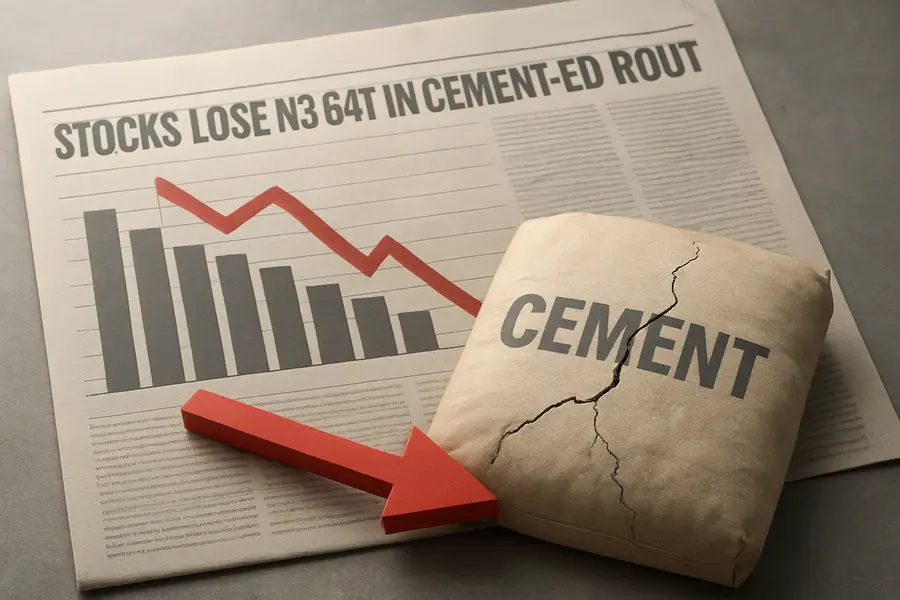
Nigeria's NGX market update on June 24 captures the exchange's worst single-day wipeout of 2026, as BUA Cement and Dangote Cement both hit the 10% downside limit, erasing N3.64 trillion in market capitalisation in one brutal session.
- The NGX All-Share Index fell 2,35% or 5,668.65 points to 235,074.54 — the steepest one-day drop of 2026.
- BUA Cement, Dangote Cement, and Geregu Power each shed exactly 10%, triggering a cascade across the industrial sector.
- The rout wiped roughly $4 billion from Nigerian billionaires' combined fortunes; Abdul Samad Rabiu alone lost more than $1 billion in a single session.
Lead
The Nigerian stock market crash of June 24, 2026, proved to be the most destructive single session on the Nigerian Exchange (NGX) this year. The benchmark All-Share Index plunged 5,668.65 basis points, or 2.35%, to close at 235,074.54. Market capitalisation fell N3.637 trillion to N150.85 trillion, eclipsing every previous correction session of the year and registering the single largest daily wealth destruction since early 2025. The catalyst was a simultaneous, maximum-limit selldown in the country's two dominant cement stocks — BUA Cement and Dangote Cement — compounded by an equally sharp reversal in Geregu Power.
What Happened
BUA Cement (BUACEMENT) closed at N340.20, down exactly 10.00% from its prior session close. Dangote Cement (DANGCEM) fell by the same margin to N963.00. Geregu Power (GEREGU) matched the move, settling at N917.40 — a level that placed the power stock below its 52-week low of N1,019.30.The synchronised selldown across three of the NGX's highest-weighted names overwhelmed buyers across the board. Breadth deteriorated sharply, with decliners outnumbering advancers by a wide margin and aggregate trading volumes surging as institutional participants reduced exposure.
The Nigeria stock market crash accelerated into the close without meaningful recovery attempts, a pattern consistent with forced selling or coordinated profit-realisation rather than a reactive correction to a single news event.
Market Reaction
The NGX Industrial Goods Index bore the heaviest sectoral damage, collapsing 8.31% to 10,202.25 points — the steepest one-day sectoral decline of the year and one of the sharpest ever recorded by any NGX sectoral index in a single session. The index had been the standout sector performer of 2026, surging +95.79% year-to-date before the session opened.
Nigerian equities had already shed approximately N8.24 trillion in total market value since the start of June, as investors rotated out of positions that had delivered outsized first-half returns. The June 24 session converted a sustained, multi-week correction into the year's defining rout.Across other sectors, sentiment was broadly negative but not catastrophic. Banking, consumer goods, and telecoms names saw modest declines, suggesting the damage was concentrated rather than systemic — a characteristics of a sector-specific deleveraging event rather than a macro-driven flight.
Billionaire Impact
The BUA Cement Dangote rout carried an acute wealth destruction dimension for the two executives whose net worth is inseparable from the share prices of their flagship companies.
Strategic Context
Both BUA Cement and Dangote Cement had been among the most dominant performers on the NGX in the first half of 2026. The Industrial Goods Index's near-doubling year-to-date created a concentration of unrealised gains that, once the decision to exit crystallised among large holders, produced the kind of concentrated, limit-down moves seen on June 24.
Nigerian equities news throughout May and early June was characterised by strong macro tailwinds: a relatively stable naira, constructive oil revenues, and a pipeline of infrastructure spend that supported cement demand projections. That same constructive narrative now functions as a source of valuation friction — prices had priced in considerable optimism, reducing the margin of safety for late-cycle entrants.The NGX market update also surfaces a structural concern: the exchange's market-cap weighting concentrates risk in a small number of names. When two or three blue-chip counters hit the 10% daily circuit breaker simultaneously, the index impact is disproportionate to the number of stocks involved.
What Comes Next
The critical near-term question for Nigerian equities is whether the June 24 session marks the exhaustion of the correction or the beginning of a deeper valuation reset. Total June losses of N8.24 trillion represent a meaningful retracement of year-to-date gains but leave the Industrial Goods Index still substantially positive for the year.
Cement demand fundamentals remain broadly intact — Nigeria's housing deficit and government infrastructure programmes have not changed. Whether the correction creates a re-entry opportunity or precedes a more prolonged reset will depend on whether institutional holders view the selldown as a technical flush or a signal of deteriorating earnings visibility.
Outlook
The June 24 Nigeria stock market crash stands as the NGX's single worst session of 2026 and a vivid illustration of the concentration risk embedded in the exchange's structure. With BUA Cement, Dangote Cement, and Geregu Power each at their 10% limit-down close, and N3.64 trillion erased from market capitalisation in one day, the correction has reset price levels materially. The underlying demand narrative for cement and infrastructure-linked equities remains in place, but the pace and severity of the selloff will require institutional confidence to rebuild before sustained buying resumes.
Mentioned tickers: BUACEMENT, DANGCEM, GEREGU