Pomegra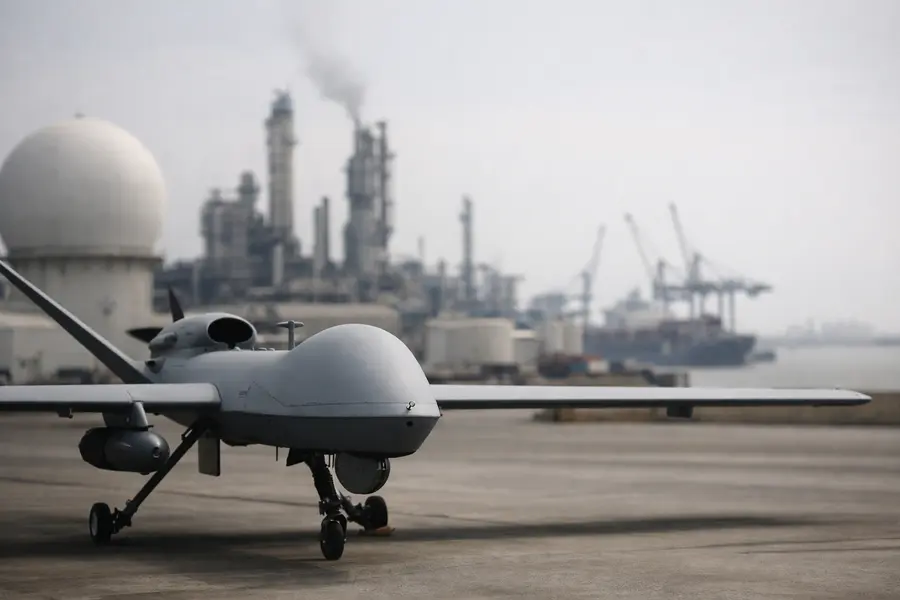
Kratos Defense beat second-quarter revenue estimates by $48 million and raised full-year guidance, as demand for its unmanned military systems platforms accelerated sharply.
- Q2 2026 revenue of $458.8M beat consensus by $48M, rising 30.5% year-over-year; adjusted EPS of $0.21 nearly doubled estimates of $0.14
- The Unmanned Systems segment secured $78.4M in bookings, maintained a 1.0 book-to-bill ratio, and ended the quarter with $374.6M in backlog
- Full-year 2026 revenue guidance raised to $1.75B–$1.81B; total proposal pipeline stands at $15B
Lead
Kratos Defense & Security Solutions (NASDAQ: KTOS) reported second-quarter 2026 revenue of $458.8 million on August 4, well ahead of the $410.4 million Wall Street consensus, as demand for the company's military drone platforms and defense systems outpaced forecasts across the board. Adjusted earnings per share of $0.21 nearly doubled the $0.14 estimate. Shares initially surged approximately 10% above recent levels immediately following the release before settling with a 5.4% gain on the session, closing at $51.87.What Happened
Revenue climbed 30.5% from $351.5 million in the year-earlier period, driven by both core units. The Government Solutions segment posted $379.7 million, a 36.4% increase from $278.3 million, while Unmanned Systems contributed $79.1 million, up from $73.2 million a year prior. Companywide organic revenue growth reached 19.1% for the quarter.
Adjusted EBITDA came in at $38.2 million. Net income reached $4.4 million, compared with $2.9 million in the second quarter of 2025. Kratos ended the period with $1.44 billion in cash, preserving ample capacity for continued internal investment in next-generation platforms.
Market Reaction
KTOS shares initially spiked above $57 the moment results were released, representing a roughly 10% move over the prior close before settling at $51.87 in the regular session and extending modestly to $52.78 in after-hours trading. The intraday move reflected broad-based investor confidence in the defense contractor's accelerating revenue trajectory. The broader defense sector has tracked elevated demand for autonomous platforms, and Kratos's results reaffirmed that positioning in the space remains well-supported by fundamentals.
Unmanned Systems: Valkyrie and Beyond
The Unmanned Systems segment — home to the XQ-58 Valkyrie, Kratos's flagship military drone — secured $78.4 million in quarterly bookings with a book-to-bill ratio of 1.0 and a total segment backlog of $374.6 million. During the quarter, the company recorded $9.3 million in revenue from company-owned Valkyrie sales, with Valkyrie activity driving much of the segment's year-over-year improvement.
The XQ-58 Valkyrie is an autonomous tactical aircraft designed to operate alongside crewed fighters as part of the Department of Defense's Collaborative Combat Aircraft (CCA) initiative — one of the Pentagon's highest-priority modernization programs. Kratos plans to scale Valkyrie production to approximately 40 units annually by the end of 2027, a capacity milestone management views as the foundation for a structurally higher margin profile in subsequent years.
Strategic Context
CEO Eric DeMarco emphasized that Kratos's model — funding early-stage hardware and software development internally to arrive first-to-market with relevant platforms — is aligned directly with DoD procurement priorities. The defense contractor ended the quarter with a total backlog of $2.08 billion and a bid and proposal pipeline of $15 billion, providing deep visibility into 2027 and beyond.
The DoD's sustained investment in autonomous systems, hypersonics, and AI-enabled defense platforms has benefited Kratos disproportionately relative to traditional prime contractors. A twelve-month book-to-bill ratio of 1.3 times confirms that inbound demand continues to outpace current revenue capacity.
What Comes Next
For the third quarter of 2026, Kratos guided revenue of $460 million to $480 million, bracketing the Street's $461.6 million estimate. Full-year 2026 revenue guidance was raised to $1.75 billion to $1.81 billion, up from the prior range of $1.70 billion to $1.76 billion. Organic revenue growth is now projected at 18% to 23% for the full year.
Management expects Adjusted EBITDA margins to expand by approximately 100 basis points relative to 2025 levels, with a further 100 basis-point improvement projected for 2027 as higher-margin programs — including hypersonics and the Valkyrie — scale toward full production rates.
Outlook
Kratos's second-quarter results confirm the structural tailwinds driving demand for autonomous and unmanned military systems. With a $15 billion proposal pipeline, rising Valkyrie production targets, and guidance raised on both revenue and margins, the defense contractor is positioned to convert sustained defense budget prioritization into durable growth through 2027 and beyond.
Mentioned tickers: KTOS