Pomegra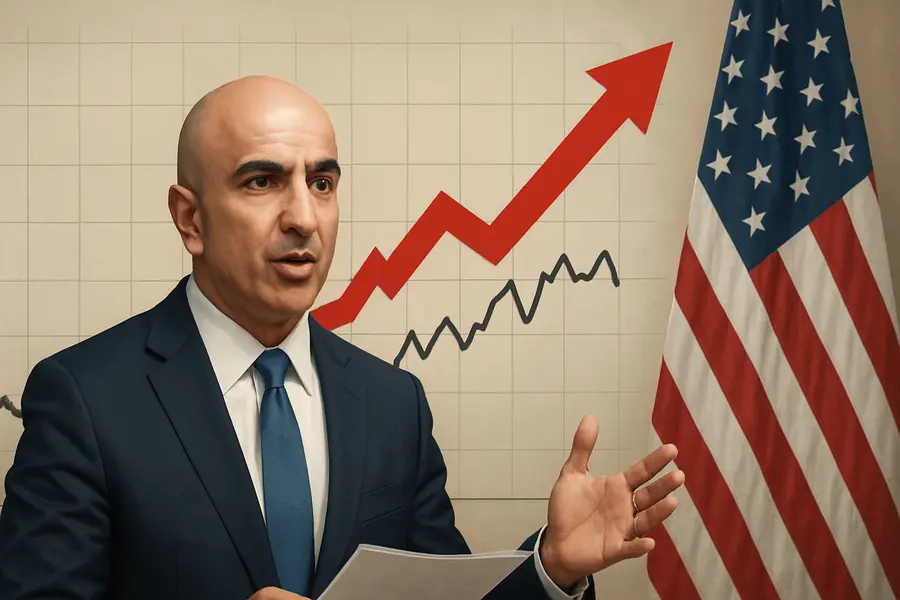
Minneapolis Fed President Neel Kashkari reversed his 2026 outlook on June 26, penciling in one rate hike and citing widespread inflationary pressures extending well beyond Middle East energy disruptions.
- Kashkari flipped from one projected 2026 rate cut in March to one projected rate hike, marking a significant hawkish pivot from one of the Fed's historically more dovish voices.
- May 2026 headline CPI rose to 4.2% annually — its highest reading since April 2023 — driven by energy costs, tariffs, fertilizer supply disruptions, and data-center demand.
- Nine of 18 FOMC members now expect at least one 2026 rate increase; the median end-year fed funds target in the June dot plot moved to 3.8% from 3.4% in March.
Lead
Minneapolis — Federal Reserve Bank of Minneapolis President Neel Kashkari said on June 26 that he has penciled in one interest-rate increase by the end of 2026, reversing the single rate cut he projected as recently as March. Kashkari's shift came as U.S. headline inflation accelerated to 4.2% in May — the highest since April 2023 — and as nearly half the Federal Open Market Committee signaled that tighter monetary policy may be necessary before the year is out.What Happened
Speaking to CNBC, Kashkari said his concern is not limited to energy-price volatility stemming from the Middle East conflict. "I'm concerned about inflation, and it's not only tied to what's happening in the Middle East — it's just the impression of broader inflationary pressures in the economy," he said, identifying supply-side drivers ranging from tariffs on imported goods to fertilizer shortages linked to Strait of Hormuz disruptions, and surging investment in AI data centers pushing up electricity and construction costs.
The Minneapolis Fed president's pivot is notable because he has historically occupied the more dovish end of the FOMC spectrum. His willingness to back a rate increase — rather than defending the current holding pattern — signals that inflation concern has migrated across the committee's internal ideological divide.
At the June 17 FOMC meeting, the committee held the target range for the federal funds rate at 3.50%–3.75%, unchanged from its level set following the last rate cut in December 2025. No new forward guidance was issued, a deliberate omission that leaves all options open for the remainder of the year.
Dot Plot Shift
The June Summary of Economic Projections crystallized the committee's hawkish tilt. The median end-2026 rate projection moved to 3.8%, up 40 basis points from the 3.4% median in March. Of 18 participants, nine projected at least one rate hike this year; three penciled in a single 25 basis-point increase, and five expected cumulative tightening of 50 basis points. Only one participant retained a cut in the baseline, while eight projected no change.
The divergence underscores that the FOMC is operating without consensus — a circumstance that places particular weight on incoming inflation and labor-market data before the next scheduled meeting.
Inflation Dynamics
The US inflation backdrop driving the shift is multi-dimensional. May 2026 CPI came in at 4.2% year-over-year, up from 3.8% in April, marking the third consecutive monthly acceleration. Energy costs — the most direct channel from Strait of Hormuz supply constraints — jumped 23.5% annually and contributed more than 60% of the monthly gain. Core inflation reached 2.9% year-over-year, its highest since September 2025.
Services inflation has remained sticky despite earlier Fed rate cuts, reflecting robust household demand and wage growth. Tariffs on imported goods have pushed goods prices higher, offsetting disinflation in categories that had led the post-pandemic normalization. The combination of supply-driven cost-push pressures and demand resilience creates a more complex policy environment than the committee faced during its easing cycle in late 2025.
Market Reaction
Equity markets closed modestly lower on June 26. The S&P 500 declined 0.05% to 7,354.02, while the Nasdaq Composite extended its losing streak to five sessions, slipping 0.24% to 25,297.62 amid continued pressure on technology and growth-sensitive sectors. The Dow Jones Industrial Average shed 44.51 points, or 0.09%, to close at 51,876.11.
Treasury markets offered a more nuanced read: the 2-year note yield edged lower even as Kashkari confirmed his rate-hike bias, a move attributed partly to energy-price softness that may relieve near-term headline inflation pressure. The U.S. dollar finished the week broadly firmer, as global currency markets priced in a higher-for-longer Fed path relative to other major central banks that have either begun easing or signaled hesitance to tighten further.Strategic Context
The Fed interest rates debate centers on the distinction between transitory supply shocks and persistent demand-driven inflation. Kashkari's framing — emphasizing breadth rather than magnitude — suggests the committee is increasingly concerned that inflation expectations could become unanchored if elevated CPI readings persist through the second half of 2026. Nine months remain in the calendar year, and the Fed holds four more scheduled FOMC meetings. The labor market, which Kashkari described as "in decent shape," provides limited grounds for emergency accommodation, narrowing the argument against tightening should price data remain elevated.
Outlook
The inflation outlook for the remainder of 2026 hinges on whether supply disruptions prove temporary and whether household spending decelerates sufficiently to relieve services-price pressure. With the median dot plot now signaling a potential hike and Kashkari's pivot adding a prominent dovish-to-hawkish data point, the market's working assumption of a prolonged Fed pause is under stress. The next CPI release and any escalation or resolution in the Middle East will be closely watched as the committee navigates competing signals heading into the third quarter.
Mentioned tickers: SPY, QQQ, DIA, TLT, SHY, UUP