Pomegra
JPMorgan's 2026 research flags upstream AI—data centers, chips, power—as the cycle's dominant theme, anchored by $5.5 trillion in projected global capex.
- JPMorgan raised its global AI capex forecast to $5.5 trillion through 2030, up from $5.1 trillion.
- Hyperscaler spending is projected at $650 billion in 2026 and more than $1.1 trillion in 2027.
- The U.S. captures roughly 85% of global AI and machine learning venture capital, anchoring the build-out.
Lead
J.P. Morgan Global Research has designated upstream AI as the defining investment theme of 2026, anchoring a bullish thesis on global equities to an infrastructure supercycle that the bank now values at $5.5 trillion in cumulative capital expenditure through 2030. The designation marks a refinement of the bank's AI investment framework, shifting emphasis from software applications and enterprise adoption toward the physical and computational substrate that makes those applications possible: data centers, semiconductors, networking hardware, and electrical power.What Upstream AI Means
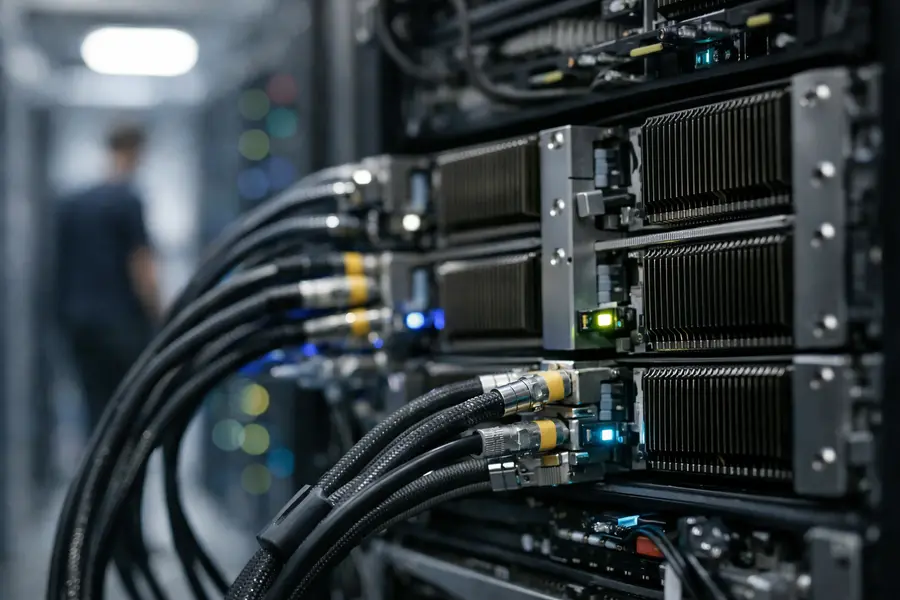
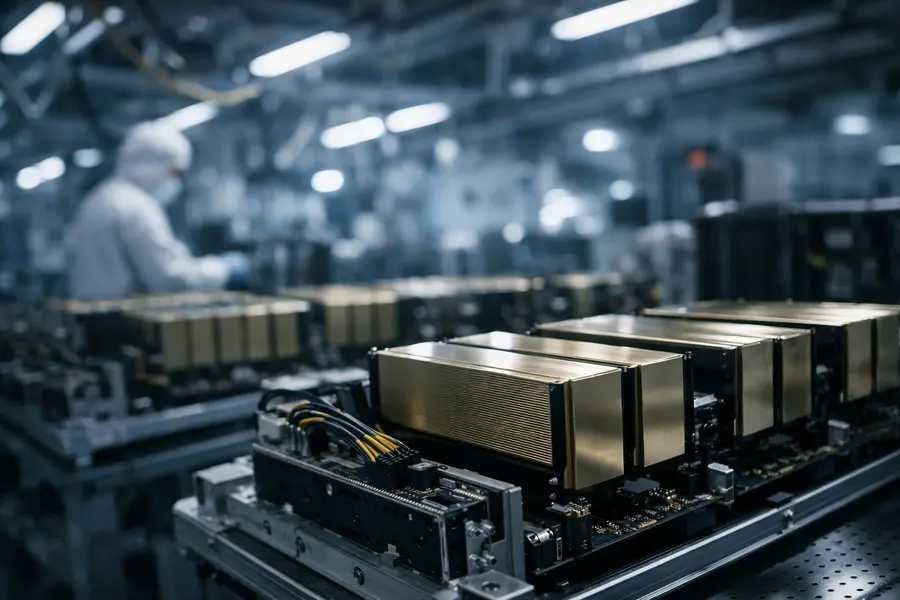
Upstream AI refers to the foundational layer of the artificial intelligence stack—the infrastructure that must be built and maintained before any enterprise application can run. It encompasses high-density data centers, advanced semiconductors (principally graphics processing units and custom accelerator chips), high-speed networking, and the electrical grid upgrades required to power these facilities.The distinction carries commercial weight. While downstream AI investment—software, services, and applications—depends on customer adoption cycles and monetization timelines, upstream AI spending is driven by a more immediate imperative: hyperscalers and cloud providers must build capacity ahead of demand or risk losing competitive position. That structural urgency underpins JPMorgan's conviction that the capex cycle is durable rather than speculative.
Scale of the Build-Out
The numbers attached to the 2026 AI investment trends are striking in both magnitude and trajectory. JPMorgan estimates cumulative global AI-related capital expenditure will reach $5.5 trillion through 2030, an upward revision from a prior estimate of $5.1 trillion. The increase reflects two factors: broader capacity expansion by a wider field of operators, and a growing reliance on debt financing to fund projects.
At the hyperscaler level—Microsoft (MSFT), Amazon (AMZN), Alphabet (GOOGL), and their peers—capital expenditure is projected at $650 billion in 2026, rising to more than $1.1 trillion in 2027. In 2025, those same companies collectively spent $342 billion in capital expenditure, a 62% increase year-over-year. By 2027, operating cash flow from the hyperscaler cohort is projected to surpass $900 billion.
The build-out translates into physical infrastructure at an equally large scale: 122 gigawatts of new data center capacity is planned for development between 2026 and 2030—a figure that places severe demands on power grids, real estate, and skilled construction labor across multiple geographies.
Financing the Cycle
A notable development in JPMorgan's tech market outlook is the rising share of debt in AI infrastructure finance. The bank raised its estimate for debt financing tied to the upstream AI build-out to $4.1 trillion, citing higher loan-to-cost ratios as developers leverage capital markets to accelerate deployment. High-grade corporate bond issuance is expected to account for more than $2.1 trillion of data center financing across a five-year horizon.
The shift toward debt introduces a structural sensitivity. Free cash flow at the hyperscaler level is projected to compress from $240 billion in 2024 to approximately $73 billion by the end of 2026, as capital expenditure absorbs a larger share of operating cash generation. JPMorgan's analysis holds that this compression is manageable given the strength of underlying revenue growth, but acknowledges that any demand shortfall would test that assumption.
Geographic Concentration and Spillover
The JPMorgan AI research 2026 framework emphasizes that the upstream build-out remains disproportionately centered in the United States, which commands approximately 85% of global AI and machine learning venture capital. Silicon Valley, Northern Virginia, and a growing set of secondary markets in Texas and the Midwest anchor the physical build-out domestically.
Meaningful spillover effects are mapped to three Asian markets: South Korea, Taiwan, and—selectively—China, whose roles in the semiconductor supply chain give them structural exposure to upstream demand. Chipmakers and memory producers in those economies are positioned as direct beneficiaries of rising chip volumes, even as export controls and geopolitical pressures complicate supply chain logistics.
Investment Framework
JPMorgan organizes its AI investment trends around four priorities. Large-cap technology leaders with proven hyperscale operations and established cash-flow profiles remain the core allocation. AI supply-chain participants—chipmakers, data center equipment suppliers, power infrastructure companies—offer more targeted exposure to the Upstream AI theme. Identifying corporate users of AI that are converting adoption into measurable productivity gains provides a downstream complement. Private markets, where early-stage infrastructure ventures and AI-native companies are concentrated, represent a distinct allocation for institutions with appropriate access and risk tolerance.
Market Risks
JPMorgan's framework is not without qualification. The bank's S&P 500 target stands at 7,800 for 2026, but crowded positioning in AI-related equities is flagged as a risk that could produce a flash crash or more extended correction if sentiment shifts. The longer-term question centers on return-on-investment validation: at the scale of capital now being committed, markets will eventually require evidence that AI adoption generates sufficient economic value to justify the infrastructure built to support it.