Pomegra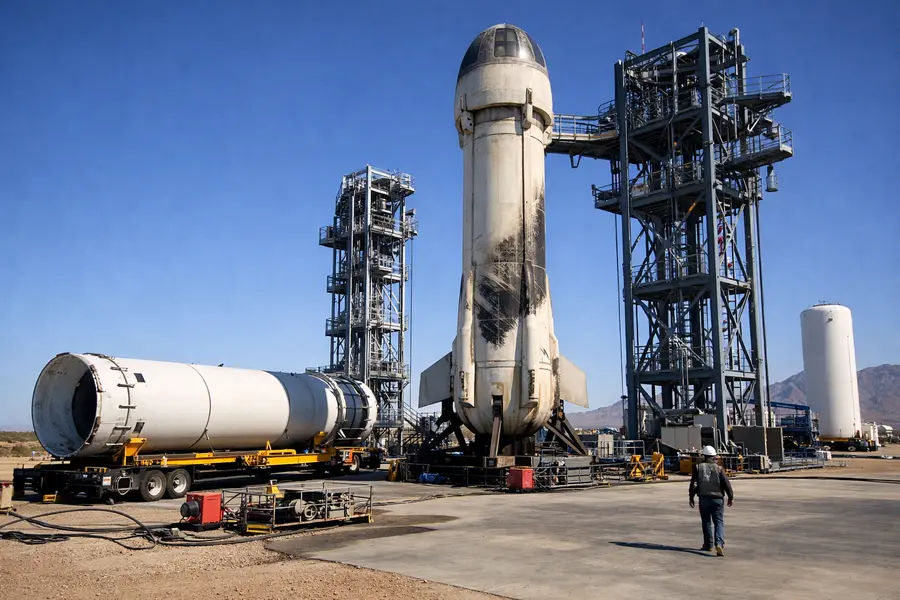
Jeff Bezos has liquidated billions in Amazon shares to bankroll Blue Origin, calling space infrastructure the most critical work of his career as the rocket company closes a landmark $10 billion funding round.
- Bezos has sold roughly $1 billion in AMZN stock annually for 25 years, channeling an estimated $28–$30 billion into Blue Origin.
- Blue Origin closed its first-ever external funding round in July 2026, raising $10 billion at a $130 billion valuation.
- Bezos contributed $2 billion to that round himself, even as he sold a combined ~$9.8 billion in Amazon shares in summer 2026.
Lead
Jeff Bezos, founder of Amazon (AMZN) and privately held Blue Origin, has disclosed that he sells approximately $1 billion of Amazon stock every year to sustain his space venture — a cadence he has maintained for more than two decades and one he describes as "the most important work I'm doing." The disclosure comes as Blue Origin completed a landmark $10 billion fundraising round in July 2026 at a $130 billion valuation, marking the first time in the company's 26-year history that it has accepted outside capital.What Happened
Bezos has liquidated Amazon shares steadily to fund Blue Origin since the company's founding in 2000. Estimates place his total personal investment in the venture at between $28 billion and $30 billion through mid-2026, consistent with a roughly $1 billion annual drawdown on his AMZN holdings.
The pace of sales accelerated sharply in the summer of 2026. Bezos sold approximately 25 million Amazon shares for nearly $5.7 billion between late June and late July, followed by a plan to sell an additional 15 million shares — valued at approximately $4.07 billion — with August 3 listed as the approximate execution date. The transactions coincided with Amazon briefly breaching a $3 trillion market capitalization, a milestone that made the share sales more conspicuous to retail investors and drew a "buzzkill" remark from TV commentator Jim Cramer.
The Funding Shift
For most of its existence, Blue Origin operated as a wholly Bezos-funded enterprise, insulated from venture-capital scrutiny and the pressure of public markets. That changed in July 2026 when the company raised $10 billion from external investors — led by a reported $4 billion commitment from Coatue Management, joined by other institutional backers. Bezos himself added $2 billion to the round, reinforcing his personal stake even as new capital comes in.
The $130 billion valuation reflects investor confidence in Blue Origin's long-term program pipeline rather than its current operational performance. The company's New Glenn heavy-lift rocket suffered an explosion in May 2026 and is undergoing repairs at its Cape Canaveral launchpad. Blue Origin CEO Dave Limp has set a target to return New Glenn to flight before the end of 2026.
Strategic Context
Bezos has articulated a specific rationale for prioritizing Blue Origin above all other ventures: he views affordable access to space as a civilizational-scale project, with a long-term objective to lower the cost of launch dramatically enough that millions of people can live and work off Earth. He frames that mission as the foundational infrastructure challenge of the coming century — hence the "most important work" framing.
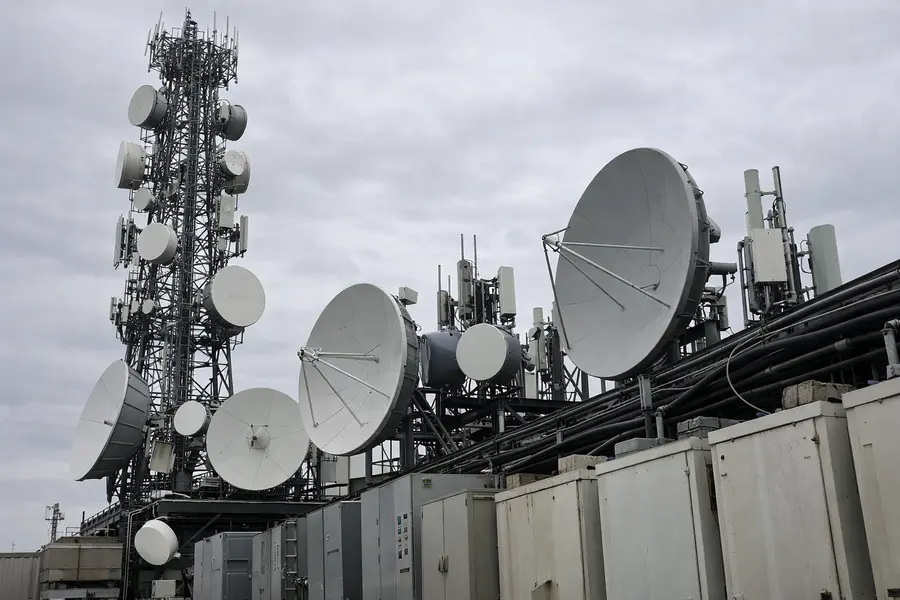
The move to raise outside capital signals that the scale of investment required has grown beyond even Bezos's capacity to fund through annual Amazon stock sales alone. Blue Origin's active programs — the New Glenn rocket, the Blue Moon lunar lander targeting NASA Artemis missions, and the TeraWave broadband satellite network — each carry multi-billion-dollar development costs.
SpaceX, Bezos's primary competitor in the commercial launch market, reached a private valuation exceeding $350 billion earlier in 2026 following Elon Musk's expansion of Starlink and growing government launch contracts, providing a clear benchmark and competitive spur for the Blue Origin fundraising rationale.Market Reaction
Amazon shares showed muted reaction to the disclosed stock sales, with the broader $3 trillion market cap providing cushion against the dilutive optics of insider liquidations. AMZN has been among the strongest performers in large-cap technology in 2026, limiting investor concern about Bezos's ongoing drawdown.
Outlook
Blue Origin's transition from single-founder funding to institutional capital marks the end of an unusual era in aerospace finance. With $10 billion in fresh capital, a $130 billion valuation, and a returning-to-flight timeline for New Glenn in the second half of 2026, the company enters a new operational and financial phase. Bezos's continued personal commitment — both verbally, in calling Blue Origin his most important work, and financially, through a $2 billion contribution to the round — signals that strategic direction remains unchanged even as the ownership structure diversifies. The competitive pressure from SpaceX and the capital demands of lunar and satellite programs suggest further external fundraising rounds are likely before any prospective public offering.