Pomegra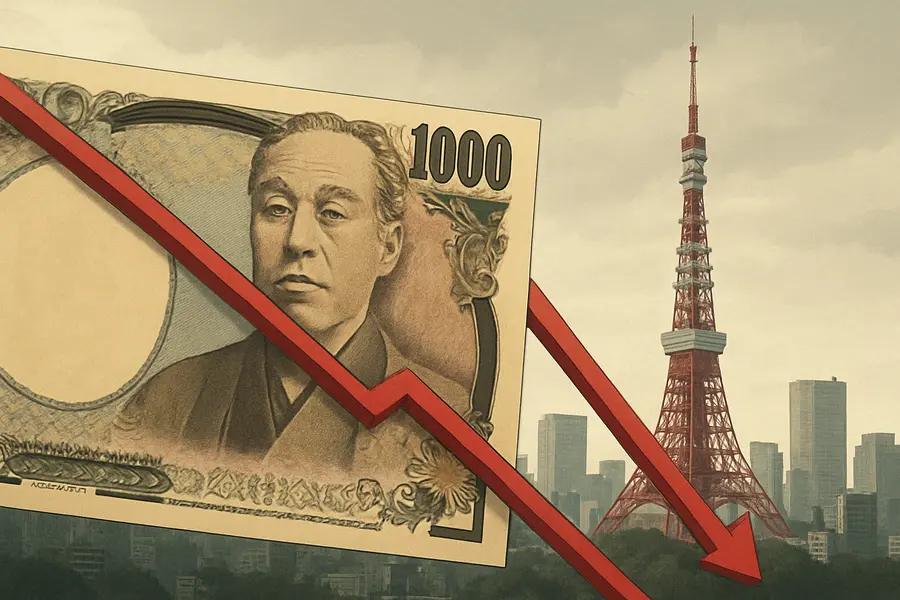
The yen slid to 162.83 per dollar on July 1—its weakest since 1986—forcing Tokyo to signal readiness for a fresh intervention after spending $74 billion failing to reverse the trend.
- The yen fell to 162.83 per dollar on July 1, a 40-year low, marking its fourth consecutive quarterly decline and a 2.45% loss in Q2 2026.
- Japan deployed ¥11.7 trillion ($74 billion) in foreign exchange intervention during April–May 2026; speculative yen short positions have since rebuilt to near two-year highs of $11.3 billion.
- ING has identified 162 as the new intervention red line; markets price a 65% probability of a U.S. rate hike in September, sustaining the yield differential that drives yen weakness.
---
Lead
The Japanese yen collapsed to 162.83 per dollar on Tuesday, July 1, its most vulnerable level since 1986, thrusting Japan's Ministry of Finance back to the edge of the currency market for the second time in two months. The move carried the yen past the threshold that analysts at ING and other institutions now treat as Tokyo's updated yen red line, intensifying debate over whether a fresh intervention can hold back structural forces that $74 billion in official firepower could not reverse in the spring.
---
What Happened
The yen's slide extended losses that have accumulated over four consecutive quarterly declines—the longest such streak since 2022. In Q2 2026 alone, the currency shed 2.45% against the dollar, with the pace quickening into the final days of June as thin holiday liquidity amplified moves in a market already tilted sharply against the yen.
Net short positioning in yen futures tracked by the CFTC climbed to roughly 146,000 contracts, a level consistent with historical extremes, with the notional value of bearish bets reaching approximately $11.3 billion. That positioning reflects a conviction among global macro funds and hedge funds that the structural underpinnings of yen weakness remain intact.
Finance Minister Satsuki Katayama responded with measured language, stating that authorities "stood ready to respond appropriately at any time," language that stopped short of the more emphatic warnings that have historically preceded direct buying operations. The word "excessive" — a Ministry of Finance signal phrase — was conspicuously absent.
---
The Carry Trade Pressure
At the core of the USD/JPY 40-year low is a rate differential that no intervention alone can close. The U.S. Federal Reserve holds its policy rate at 3.50%–3.75%; the Bank of Japan stands at 0.75% following recent hikes that, while historic by Japan's standards, leave real rates deeply negative. That gap of roughly 275–300 basis points sustains one of the most widely held trades in global markets: borrow cheaply in yen, deploy capital into higher-yielding dollar assets, and pocket the spread.
The BOJ's most recent rate increase was accompanied by a halving of Japan's 2026 GDP growth forecast to 0.5% and an inflation upgrade to 2.8%, a stagflationary combination that constrains the central bank's appetite for further aggressive tightening. Adding to uncertainty, Prime Minister Sanae Takaichi nominated two academics with dovish policy leanings to the BOJ board, one of whom cast the sole dissenting vote on the recent rate move.
---
Intervention: Power and Limits
Japan's record intervention program between April 28 and May 27 totaled ¥11,734.9 billion—equivalent to approximately $74 billion—and succeeded only in buying time. Within weeks of the operation, yen intervention news 2026 had given way to a resumption of the same selling pressure.
The constraint is structural. Unilateral intervention can smooth volatility and deter momentum traders, but it cannot alter the interest rate arithmetic that makes the yen an attractive funding currency. Analysts have consistently noted that a coordinated intervention involving the U.S. Treasury would carry far greater force, but Washington has shown no appetite for weakening the dollar. The Trump administration's sensitivity to being labeled a currency manipulator has made bilateral coordination politically complicated for Tokyo, which has already drawn scrutiny for its April actions.
The effectiveness window for any new operation is further narrowed by the current forex market outlook: with U.S. June nonfarm payrolls due this week and markets pricing a 65% probability of a Fed rate increase by September, any yen-buying operation risks being absorbed quickly by a market betting on sustained dollar strength.
---
The New Red Line at 162
Prior to this year's episodes, 160 per dollar was the widely accepted threshold at which Japanese authorities were expected to act. That level was breached in late April, triggering the record intervention campaign. With the yen now trading at 162–163 and Tokyo having already exhausted considerable reserve capacity, ING has recalibrated the effective red line upward to 162.
The recalibration matters. It signals that Japan's tolerance for depreciation has widened under pressure, and that market participants must weigh not just the level but the speed of the move when assessing intervention risk. Thin liquidity around the July 4 U.S. holiday and a potential upside surprise in Friday's payrolls data represent the near-term flashpoints most closely watched by currency traders.
Commonwealth Bank of Australia projects the yen will weaken further to 164 per dollar by early 2027, a trajectory that would mark a generational low and keep the intervention question open through the remainder of the year.
---
Outlook
The yen's USD/JPY 40-year low reflects a conflict between Japan's policy constraints and the gravitational pull of U.S. rate superiority that monetary tools alone cannot resolve. Fresh intervention remains possible and could generate a sharp short-covering rally, particularly around low-liquidity sessions. But the forex market outlook for the yen over the medium term hinges less on Tokyo's reserve deployments than on the Federal Reserve's rate path: a September hike would reinforce the carry trade; an unexpected dovish pivot would be among the few catalysts capable of delivering sustained yen relief. Until that calculus shifts, traders are likely to treat any intervention as an opportunity rather than a reversal.
---
Mentioned tickers: FXY