Pomegra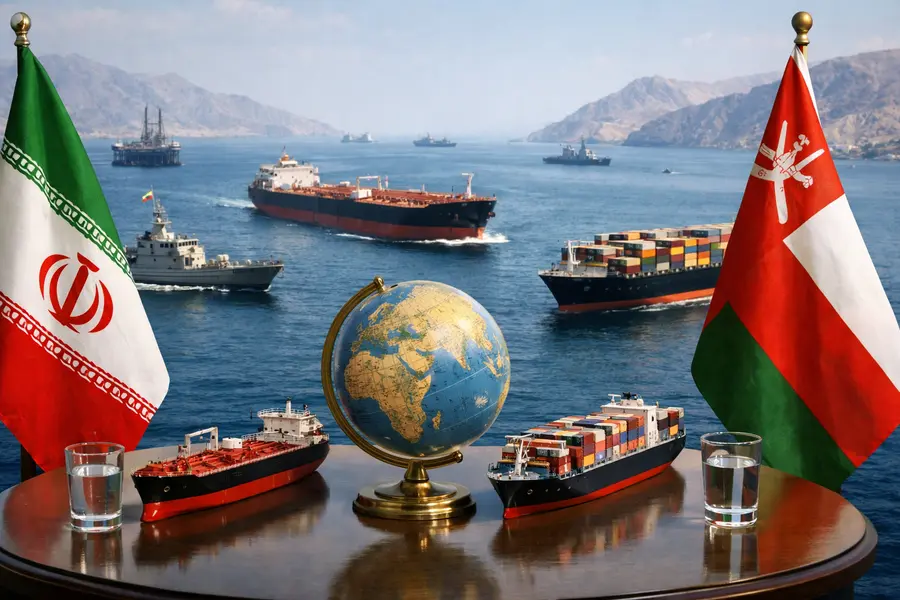
Iran and Oman are negotiating a three-lane maritime framework to restore Hormuz tanker traffic, with daily transits collapsed to just 10 against a pre-crisis baseline of 88 per day as of late July 2026.
- Daily Hormuz tanker transits have fallen to 10 from a pre-crisis baseline of 88, a near-90% collapse since the conflict began in late February.
- Oman proposed three shipping corridors through the strait, including a route skirting the Oman coast near the Musandam exclave.
- A voluntary maritime service fee modeled on the Strait of Malacca framework remains the central sticking point in current negotiations.
Lead
Diplomats from Iran and Oman met in Tehran over the weekend of July 26–27, 2026, to negotiate a framework for restoring commercial navigation through the Strait of Hormuz, the world's most consequential oil chokepoint. The talks, described by both sides as productive, center on a voluntary fee mechanism, a three-lane shipping corridor proposal, and a broader regional maritime consortium. No agreement has been finalized, and Hormuz tanker transits remain at roughly 11% of pre-crisis levels, with Brent crude still trading well above its five-year average following a surge to $118 per barrel in late April.
What Happened
The Strait of Hormuz's central passage has been largely avoided by commercial vessels since hostilities broke out in late February 2026. In response, shipping operators have adopted two workaround routes: a northern corridor running close to Iran's territorial waters, and a southern corridor that hugs the Oman coast along the Musandam Peninsula — the narrow Omani exclave that commands the southern shore of the strait. Six oil and gas tankers were observed transiting the Oman-side route in early July, with the Joint Maritime Information Center confirming that passage remained operationally available.
Oman's negotiators have now proposed formalizing three defined shipping lanes: one through Iranian territorial waters, one along the international maritime boundary, and one through Omani territorial waters. The Sultanate has simultaneously tabled a proposal for a Gulf-backed regional consortium that would assume responsibility for maritime security, navigation services, and search-and-rescue operations across the strait.
The thorniest open question is transit fees. Iran and Oman have both expressed interest in charging vessels for using the corridor — Iran has a direct financial incentive, while Oman seeks compensation for expanded maritime oversight. However, the current Omani proposal distinguishes sharply between mandatory tolls, which Washington and shipping industry bodies have rejected as inconsistent with international maritime law, and voluntary service charges, drawn on the model used in the Strait of Malacca and Singapore. The United States is reviewing the voluntary-fee structure and has not publicly endorsed or rejected it. Washington had itself floated a 20% Hormuz transit fee in mid-July before dropping the idea in favor of pursuing broader Gulf investment arrangements.
Strategic Context
The Hormuz corridor handles approximately 20 million barrels of oil per day under normal conditions — roughly one-fifth of global consumption — along with substantial volumes of liquefied natural gas from Qatar and other Gulf producers. The near-halt in traffic since February has produced extraordinary market dislocations: Brent crude reached a record-setting monthly increase in March, hit $118 per barrel on April 29, then collapsed to $72 per barrel on June 26 following the announcement of an interim U.S.–Iran Memorandum of Understanding. The MOU called for full Hormuz reopening without tolls for at least 60 days, but marine traffic failed to recover meaningfully even after its signing, and thirteen consecutive days of subsequent strikes in the Arabian Gulf effectively invalidated the agreement.
Geopolitical Dimension
Oman has served throughout this crisis as the only Gulf state maintaining functioning diplomatic channels with both Tehran and Washington — a role it has played in previous rounds of Iran nuclear negotiations. Muscat's current initiative seeks to convert that mediating leverage into a durable institutional arrangement. The regional consortium proposal, if accepted, would give Oman a formal governance role in the strait for the first time, a significant structural shift in Gulf maritime affairs.Iran's position remains internally contested. Tehran has signaled that meaningful progress has been made, while simultaneously issuing renewed shipping threats that have complicated the diplomatic calendar. A successful deal with Oman would also remove a key obstacle to resuming broader U.S.–Iran talks on ending the wider conflict — a linkage that gives both parties additional incentive to close the gap.
The United States, for its part, has shifted from an early-crisis posture of proposing transit fees to endorsing a Gulf investment-led framework, reflecting pressure from major oil importers and shipping insurers who have flagged the legal and operational risks of mandatory Hormuz tolls under the United Nations Convention on the Law of the Sea.
Market Reaction
Energy markets have reacted cautiously to the latest round of talks. Brent crude has eased from its April peak but remains elevated relative to pre-crisis levels, with analysts projecting an average of approximately $86 per barrel for full-year 2026 before supply normalization pushes prices toward $70 per barrel in 2027. Shipping insurance premiums for Hormuz tanker transits remain at crisis levels, and the major classification societies have not yet altered their risk advisories for the region. Any confirmed framework agreement would be expected to trigger a rapid repricing of both crude and freight markets.
What Comes Next
Iran and Oman have described the current talks as ongoing, with technical and political consultations continuing at the working level. The voluntary-fee mechanism requires U.S. acceptance to be viable, given Washington's ability to sanction Iranian revenue streams. A formal agreement — if reached — would likely proceed in stages: first, a defined corridor with security guarantees; second, the establishment of the regional consortium; and third, any fee structure. Oman's three-lane corridor proposal is viewed in diplomatic circles as the most immediately actionable element, since it sidesteps the sovereignty questions that have complicated earlier attempts to standardize Hormuz tanker routing through the strait's middle passage along the Oman coast.
Outlook
The Iran–Oman talks represent the most structured diplomatic effort to date to restore normal Hormuz navigation. Oman's proposed voluntary-fee framework, modeled on established Southeast Asian precedent, offers a politically workable middle ground between Iranian revenue demands and international maritime law constraints. The key near-term variable is U.S. endorsement of the voluntary charge mechanism; without it, the incentive structure for Iran's cooperation narrows considerably. If a corridor agreement is reached within the next several weeks, the projected 3.7-million-barrel-per-day supply deficit that has characterized the second quarter of 2026 would begin to unwind, with commensurate pressure on crude prices.
Mentioned tickers: BNO, USO, XOM, CVX, BP, SHEL, TTE, LNG, FLNG