 Pomegra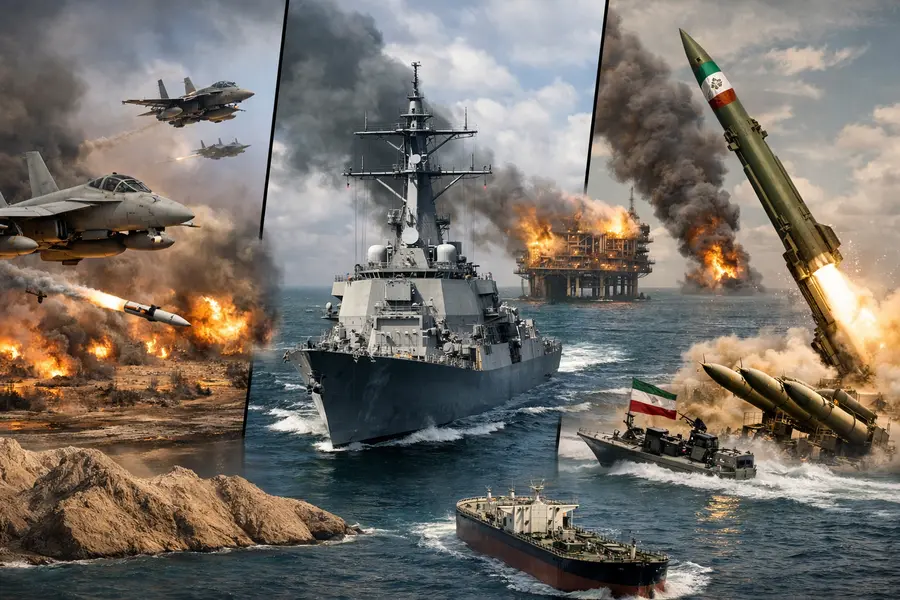
U.S. forces struck 90 Iranian military targets on July 9, 2026, as Trump declared the ceasefire "over" and Iran retaliated against Gulf bases, reigniting the US-Iran conflict over Strait of Hormuz shipping.
- CENTCOM executed over 170 US strikes Iran July 9 and the preceding 48 hours, hitting missile storage, drone depots, and logistics sites along Iran's coastline.
- Iran launched drone and missile salvos at U.S. military bases in Kuwait, Bahrain, and Qatar, widening the Middle East air strikes exchange.
- Brent crude swung from a 6%-plus surge to $77.86 per barrel on July 9 as at least four tankers reversed course away from the Strait of Hormuz.
Lead
U.S. Central Command launched a fresh wave of Middle East air strikes against Iran on July 9, 2026, targeting approximately 90 Iranian military positions along the Strait of Hormuz coastline in what CENTCOM described as action "to further degrade [Iran's] ability to threaten freedom of navigation in the Strait of Hormuz." The campaign — encompassing more than 170 sorties over 48 hours and hitting sites in Bushehr, Bandar Abbas, Chabahar, Sirik, Jask, and Qeshm — followed President Donald Trump's declaration at the NATO summit in Ankara that the bilateral ceasefire was "over," a rupture triggered by Iran's attacks on three commercial vessels in the strait on July 6 and 7.What Happened
The US Iran conflict reignited after a fragile memorandum of understanding, intended to govern a gradual return to normalized shipping through the strait, collapsed under mutual accusations of provocation. Iran's Islamic Revolutionary Guard Corps struck three ships transiting the strait on July 6 and 7, a move U.S. officials characterized as a direct violation of the MoU. Washington responded by reimposing oil export sanctions on Tehran and launching strikes against Iranian military infrastructure on July 7.
On July 8, with Trump attending the NATO summit, U.S. forces struck a further 90 targets along Iran's southern coast. Trump, speaking to reporters on the sidelines of the summit, declared the ceasefire finished. "I think it's over," he said. "I don't want to deal with them anymore." The timing of Iran's initial provocations — as Trump met with foreign leaders on a multilateral stage — deepened Washington's resolve.
On July 9, Iran escalated its counter-response. The IRGC's Navy and Air Force launched a joint drone and missile attack against U.S. military installations across the Gulf: Camp Arifjan and Ali Al Salem Air Base in Kuwait, Shaikh Isa Air Base and the Juffair naval facility in Bahrain, and a satellite antenna array in Qatar. Iranian forces also struck a Patriot missile battery and U.S. fuel depots. The attacks killed 14 people and wounded 78 in Iran over two days of sustained bombardment.
Strait of Hormuz Shipping Crisis
The Strait of Hormuz shipping lane — through which approximately 20% of global seaborne oil passes — has been effectively closed to commercial traffic since the conflict began in late February 2026. As of early July, vessel transits had fallen to 34 per day against a pre-crisis baseline of 88, a drop of more than 60%. At least four oil and gas tankers reversed course rather than attempt a Hormuz transit on July 8 alone.
Market Reaction
Oil markets swung sharply across the 48-hour escalation. Brent crude futures surged more than 6% when Trump declared the ceasefire over on July 8, touching their highest level in more than two weeks. By July 9, as markets weighed the potential for negotiations — mediators publicly urged both parties to uphold the existing MoU — Brent pulled back 0.21% to $77.86 per barrel. WTI crude fell 1.2% to $72.64 per barrel on the same session. Broader financial markets reflected the ambiguity: defense equities firmed while energy transport names remained under pressure from insurance and rerouting costs.
Strategic and Geopolitical Context
The US Iran conflict over the strait is rooted in a fundamental dispute over sovereignty and transit rights. Tehran had demanded a formal fee regime for commercial shipping through the Strait of Hormuz as part of any enduring settlement — a condition the U.S. and its Gulf Arab partners rejected outright. The collapse of the ceasefire represents at least the second failed interim agreement since the broader war began on February 28, 2026, when U.S. and Israeli forces launched nearly 900 strikes in 12 hours against Iranian missile systems, air defenses, and military infrastructure.
Iran's decision to strike U.S. bases across three Gulf states — Kuwait, Bahrain, and Qatar — marks a significant geographic expansion of the exchange, drawing in host-nation governments that have tried to maintain a degree of insulation from the bilateral conflict. All three nations house major U.S. military installations that anchor the American force posture in the region.
Outlook
The collapse of the ceasefire on July 8–9 has pushed the US Iran conflict back to active-war footing with no clear off-ramp visible in the near term. Mediators continue to call on both parties to observe the MoU, but the combination of Trump's stated reluctance to negotiate and Iran's expansion of retaliatory targeting reduces the probability of a rapid return to talks. Strait of Hormuz shipping volumes are unlikely to recover meaningfully until insurance underwriters restore coverage, a step that requires both a formal cessation of hostilities and mine-clearance certification. For energy markets, the critical variable is whether Saudi and UAE pipeline alternatives can absorb the displaced volumes — a ceiling that analysts place well below what the strait typically carries at full capacity.
Mentioned tickers: USO, BNO, XLE, XOM, CVX, BP, SHEL, TTE