Pomegra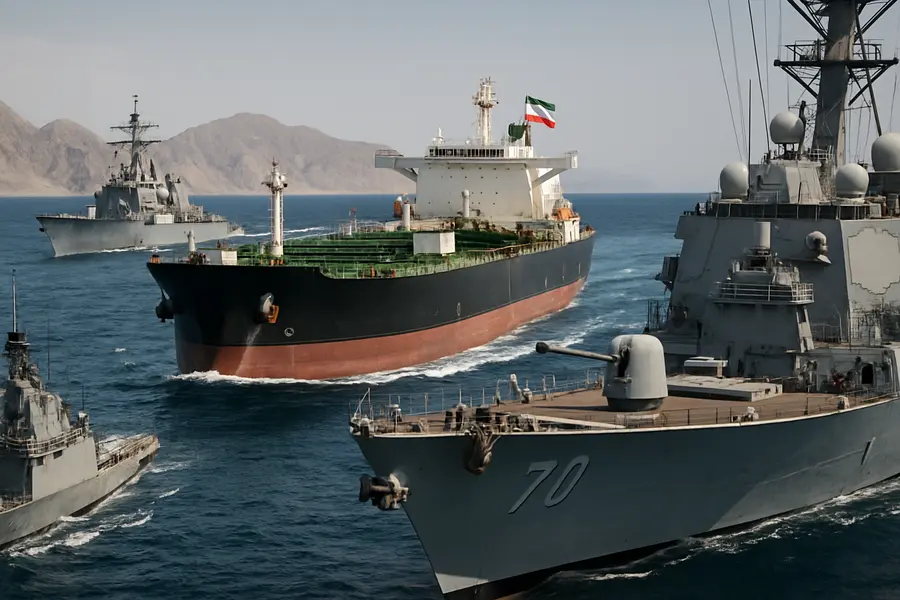
Three NITC tankers with 5 million barrels of Iranian crude crossed the U.S. naval blockade line in the Gulf of Oman on June 16–17 as shipowners watch "wary disbelief" ahead of a Hormuz accord.
- VLCCs Diona and Hero 2 and Suezmax Sonia 1 moved roughly 5 million barrels of Iranian crude past the blockade line, the first export movement in months.
- Brent crude fell to approximately $79 per barrel, a three-month low, as the Hormuz strait blockade showed signs of easing before a June 19 accord.
- More than 1,600 vessels remain in holding patterns awaiting formal confirmation of safe passage through the Strait of Hormuz.
Lead
Three fully laden Iran oil tankers operated by the National Iranian Tanker Company (NITC) crossed the U.S. naval blockade line in the Gulf of Oman on June 16 and 17, 2026, moving approximately 5 million barrels of Iranian crude into open water for the first time in months. The breakthrough transits, confirmed by TankerTrackers.com and Pole Star Global through satellite and AIS data, came days before a U.S.-Iran Memorandum of Understanding is scheduled for signature in Switzerland on June 19 — an agreement that would formally lift the Hormuz strait blockade and restore global energy supply flows through the world's most critical oil chokepoint.
What Happened
The two very large crude carriers (VLCCs) Diona and Hero 2 cleared the U.S. blockade line on Tuesday, June 16. The Suezmax Sonia 1 followed on Wednesday, June 17. All three vessels sailed from Chabahar, Iran's southeastern port, which had become a staging area for trapped hydrocarbons since the U.S. Navy's cordon took effect on April 13. The Diona and Hero 2 together carried 3.8 million barrels of Iranian crude; the Sonia 1 added a further 1 million barrels, bringing the combined shipment to roughly 5 million barrels.
The transits represent the first breach of the export barrier that had effectively sealed Iranian port access to international markets. At its peak in late May, eleven fully laden Iranian tankers — eight NITC-flagged and three dark-fleet vessels — were anchored at Chabahar alongside fourteen cargo ships, with a separate concentration of at least 22 tankers recorded at Kharg Island, Iran's primary loading terminal.
Market Reaction
Brent crude fell to approximately $79 per barrel on June 17, its lowest level in three months, following four consecutive sessions of losses. The decline marked a sharp retracement from the wartime high of $126 per barrel reached intraday on April 30, when supply disruption fears were at their most acute. WTI crude tracked Brent's slide, with prices compressing the geopolitical risk premium embedded in energy markets since the conflict began in late February.The market response reflected the signal embedded in the tanker movements: the operational enforcement of the Hormuz strait blockade had materially relaxed ahead of any formal legal resolution. Iranian oil exports averaged just 64,921 barrels per day in May 2026, a fraction of pre-blockade volumes, leaving a measurable deficit in global energy supply that sustained elevated prices through the second quarter.
Strategic Context
The U.S. naval cordon of Iranian ports, in place since April 13, represented one of the most aggressive exercises of American maritime power in decades. U.S. forces redirected 122 vessels, disabled six commercial ships using Hellfire missiles — including the M/T Jalveer on June 10 and the M/T Lexie on June 2, both struck in the engine room — and intercepted a total of 85 vessels. Despite the cordon's reach, an estimated 26 vessels bypassed the exclusion zone over the same period.
Iran's Islamic Revolutionary Guard Corps simultaneously enforced its own restrictions on the Strait of Hormuz, laying sea mines and boarding or attacking merchant vessels attempting transit. The dual blockades — one American, one Iranian — trapped an estimated 1,600 ships in holding patterns, creating one of the most severe disruptions to maritime security in the region since the 1980s tanker wars.
The U.S. launched Operation Project Freedom on May 4 to escort vessels through the strait, but paused the effort after 48 hours, having guided only two ships to safety. Subsequent escort activity was conducted covertly, with vessels disabling transponders and hugging the Omani coast to limit confrontation risk.
Geopolitical Dimension
The tanker passages coincide with a near-finalized diplomatic track. An initial ceasefire deal was announced June 14, and a formal MOU is scheduled for signing at the Bürgenstock resort in Switzerland on June 19. The agreement, as understood by shipping and energy market participants, calls for the immediate lifting of the U.S. naval blockade, the full reopening of the Strait of Hormuz to commercial traffic, and a phased restoration of shipping capacity within thirty days, alongside broader terms covering sanctions relief and cessation of hostilities.
For the shipping industry, the mood stopped well short of relief. Shipowners monitoring developments in the Hormuz region described the tanker passages as unfolding in "wary disbelief" — a phrase that captures the gap between observed vessel movements and the absence of formal legal clarity on maritime security guarantees. CENTCOM maintained that commercial ships were continuing to transit in and out of the strait; Iranian authorities issued competing accounts of the waterway's status through the same period.
What Comes Next
If the June 19 MOU is signed as scheduled, the formal end of the Hormuz strait blockade would clear the way for the approximately 73 laden tankers identified inside Iranian waters to begin export voyages. The reintegration of Iranian barrels — at volumes expected to recover toward pre-war levels — introduces downside pressure on crude prices in the near term, reinforcing the trajectory already reflected in Brent's four-session decline.
For maritime security oversight bodies and flag-state registries, the next step is issuing updated navigational advisories that lift the rerouting guidance that has diverted vessel traffic away from the strait since late February. Lloyd's and the Joint War Committee are expected to reassess war-risk premium designations for Hormuz transit once the MOU is in force, a move that would directly reduce insurance costs for operators resuming normal passage.
Outlook
The Diona, Hero 2, and Sonia 1 transits signal that the Hormuz strait blockade has operationally softened ahead of any formal accord. Oil markets have moved to price in the recovery of Iranian oil tanker flows, with Brent crude retreating to three-month lows as the geopolitical premium built since February erodes. The June 19 MOU signing in Switzerland remains the definitive threshold: a completed agreement would formalize free passage for the more than 1,600 vessels in holding patterns, set the terms for Iran's re-entry into global energy supply chains, and mark the formal close of the most disruptive episode for maritime security in the Strait of Hormuz in four decades.
Mentioned tickers: USO, BNO, XOM, CVX, TTE, SHEL, BP, FRO, INSW, DHT, TNK, NAT