Pomegra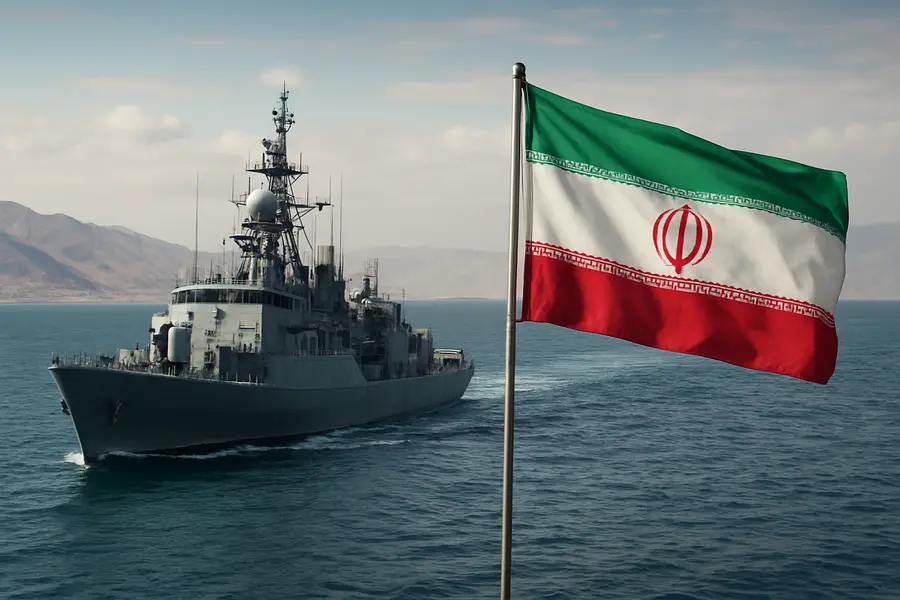
Iran's Revolutionary Guard reaffirms disputed maritime authority over the Strait of Hormuz as U.S. and Iranian delegations convene in Doha for technical talks on shipping management and de-escalation.
- Iran plans to impose transit fees on Hormuz vessels after a 60-day grace period, directly contesting the U.S. position that the strait is an international waterway.
- Brent crude peaked at $126 per barrel in March 2026; global oil supply fell 10.1 mb/d as crude throughput through Hormuz dropped to roughly 50% of pre-conflict levels.
- A June 17 U.S.-Iran MOU halted the blockade, but Tehran re-closed the strait citing Israeli violations, deepening uncertainty over the Doha negotiating track.
Lead
DOHA/TEHRAN, June 30, 2026 — Iran's Islamic Revolutionary Guard Corps warned shipowners this week that any transit route through the Strait of Hormuz established without coordination with Tehran is "unacceptable and dangerous," as technical delegations from the United States and Iran convened in Qatar for a new round of talks on the waterway's management. The warning came thirteen days after a U.S.-Iran memorandum of understanding — signed June 17 — was meant to suspend hostilities and reopen the chokepoint that once carried approximately 25% of the world's seaborne oil trade.What Happened
The current standoff traces to February 28, 2026, when the United States and Israel launched coordinated airstrikes on Iran under Operation Epic Fury, targeting military infrastructure, nuclear facilities, and senior leadership. By March 4, Iran had formally announced the Strait of Hormuz "closed" to unauthorized passage, deploying the IRGC Navy to board vessels, lay sea mines, and enforce exclusion zones.
In May, the IRGC Navy redesignated the strait as a "vast operational area," extending Iranian-claimed jurisdiction from the port city of Jask to Siri Island — a significant geographic expansion of the maritime control assertion that underpins Iran maritime control in the current crisis.
The June 17 MOU between U.S. President Donald Trump and Iranian President Masoud Pezeshkian appeared to provide an off-ramp. It committed both sides to halt blockade actions and mapped a pathway toward a final political settlement. Iran re-closed the strait shortly after, however, citing Israeli actions it characterized as violations of the agreement. The United States disputes that characterization.
The Transit Fee Dispute
At the center of the Qatar peace talks agenda is Tehran's demand to charge vessels a passage fee for using the strait. IRGC-affiliated media reports that the MOU's final text affirms Iranian and Omani sovereignty over the waterway and that toll-free passage is guaranteed for only 60 days, after which Iran intends to levy navigation and environmental service charges on all transiting ships.
The U.S. delegation holds that toll-free passage is unconditional and that the Strait of Hormuz — through which roughly a fifth of global oil and liquefied natural gas supply moved in peacetime — remains an international waterway under the UN Convention on the Law of the Sea. Senior Iranian adviser Ali Akbar Velayati publicly urged on June 29 that Tehran's transit fee demand be preserved as a non-negotiable position entering the Doha discussions.
Iran's Foreign Ministry spokesman Esmail Baqaei added ambiguity, stating that an Iranian technical team would visit Doha but that its visit bore "no relation" to U.S. officials present — a framing that underscores the fragility of the negotiating channel.
Market Reaction and Middle East Shipping Risk
The scale of disruption to global energy markets has been historic. Brent crude surpassed $100 per barrel on March 8 for the first time in four years, peaking at $126 per barrel at its March apex — the largest single-month price rise on record. Global oil supply collapsed by 10.1 million barrels per day in March alone. The Middle East shipping risk premium on marine insurance has remained elevated throughout the crisis.
Current crude throughput in the strait stands at approximately 50% of pre-conflict volume. Liquefied petroleum gas has recovered to pre-conflict throughput levels, but at roughly triple the pre-war price. The oil market is projecting a 3.7 mb/d supply deficit in the second quarter of 2026, with Brent expected to average $86 per barrel for the full year — a figure that presupposes gradual reopening. Under continued disruption scenarios, consensus estimates place the 2026 average between $95 and $115 per barrel.
Beyond crude, the crisis has rippled into methanol, aluminium, sulfur, and graphite supply chains, with consequences for global manufacturing and the green energy transition. Freight rates and marine insurance premiums remain elevated, amplifying food and consumer cost pressures worldwide, particularly in import-dependent developing economies.
Geopolitical Dimension
Iran and Oman — which shares a coastline along the strait's southern transit corridor — held initial bilateral talks on Hormuz management on June 29, signaling Muscat's effort to position itself as a stabilizing intermediary. The United Kingdom has separately deployed drones, fighter aircraft, and a Royal Navy warship to join an international coalition aimed at securing commercial shipping.
Iran's internal economic position has deteriorated sharply under wartime conditions: annual inflation reached 58% in June, intensifying domestic pressure on the Pezeshkian government. That pressure cuts both ways — it creates incentive to reach a deal, but also to extract maximum economic concession, including transit fee revenue, from any agreement.
Outlook
The Strait of Hormuz news 2026 negotiating track in Doha remains contested in both scope and substance. Iran's insistence on Iran maritime control and the right to levy transit fees represents a fundamental challenge to the international legal framework governing freedom of navigation — a point the United States has indicated it will not concede. With the 60-day toll-free grace period written into the IRGC's own account of the MOU, the window for reaching durable terms is finite. Energy markets are pricing in continued elevated Middle East shipping risk, and the outcome of Doha's technical sessions will determine whether the June 17 MOU evolves into a framework for normalization or dissolves into the next escalation cycle.
Mentioned tickers: XOM, CVX, COP, BP, SHEL, TTE, FRO, STNG, DHT