 Pomegra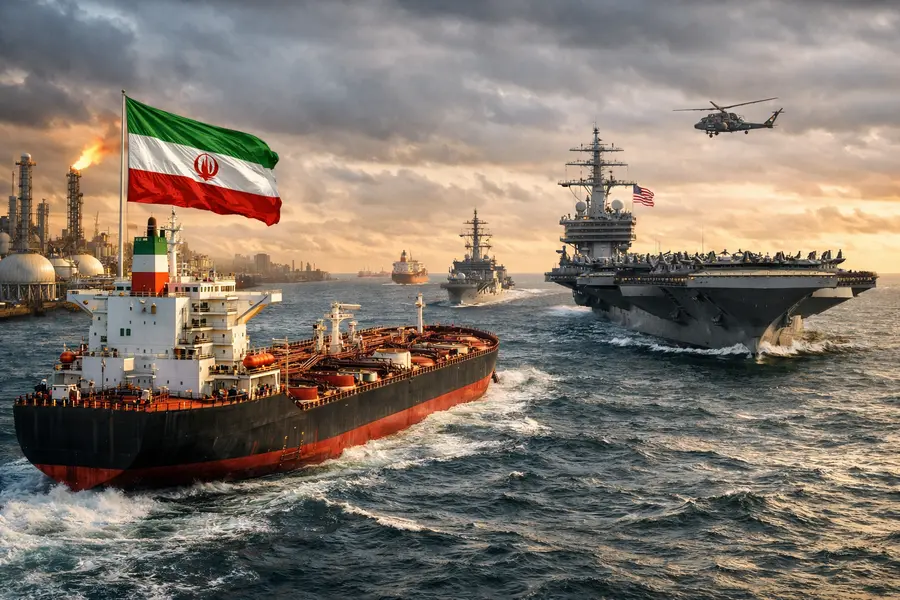
Iran dispatched six tankers carrying 11 million barrels of crude on July 9 as Washington revoked its oil-sales waiver and threatened a new Strait of Hormuz naval blockade, pushing Brent crude up almost 9% for the week.
- Six vessels — five supertankers and one Suezmax — departed Iranian ports in 24 hours, carrying roughly one week of Iran's pre-war export volume
- Brent crude traded near $79 a barrel Thursday, briefly crossing $80 after Trump declared the June ceasefire "over" at the NATO summit in Turkey
- Washington revoked its Iranian oil-sales waiver, prohibiting transactions after July 17 — five weeks ahead of the original August 21 deadline
Lead
LONDON/DUBAI — Iran accelerated a sweeping Iran crude oil export rush on July 9, deploying five supertankers and one Suezmax vessel carrying an estimated 11 million barrels of crude as the US military conducted retaliatory strikes on Iranian targets for a second consecutive day. Tanker-tracking data showed four vessels signaling positions in the Gulf of Oman and a fifth actively transiting the Strait of Hormuz, as a peace framework negotiated just three weeks earlier threatened to collapse entirely.What Happened
The Iran crude oil export rush unfolded against a backdrop of swift diplomatic and military deterioration. Tehran attacked three commercial vessels near the Strait of Hormuz in early July, prompting the US to launch retaliatory airstrikes against more than 80 Iranian military installations and vessels operated by the Islamic Revolutionary Guard Corps. President Donald Trump, speaking at the NATO summit in Turkey, declared the ceasefire arrangement "over" and threatened to reimpose the US naval blockade that had cut off Iranian oil revenues from April 13 through June 17.
The Treasury Department simultaneously revoked a waiver that had permitted limited Iranian crude oil sales under the temporary peace arrangement, narrowing the window for compliant transactions to July 17. Five supertankers — very large crude carriers capable of transporting up to 2 million barrels each — and one Suezmax vessel were tracked departing Iranian ports within a 24-hour window. The 11 million barrels dispatched represents approximately one week of Iran's pre-war crude export volumes, though the immediate availability of buyers for the shipments remains uncertain.
Oil Market Reaction
Brent crude traded near $79 a barrel in London on Thursday, up almost 9% on the week. The commodity briefly pierced $80 after Trump declared the June 18 memorandum of understanding defunct, reversing a sustained decline that had taken prices toward pre-conflict levels following the ceasefire. West Texas Intermediate moved in parallel, sustaining weekly gains unseen since the initial outbreak of hostilities.The price trajectory reflects acute uncertainty over global energy supply corridors. Approximately 25% of the world's seaborne oil trade passes through the Strait of Hormuz, making any disruption to the chokepoint an immediate price catalyst. A full reimposition of the US naval blockade would effectively replicate conditions from the April–June period, when Iranian exports fell by more than 90%.
Strategic Context
The June 18 memorandum of understanding had allowed Iran to resume crude oil sales and certain financial transactions as part of a broader effort to stabilize Strait of Hormuz shipping. In the weeks following its implementation, Iran shipped more than 40 million barrels of crude, selling at a reported 20% premium as buyers raced to capture the reopening arbitrage. China, which absorbs roughly 90% of Iranian crude, served as the primary destination for those flows.
The fresh escalation places those buyers in an ambiguous legal position. With the US waiver revoked and the diplomatic framework in question, tens of millions of barrels already at sea face uncertain delivery prospects. Tanker operators have historically navigated such periods using AIS signal suppression, ship-to-ship transfers in international waters, and cargo relabeling — techniques extensively documented from Iran's pre-war sanctions-era trade. Dark transits, in which tankers disable their Automatic Identification System beacons, surged during the April–June blockade period and appear to be recurring with the latest fleet departure.
Geopolitical Dimension
The collapse of the ceasefire framework is particularly consequential given its timing. The original 60-day MOU had been viewed as a preliminary step toward a more comprehensive agreement and carried multilateral backing. Trump's dismissal of the deal at the NATO summit eliminates the diplomatic architecture for near-term de-escalation and returns both parties to an ambiguous military posture.
The US naval blockade imposed April 13 had exacted significant economic costs on Tehran — the Department of Defense estimated Iran lost approximately $4.8 billion in oil revenue in the first six weeks alone. A full reimposition would restart that pressure while simultaneously constricting global energy supply, complicating transit rights for non-allied shipping, and testing whether the enforcement framework can hold more firmly than it did during the May–June period, when several tankers successfully transited the blockade line.
Outlook
The supertanker oil shipments dispatched on July 9 represent Iran's effort to maximize export revenue before access restrictions return, but their viability hinges on whether buyers — principally China — are willing to absorb sanctioned barrels following the waiver revocation. Brent crude remains highly sensitive to any confirmation of renewed US naval enforcement in the strait. A formal reimposition of the Strait of Hormuz oil blockade would likely push prices back toward the elevated levels seen during the April–June conflict period, with cascading implications for global energy supply chains across Asia and Europe. The diplomatic window has narrowed sharply, and developments over the next several days on both military and negotiating tracks will determine whether the June framework can be revived or whether a second blockade becomes operational.