 Pomegra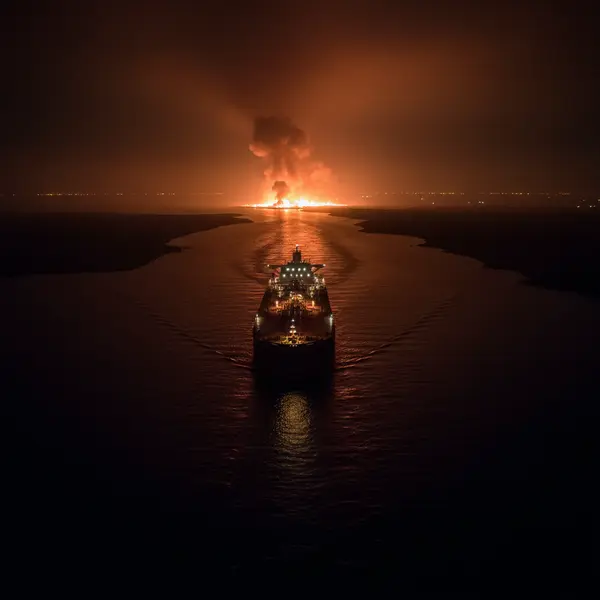
The US and Iran have "mostly agreed" on a 60-day truce extension after 90 days of war, with Brent crude plunging nearly 19% in May while the Strait of Hormuz remains the central flashpoint in one of the Middle East's most consequential modern conflicts.
- Brent crude fell to $92.56 on May 29, 2026, down ~20% from its 2026 peak, as ceasefire optimism swept global markets.
- The US and Iran are reported to have "mostly agreed" to a 60-day memorandum of understanding, pending President Trump's formal sign-off.
- Iran's newly created Persian Gulf Strait Authority is demanding vessel authorization to transit the Strait of Hormuz, complicating any lasting reopening.
Day 91: A War That Remade the Middle East
Ninety-one days after the United States and Israel launched Operation Epic Fury on February 28, 2026 — firing nearly 900 strikes in the first 12 hours against Iran's nuclear infrastructure, air defense systems, and regime leadership — the conflict that killed Supreme Leader Ali Khamenei in its opening wave and displaced millions across the region is approaching a critical diplomatic inflection point. On May 29, 2026, global oil markets reacted to reports that Washington and Tehran have reached a tentative agreement to extend their fragile ceasefire by 60 days, as peace negotiations mediated by Pakistan advance toward a potential framework for ending the most consequential US military operation in the Middle East since the 2003 Iraq War.
Operation Epic Fury and the Anatomy of a Regional War
The US-Israel joint campaign opened with precision strikes targeting Khamenei, dozens of senior officials, and the core pillars of Iran's Islamic Revolutionary Guard Corps (IRGC). Among the most controversial early incidents was a missile strike near Bandar Abbas that killed approximately 170 people at a girls' school adjacent to an IRGC naval base, triggering immediate international condemnation. Iran's leadership rapidly reconstituted itself: Ali Larijani assumed de facto control before being killed on March 17, and Mojtaba Khamenei — regarded by analysts as significantly more hawkish than his father — was appointed supreme leader by the Assembly of Experts in early March despite sharp objections from President Donald Trump.
Iran responded with a doctrine of horizontal escalation, launching waves of ballistic missiles and drones against US embassies and military installations across the UAE, Saudi Arabia, Qatar, Kuwait, Bahrain, Iraq, Oman, and Jordan. Iranian strikes damaged Dubai International Airport — one of the world's busiest aviation hubs — within 48 hours of the conflict's outbreak, nearly halting regional air traffic. The conflict also resumed hostilities between Israel and Hezbollah in Lebanon, with the IDF deploying south of the Litani River and displacing over 1.1 million Lebanese civilians by late March.
The Strait of Hormuz: World Economy's Most Dangerous Chokepoint
The Strait of Hormuz — through which approximately 20% of global oil supply flowed before the conflict — became the decisive economic weapon of the war. Commercial vessel traffic through the strait collapsed by more than 90% after the outbreak of hostilities. Brent crude surged from approximately $70 per barrel just before the war began to an average of $103 per barrel in March, while oil prices peaked further still above $126 per barrel at the conflict's most acute phase. The disruption triggered fuel shortages and rationing across Asia, with Gulf Arab states losing a collective reported 6.7 million barrels per day of production capacity by early March.
Iran leveraged the energy shock for significant financial gain. Iranian oil revenues increased by an estimated average of $25 million per day in March as reduced supply drove global prices sharply higher, while Russia — which controls substantial oil export infrastructure — reaped an average windfall of approximately $150 million per day in the same period. After a Pakistan-brokered ceasefire was announced on April 7–8, Iran's newly established Persian Gulf Strait Authority moved to formalize its control over the waterway, demanding authorization for vessels transiting a newly demarcated controlled maritime zone — a posture that markets view as the most immediate obstacle to any durable peace.
Ceasefire Architecture and the Path to a Deal
The first ceasefire, brokered by Pakistan and approved by both Trump and Iran's leadership on April 7–8, marked the highest-level direct US-Iran engagement since the 1979 Islamic Revolution when Vice President JD Vance met Iranian parliament speaker Mohammad Bagher Ghalibaf in Islamabad on April 11–12. That round of talks failed to produce a permanent agreement. The US Navy subsequently began a blockade of the Strait of Hormuz on April 13, preventing ships that had docked at Iranian ports from transiting the waterway, a measure designed to coerce Tehran while straining Iran's storage and export capacity.
On May 5, Operation Project Freedom — a US effort to guide stranded vessels through the strait — resulted in deadly confrontations between American and Iranian naval forces before being paused after Trump cited "great progress" toward a deal. As of May 29, Iran's crude loadings for the month remain below 0.3 million barrels per day, down sharply from April's 1.5 million barrels per day average, a figure reflecting the cumulative damage of the blockade and ongoing security restrictions.
Markets Signal Cautious Optimism
Global financial markets reacted firmly on May 29 to reports of the tentative 60-day ceasefire extension. Brent crude futures fell 1.2% to $92.56, its worst monthly performance since the Covid-19 pandemic, down approximately 19% for May. WTI futures declined 1.9% to $87.18, off 16.5% month-to-date. Equity markets across Asia rallied sharply: Japan's Nikkei 225 gained 2.5%, South Korea's Kospi surged 3.6%, and Hong Kong's Hang Seng climbed 0.9%. Europe's Stoxx 600 rose 0.3%, and the US S&P 500 had notched a 0.6% gain the prior session, reaching a record high. The 10-year US Treasury yield fell to 4.45% as investors priced out stagflationary scenarios that had weighed on bond markets throughout the conflict.
Deutsche Bank's Henry Allen characterized the moves as markets showing "mounting optimism about an end to the conflict," noting that falling oil prices were allowing investors to "price out the more stagflationary outcomes for the global economy." UBS analysts, however, warned that crude loadings in the Gulf remain "extremely low" and that there is "little evidence" of any short-term improvement in vessel traffic through the region, with Bob Parker of the International Capital Markets Association forecasting Brent crude will hold between $90 and $100 "at least for the next couple of months."
Trump's Window and the Risk of Resumption
As of May 29, President Trump has not formally signed off on the 60-day memorandum of understanding. The president stated the US and Iran are "right on the borderline" between a deal and resumption of hostilities, and that he would give diplomacy "a few more days." Iran's chief negotiator Mohammad Bagher Ghalibaf signaled that Iran's armed forces used the ceasefire period to "rebuild their strength," a statement that underscored Tehran's ongoing strategic posture of deterrence even amid negotiations. China's President Xi Jinping urged Russian counterpart Vladimir Putin that "a comprehensive ceasefire is of utmost urgency," with Beijing pressing both sides that "maintaining negotiations is particularly important." Meanwhile, Iranian forces fired ballistic missiles at Kuwait and launched attack drones toward the Strait of Hormuz as recently as May 28, demonstrating that the military dimension of the conflict has not been fully suspended.
Structural Damage and the Long Reconstruction Horizon
Beyond the immediate humanitarian toll — thousands dead in Iran, Lebanon, Israel, and the Gulf Arab states, and millions displaced — the 2026 Iran War has inflicted structural damage on global energy infrastructure that analysts warn will persist regardless of a ceasefire. Significant damage to refineries, pipelines, and oil export terminals across the Gulf has been documented. The UAE announced plans to complete a second oil pipeline bypassing the Strait of Hormuz by 2027, reflecting Gulf state assessments that the waterway's vulnerability is now a permanent strategic risk. The US military is reported to face years of effort to replenish advanced weapons stockpiles depleted during Operation Epic Fury, while Iran's nuclear timeline remains contested — the CIA assessed significant setbacks to Tehran's enrichment capacity, though earlier intelligence suggested Iran relocated significant portions of its enriched uranium stockpile before the initial June 2025 strikes.
With negotiations in their most advanced phase since the April ceasefire, the shape of any eventual agreement will center on three interlocking demands: Strait of Hormuz reopening, a verified halt to Iran's nuclear weapons program, and a durable security architecture for the Persian Gulf. Whether the 60-day ceasefire extension converts into something more lasting will be determined in the days immediately ahead — and global energy markets, still pricing war risk at elevated levels, are watching every signal from Washington and Tehran.
Mentioned tickers: USO, BNO, XLE, XOM, CVX, OXY, HAL, SLB