Pomegra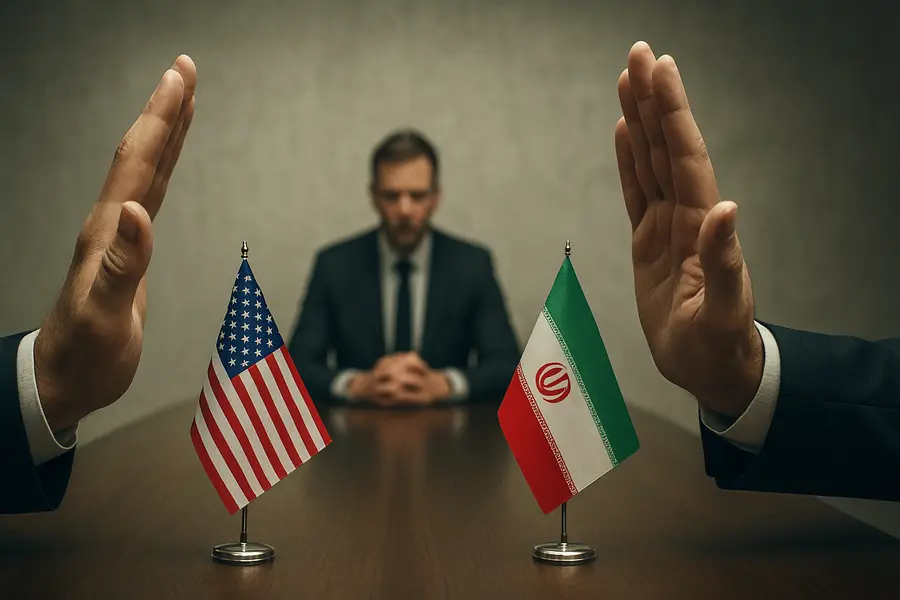
Tehran refuses face-to-face negotiations with Washington in Qatar, leaving US envoys Witkoff and Kushner to work through mediators as the June ceasefire frays.
- Iran's Foreign Ministry confirmed no direct meetings with American officials are scheduled in Doha, rebuffing US envoys present in Qatar.
- A June 17 Islamabad Memorandum set a 60-day ceasefire, but tit-for-tat military strikes over the weekend have put the framework under severe strain.
- Brent crude steadied above $73 per barrel after a 23% quarterly drop, with markets watching the Strait of Hormuz for any further disruptions.
Lead
Doha, July 1, 2026 — Iran ruled out Iran US direct talks with American representatives in Qatar on Tuesday, even as senior White House envoys Steve Witkoff and Jared Kushner met Qatari officials to salvage a collapsing ceasefire. Iran's Foreign Ministry spokesperson stated plainly that "no meeting at any level with the American side has been scheduled," a declaration Qatar's own Foreign Ministry swiftly corroborated. The refusal, delivered during what US officials had billed as a new round of Doha peace talks news, underscores how rapidly the diplomatic momentum built around the June 17 Islamabad Memorandum has deteriorated.What Happened
The Islamabad Memorandum, signed remotely on June 17 by US President Donald Trump and Iranian President Masoud Pezeshkian, established a 60-day ceasefire framework and opened a pathway toward lifting sanctions and reopening the Strait of Hormuz to commercial traffic. The agreement followed roughly four months of conflict that began on February 28 when the United States and Israel launched large-scale strikes on Iran.
Within two weeks of the MoU's signing, the fragile arrangement came under pressure. US Central Command executed strikes against Iranian military surveillance infrastructure, communication systems, air defense sites, drone storage facilities, and minelayer capabilities, citing Iranian attacks on two commercial vessels in the Strait of Hormuz. Tehran responded with missiles and drones targeting US military installations in Bahrain and Kuwait. By the weekend of June 28–29, both sides had exchanged further strikes, prompting Iranian officials to warn that missiles were "ready to launch."
Against that backdrop, Tehran has downgraded its participation in Doha peace talks news to indirect, technical-level engagement conducted through Qatari and Pakistani mediators. Iran's delegation traveled to Doha specifically to discuss implementation of the MoU — not to negotiate with Washington directly.
Market Reaction
Brent crude steadied just above $73 per barrel on Tuesday, a modest rebound after the commodity posted its steepest quarterly decline since 2020, falling nearly 23% in the second quarter. The sharp drop had reflected market confidence that the MoU would restore Persian Gulf shipping, with Iran exporting more than 40 million barrels since the US eased its naval blockade. The renewed diplomatic uncertainty pushed prices modestly higher, as traders recalibrated the probability of a durable ceasefire. Energy analysts note that a full reescalation could push Brent back toward the $90–$100 range, depending on how quickly the Strait of Hormuz situation deteriorates. The strait handles roughly 20% of global oil trade.Strategic Context
The sticking points in US-Iran relations 2026 are structural. Tehran is demanding the release of approximately $6 billion in frozen Iranian assets held in Qatar as a prerequisite for substantive engagement — a first step President Pezeshkian publicly stated he expects Washington to honor. US officials have tied any asset transfer to verifiable progress on Iran's military and nuclear posture, a condition Tehran has characterized as a renegotiation of agreed terms. Neither side has moved.
Witkoff and Kushner's presence in Doha represents Washington's attempt to keep the diplomatic channel open through the Qatari intermediary, even without direct contact with Iranian counterparts. Qatar's Prime Minister, Sheikh Mohammed bin Abdulrahman Al Thani, has served as the primary conduit, relaying proposals between delegations that refuse to sit in the same room.
Geopolitical Dimension
The Lebanese theater has injected a new complication into Middle East geopolitics. Iran has explicitly conditioned any durable ceasefire on Israel restraining its operations in Lebanon, a demand Israel has not accepted. Iranian national security adviser Mahdi Mohammadi linked the two theaters directly, warning that continued Israeli strikes in Lebanon would terminate both the ceasefire and negotiations. Washington, which has relied on the Lebanese question as leverage, now faces pressure from an ally unwilling to stand down and an adversary that has made its position non-negotiable.
Pakistan's role as a secondary mediator — alongside Qatar — reflects a broader diplomatic architecture designed to give Tehran political cover for indirect engagement with Washington. Both Islamabad and Doha have staked considerable regional credibility on securing a durable agreement, adding pressure on both parties not to be seen as the side that collapsed the talks.
What Comes Next
The 60-day clock on the Islamabad Memorandum continues to run, with no formal mechanism to extend it if talks remain stalled. US and Iranian technical delegations in Doha are focused on narrow implementation questions — asset transfer sequencing, Strait of Hormuz traffic management, and monitoring protocols — but neither government has authorized the level of concessions needed to resolve the core disputes. Oman has submitted a separate proposal on long-term Strait of Hormuz governance, adding another variable to an already complex negotiation.
Should the MoU expire without renewal, analysts expect a rapid re-escalation in the strait, a reversal of the June oil-price decline, and a return to the pre-ceasefire posture that brought Brent crude close to $120 per barrel at the conflict's height.